Livestock’s latest pest not a one-hit wonder
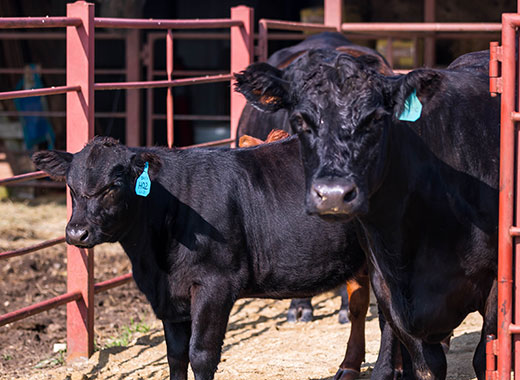
Mitigating the New World screwworm is going to be a long-term battle and Phillip Kaufman, a professor in the department of entomology at Texas A&M University and Texas A&M AgriLife Extension service entomologist, said ranchers will need to help, too.
Since November 2024, the U.S. Department of Agriculture has banned cattle from being imported from Mexico as the two countries try to eradicate the pest. In July, the New World screwworm had been reported as close as 370 miles to the United States-Mexico border but has since retreated to about 600 miles from the border.
When NWS fly larvae (maggots) burrow into the flesh of a living animal, they cause serious injury with the potential to kill an animal. NWS is known to researchers as Cochliomyia hominivorax.
If an animal dies, Kaufman said NWS, if the maggots are large enough and survive the resultant adults can go to another host.

The NWS is very different from its more commonly seen cousin named the secondary screwworm—Cochliomyia macellaria that is common across Texas. This blue blow fly typically lays eggs only on dead animals.
Kaufman, as a researcher, focuses on the development of new pest management tools for livestock and companion animal systems. He encourages farmers and ranchers to learn as much as they can about both species of flies so that they are informed and prepared.
The NWS is not new as cases were reported 50 years ago in Texas. The key to controlling the fly has been the sterile insect technique that used the production and weekly release of sterilized male flies that when they mate with a wild female causes her to lay unfertilized eggs that never hatch.
The NWS develops from fly larvae, known as maggots, that burrow into the open flesh of mammals. All livestock, wildlife, humans and occasionally birds can be hosts, Kaufman said.
With early detection and proper treatment an animal can recover, although the damage to the tissue can be significant, he said. For example, if the maggots eat the tissue on biceps of the animal and treatment is not addressed quickly the bicep may have to be removed. The animal, while it will not necessarily die, it will be without a bicep.
When cases hit the Key deer in Florida, maggots burrowed near the cranial cavity and many deer had to be euthanized, he said. The location of the burrowing is critical.
“It all depends on where the wound is and how long it’s been there and how sensitive that area is as to whether the animal will have to be euthanized,” Kaufman said. “That’s why with wounds on an animal you need to treat them early. If you can get the maggots out, you’re going to stop any more damage from happening. But depending on how sensitive that area on the body is that is going to really impact the prognosis on the animal.”
More sterile flies needed
Experts say producing sterile flies is key to stopping the NWS. The U.S. has one plant that produces 110 million sterile flies a week and it has been operating at full capacity since November 2024.
“That’s simply not enough flies to distribute across the landscape, to fully stop or even reverse the progression of the fly as it is moving farther north,” Kaufman said.
The ideal place to release the sterile flies is as the Isthmus of Mexico because it is the narrowest strip of land between the Gulf and the Pacific Ocean; however, when the female fly travels further north the geographic area expands and that means more sterile male flies are needed so as to not dilute their dispersal numbers too greatly.
Kaufman said the U.S. and Mexico are cooperating and coordinating their efforts. The USDA is going to add capacity with an eventual goal of 300 million flies a week at a new production plant in South Texas. Secretary of Agriculture Brooke Rollins announced a plant will be constructed at Edinburg, Texas, which is near the Mexico border.
The sterile fly production plant will be a high containment facility with precautions so that no fertile flies will escape, Kaufman said. The plant will take about three to four years to build before it can produce sterilized flies.
The USDA has also provided Mexico with resources to retrofit a fruit fly production plant in Barrie to produce more sterile screwworm flies by next summer.
“I think by July 2026 they expect to produce their first sterile flies and getting those fly numbers up will help us to suppress the fly,” Kaufman said. “It’s going to take time before the new plant in southern Texas will be able to produce enough (sterile flies) for us to start eradicating flies. Right now, what we’re doing is slowing down its northern movement, but in order to push it back we’re going to need hundreds of millions more flies being produced per week.”
Several theories abound about why there has been a resurgence in the pest, he said. One of those theories was that cattle production has increased significantly in Central America over the past 25 years and as the cattle grazed moved farther north it also upped the opportunity for the NWS to go unchecked.
“Once it was moved into a wider area, without some of the inspection sites operating correctly, you lose the ability to contain it as effectively and that’s where we are at now,” he said.
Another credible theory had to do with the impact of the COVID-19 shutdowns when supply chain problems limited the capability to get production fly rearing supplies as well as parts for the sterile fly plant in Panama, which may have lowered the weekly production of sterile flies.
Ranchers need to be vigilant
While the two countries are working together to address the pest, Kaufman said farmers and ranchers need to be proactive.
“If producers think they have a case they should report it right away,” he said. “The worst thing they can do is to ignore it or fail to report an infestation to prevent their farm from being quarantined.”
To control NWS, it takes a stewardship approach that not only means to guard your own herd but realize rancher actions can impact neighbors because the flies can travel to the next host. The best preventive advice is to start by regularly checking your own herd because producers also need to realize that wildlife, including deer or feral hogs, can be hosts.
The USDA’s Animal and Plant Health Inspection Service has in its plan that within two days of a new site being identified for NWS, it will drop sterile flies on that area to try to suppress any female flies.
Susceptible domestic livestock to hosting the NWS-carrying larvae include those who have had surgically treated procedures that leave a wound, which includes castration, dehorning and tail docking and newborns with unhealed umbilical areas.
“You will need to monitor those animals daily to make sure they don’t have maggot infestations—and if they do—you will have to get a veterinarian to treat them,” he said. “What we don’t have and what we don’t want are people treating animals with “preventatives” before they even know the screwworms were in the area. Although there are Internet postings suggesting you treat with products now, it’s pointless to do so now because the fly isn’t even in the U.S. and may not be here for some time.”
If a producer is unsure and he has discovered an animal that has just died and the carcass has maggots on it, Kaufman urges the producer to collect the maggots and take them to their veterinarian for identification. The same is true for live animals. The veterinarian will be able to have the maggots tested at the National Veterinary Services Diagnostic Laboratories in Ames, Iowa, and results usually will be known within a day. This gives enough time for APHIS to implement its control plan that will include a stop animal movement declaration to reduce the unintended movement of infested animals and the release of the sterile flies.
The NWS is likely a long-term nemesis, particularly in the southern regions of the U.S. because the weather typically stays warmer year-round, he said. Prior to eradication, there were cases reported in South Dakota, but Kaufman said experts believe they occurred as a result of people transporting the animals that were already carrying fly larvae.
Winter weather from northern Texas, through Oklahoma and southern Kansas northward is going to kill the female flies in the winter, he said, but these ranchers also must stay vigilant from spring to fall.
All producers in the High Plains, regardless of their location, need to work with their local Extension services, he said. Each state has a state animal health veterinarian who will manage the response in his or her state in cooperation with the USDA-APHIS-VS and they will keep information updated.
With proper action, the nation’s cattle herd will be protected, he added.
“Don’t be afraid to report that you have a case because that’s the fastest way to get rid of it. You will have the attention of the USDA if it shows up on your ranch. It is very treatable at an early stage, but it does require all of us to know that it’s here. It’s not something to try to hide.”
A long road ahead
Kaufman will not be surprised if cases eventually show up on U.S. soil.
The battle to return the NWS to the Darian gap in Panama may take a decade or more, he said. “This fly moved north in two years in the amount of time it took us 17 years to eradicate it. We’re in it for the long haul. The good news is that we eradicated it fairly quickly from Texas the last time and we will do so again with assistance from our fellow Texans.”
The newest challenge to livestock producers is another example of why funding research is important. The last known case in the Southern Plains region was 50 years ago and that success story may have led to complacency.
Research was hampered because scientists didn’t have access to the New World screwworm because it doesn’t exist anymore in the U.S. and that meant grant funding to research the pest also ended, he said.
“What we need to do as a country is to reinvest in research on this pest because we have a lot of tools like genetic engineering and other techniques that we didn’t have 50 years ago and also leverage the great scientific minds we have in this country to address this problem and make sure it does not come back again.”
Dave Bergmeier can be reached at 620-227-1822 or [email protected].
Related coverage and resources
- Related on HPJ: What is New World screwworm, and why are they dangerous?
- Related on HPJ: USDA expands effort to protect livestock industry from NWS
- Outside resource: USDA APHIS — Livestock and Poultry Diseases