High demand dwindles hay supplies as dry weather persists
Dry conditions prevail across Texas, and rainfall outlooks are raising concerns about hay supplies and grazing in the near term and production potential this coming season, according to Texas A&M AgriLife Extension Service experts.
Vanessa Corriher-Olson, Ph.D., AgriLife Extension forage specialist and professor, Department of Soil and Crop Sciences, Overton, said livestock producers continue to deplete hay supplies and the verdict is still out on warm-season haying prospects.
“Folks likely have supplies left over from last year, however the quality might be questionable,” Corriher-Olson said. “We are currently dry with some parts of the state in a drought, so things don’t look very promising now. Looking at the long-range forecast, it appears we should expect above-normal temperatures and below-normal rainfall.”
Beyond drought, an invasive pest found in South Texas pastures – the pasture mealy bug – is raising concerns among hay producers.
“If it spreads, it could be devastating to a lot of forage and hay producers,” she said.
Surplus drawdown
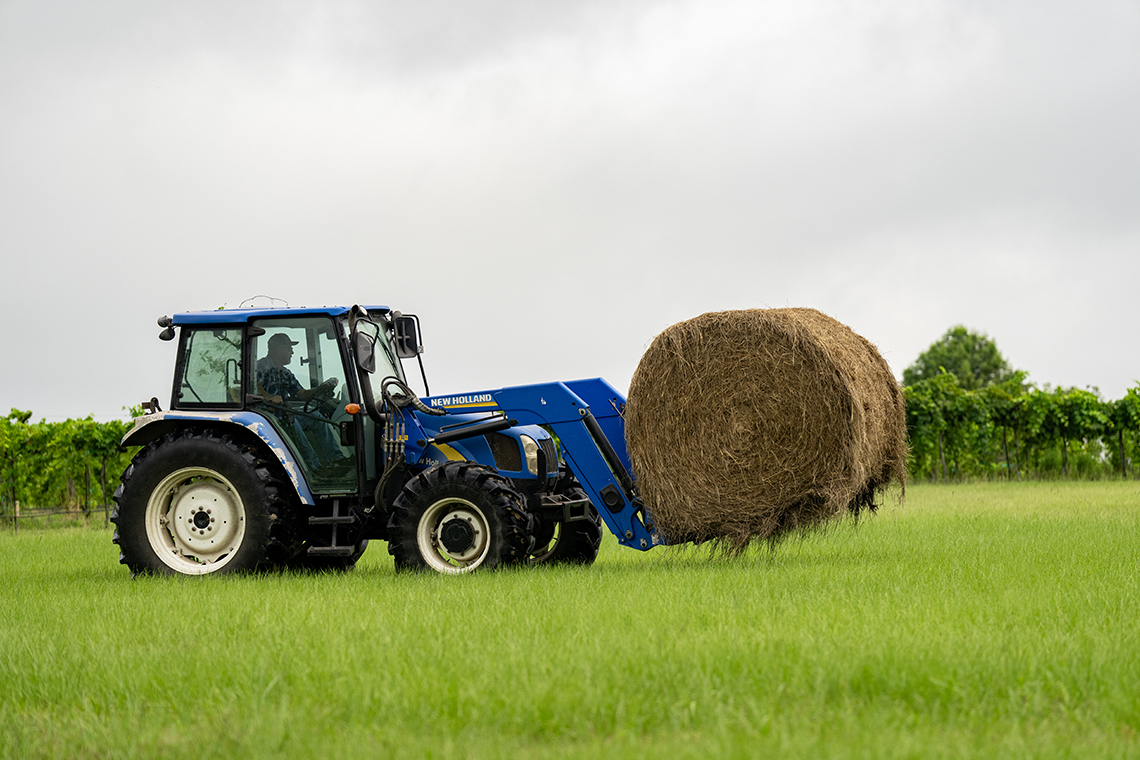
Though 2025 was a bumper hay crop for most, that initial surplus has proven to be a salvation for drought-plagued regions of the state. Some AgriLife Extension agent reports in drier areas of the state indicate tightening hay supplies, while other areas remain well stocked.
Round bale pricing varies from $75-$85 on average for Texas, according to a recent U.S. Department of Agriculture Texas Direct Hay Report. Premium round bales were between $110-$145.
“We still have a surplus of hay from the major hay providers,” said Shane McLellan, AgriLife Extension agriculture and natural resources agent, McLennan County. “Most livestock people have dipped fairly deep into their hay supplies, but I know there’s a lot of hay left over and prices are reduced drastically. We just made so much hay last summer that it’s expected to carry over into next year.”
Drought influences grazing, supplemental feeding
McLellan said the Central Texas region is 8 inches below normal rainfall since September. Lines of recent moisture helped some but were not enough to significantly improve early spring grazing outlooks and pasture recovery.
“We did receive 0.6 to 0.7 of an inch over much of our area,” he said. “That helped a lot as pastures are trying to green up and there is available moisture for planting. As you get into Bell County they are in better shape, moisture-wise, and the same as you go east.”
He said McLennan and Limestone counties “are kind of on the edge of the drier area as you head east.”
“We need a multi-inch rain to break this cycle of dry weather,” he said.
South Central Texas hay conditions
Hay supplies remained in good shape in Brazos County and surrounding areas, but lack of rainfall and freeze damage in January have set winter forages back. These forages are bouncing back with recent rain and sunshine, but hay will be needed to supplement cattle diets until warm-season forages kick in, said Chadd Caperton, AgriLife Extension agriculture and natural resources agent for Brazos County.
Looking ahead, Caperton said supplies are likely to tighten further.
“The weather outlook isn’t strong so we’re expecting hay supplies and new cuttings to be low,” he said. “We hope the pattern changes, but it’s not been encouraging so far.”
PHOTO: A bumper hay crop is starting to dwindle as supplies are being used in the wake of dry weather. (Sam Craft/Texas A&M AgriLife)