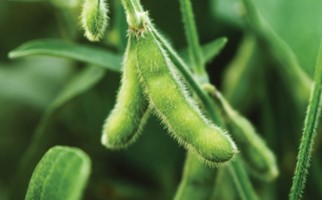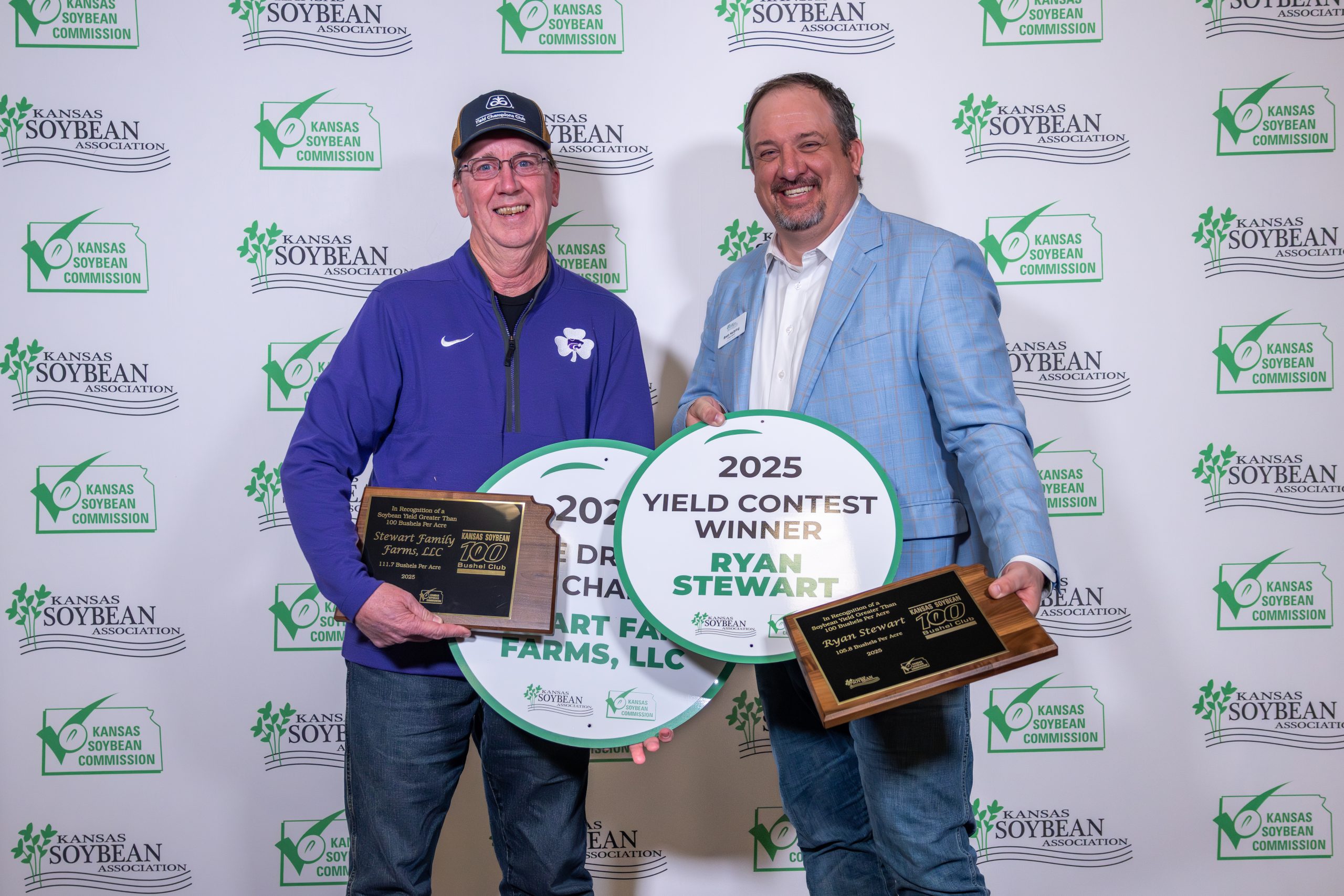
Kansas Soybean Yield Contest included Washington County farmers who made the 100 Bushel Club without irrigating.
Rod Stewart and his son Ryan made club in 2025 without irrigating, and according to the Kansas Soybean Association, in a year with the highest number of 100-bushel per acre entries, it’s quite the feat. Their entries of 111.7 and 105.8 bushels per acre, respectively, were both achieved on dryland fields.
Rod Stewart said they were blessed with timely rains.
“Makes a huge difference in our setting, but that made a big difference in our yield,” he said. “But I’d like to think some of the tweaks we’ve made, especially in our fertilizer program, helped us put the top in on those yields.”
The pair also had the highest dry land corn production in the state and the highest dry land sorghum yield in the nation this year.
The accomplishment is something he’s been working on his entire life. He recently retired from selling seed.
“I’ve been helping customers all this time with their programs and trying to do things with mine,” he said. “But now I have more time to concentrate on my program, and this year’s that, and the rain and whatever else we were able to achieve some pretty lofty goals.”
Stewart loves to attend the national Commodity Classic and listen to high yield producers, pulling anything he can from their techniques. He also adjusted his fertility protocol and two years ago upgraded his planter technology by “about 35 years,” he said.
“Our seed placement, both depth and singulation is way better than it was before, and that’s the key to achieving high yields,” he said. “We run two different fertilizer systems on our planter. We put stuff in a row and we put stuff out to back, just right beside the seed, on top to ground, but so it gives us some flexibility on what we want to do with our fertility program.”
In 2025, he started planting at the end of April and was finished by the end of May—about the normal time for his area, he said. Beans went in first and corn second.
He looks for traits that match his region.
“I look for combination of drought tolerance and high yield, kind of like when we select bulls, you want one that throws small calves, but they grow like crazy when they’re born,” he said. “So we do the same thing with our varieties that we select.”
He found the best varieties that worked for him and said his chart topper sorghum variety is one that has been in Pioneer’s line up for more than 30 years—84G62.
“It’s won contests every year,” he said. “Sometimes (it) isn’t always the new one; just kind of evaluate, look at test plots and see how it performs in the area.”
When it comes to soybeans, the perfect variety may change from year to year.
“This year, I think we found a perfect one for our situation, when we hit over 100 bushels,” Stewart said. “I trust the new genetics they come out with, because I have seen each year when they come out with something new. I just trust that new stuff is where we need to go.”
Stewart puts some money in pre-plant herbicide programs to help deal with weed pressure. The Stewarts mostly use no-till.
“We have some of the conventional till we use for some of our contest entries, but we’re really concerned with weeds, and so I’m not afraid to spend the money on a good pre-program,” he said. “Because, like our beans, we post them 30 days after we plant them. That’s the only time we went over them.”
Stewart believes if you’re going to spend the money one way or another when it comes to herbicides, and he’d rather spend it up front to get the field clean instead of trying to “clean up a mess down the road.”
After his record breaking crops, Stewart already has a plan to help this year’s production—starting with fertility.
“As soon as this snow leaves and the ground thaws out, we have a gentleman lined up to grid samples so we’ll find out what we’re lacking, then we’ll address it accordingly,” he said.
When asked if he knew ahead of time he was going to have high yields, Stewart said he always wants to be cautiously optimistic.
In 2025, the soybeans were planted at a seed population of about 145,000 per acre and he chose a bushier type of variety. He is also a big believer in seed treatments, to protect the plant as long as possible.
“My son has a drone spraying business, so he put fungicide on our corn and grain sorghum,” he said. “We tried some biologicals on the high yielding 111-bushel beans, we had some biologicals we put on there too.”
Kylene Scott can be reached at 620-227-1804 or [email protected].