K-State researcher shares insight on how to cook steak to its highest quality
Consider this: The average steak at a popular national chain costs between $15-$35. But what if consumers could cook steak at home to the same quality, or better?
For years, Kansas State University researchers have conducted studies at guiding consumers to better cooking practices that can ensure the overall juiciness and flavor of the beef they prefer.
A recent study shows that freezing steak does not affect the overall quality of the meat.
“When we researched the difference between fresh, never frozen beef versus frozen beef, we found that freezing steaks did not impact juiciness, flavor or overall liking when fed to a consumer group,” said Erin Beyer, K-State Extension meat quality expert. “However, we found that it did improve overall tenderness.”
Cooking Steak
Beyer said that meat, in general, has approximately 75% water content. Whenever steaks are cooked, water loss will occur, and the meat will become tougher.
“As the steaks are cooked longer, you’re going to lose the water that’s still in the product,” Beyer said.
Cooking temperature also plays a major role in contributing to water loss and tenderness.
“If you cook steak super-fast on high heat, you’re going to lose even more water, even get a crust on the outside impacting juiciness and tenderness,” Beyer said. This cooking method is appropriate for muscles that are naturally tender, such as ribeye or tenderloin, but is problematic for tougher cuts.
Certain cuts of meat are tougher than others; understanding the tenderness of the steak and choosing the correct cooking method will drastically improve overall palatability.
“On certain cuts that are inherently tough (shank, brisket, chuck, round, and flank), cook them low and slow, to prevent that loss of water, and improve tenderness,” Beyer said.
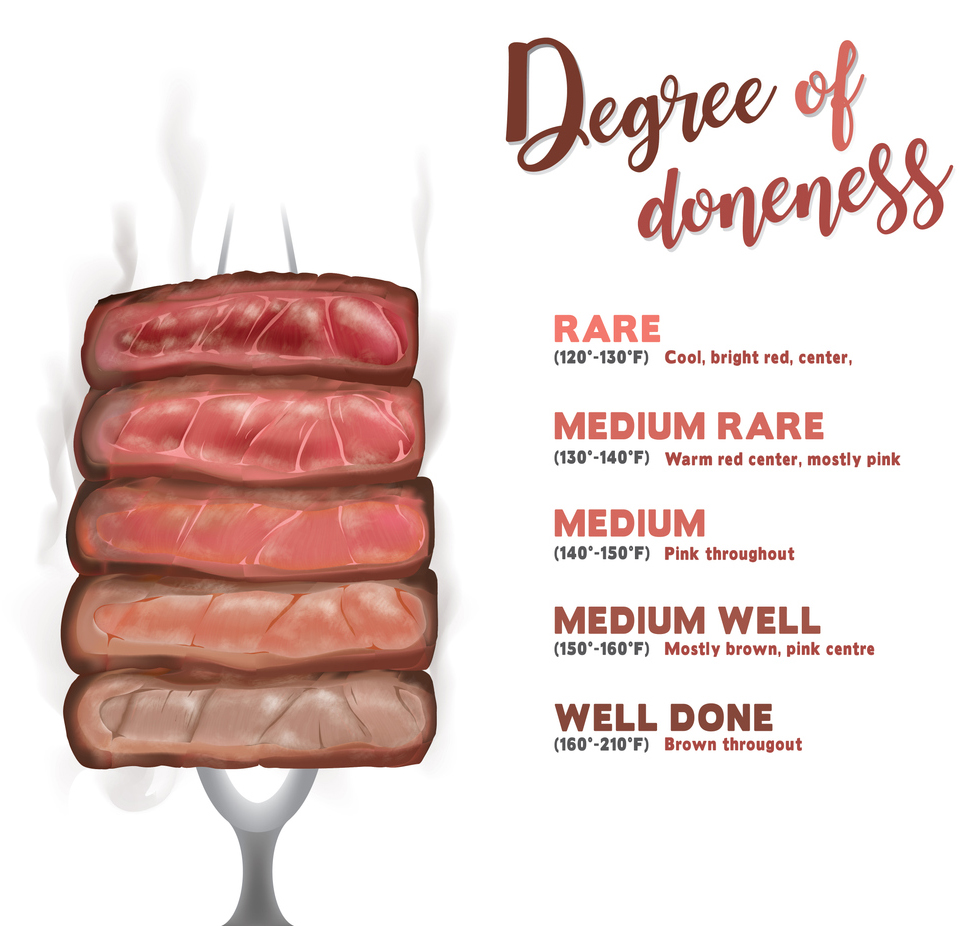
When cooking steaks, Beyer said to be mindful of what level of doneness is preferred for the eating experience.
“Steak will rise at least 15 degrees (Fahrenheit) from when they are pulled off of a high heat source to when they reach their final temperature, and that final temperature is going to represent your degree of doneness,” she said.
Freezing Meat
“If consumers freeze meat, I recommend getting as much air out of the package as possible,” Beyer said, adding that vacuum sealing is also effective for preventing freezer burn.
She adds that when freezing beef, especially ground beef, it is possible for the meat to change pigmentation.
“Red, purple and brownish gray pigments are all considered safe for consumption,” Beyer said. “When you pull your ground beef loaf out, it most likely will be purple or brown from the freezer. It will bloom and it will turn back to red; that’s normal.”
If the ground beef does not turn back to its normal red color, Beyer stressed the importance of using a thermometer to ensure the doneness of the meat.
Thawing Steak
“We evaluated thawing on the counter, thawing in cold water, thawing in warm water, and thawing in the refrigerator. Two other approved methods are thawing in the microwave and cooking from frozen,” which the researchers also evaluated, according to Beyer.
“Thawing practices that are not approved for food safety but commonly done, are on the counter and in warm water,” Beyer said.
In the study, researchers did not find any difference in palatability in the steaks related to their thawing method, but Beyer still suggests thawing in the refrigerator or in cold water. “Those are the two gold standards from a safety standpoint.”
Beyer’s Three Tips for Cooking Steak
- If freezing steak, remove as much air from the package as possible.
- Remove the steak from the cooking method when it is approximately 10-15 degrees Fahrenheit from the desired cooking point.
- Always use a food thermometer.
More information on cooking methods is available at local K-State Extension offices in Kansas.
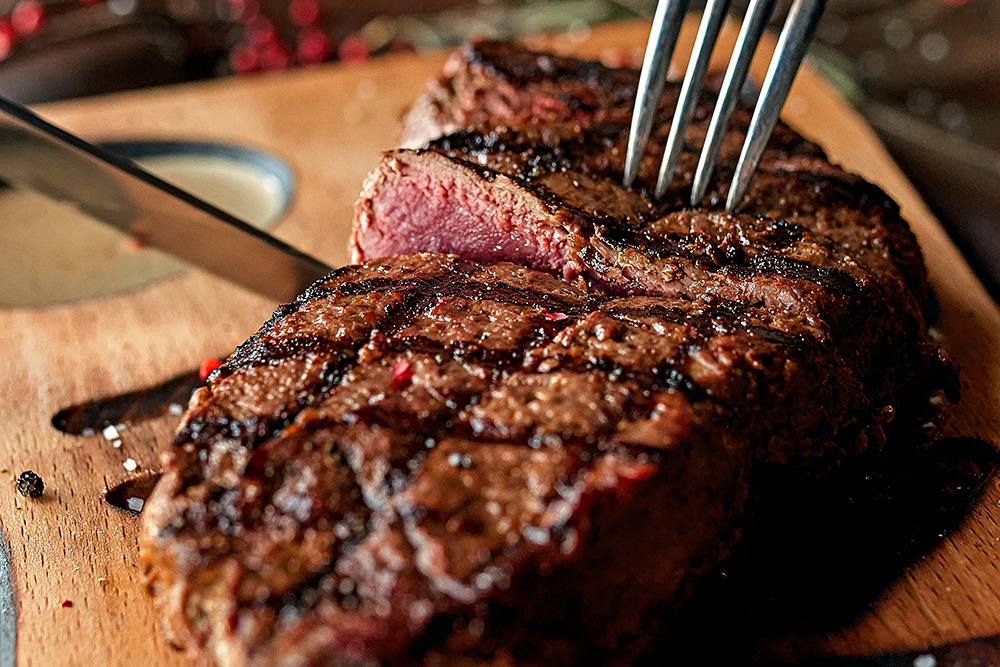
PHOTO: Steak. (Adobe Stock │ #276888833 – vladimirkolens)