Strategies to consider when dealing with drought, cow herds
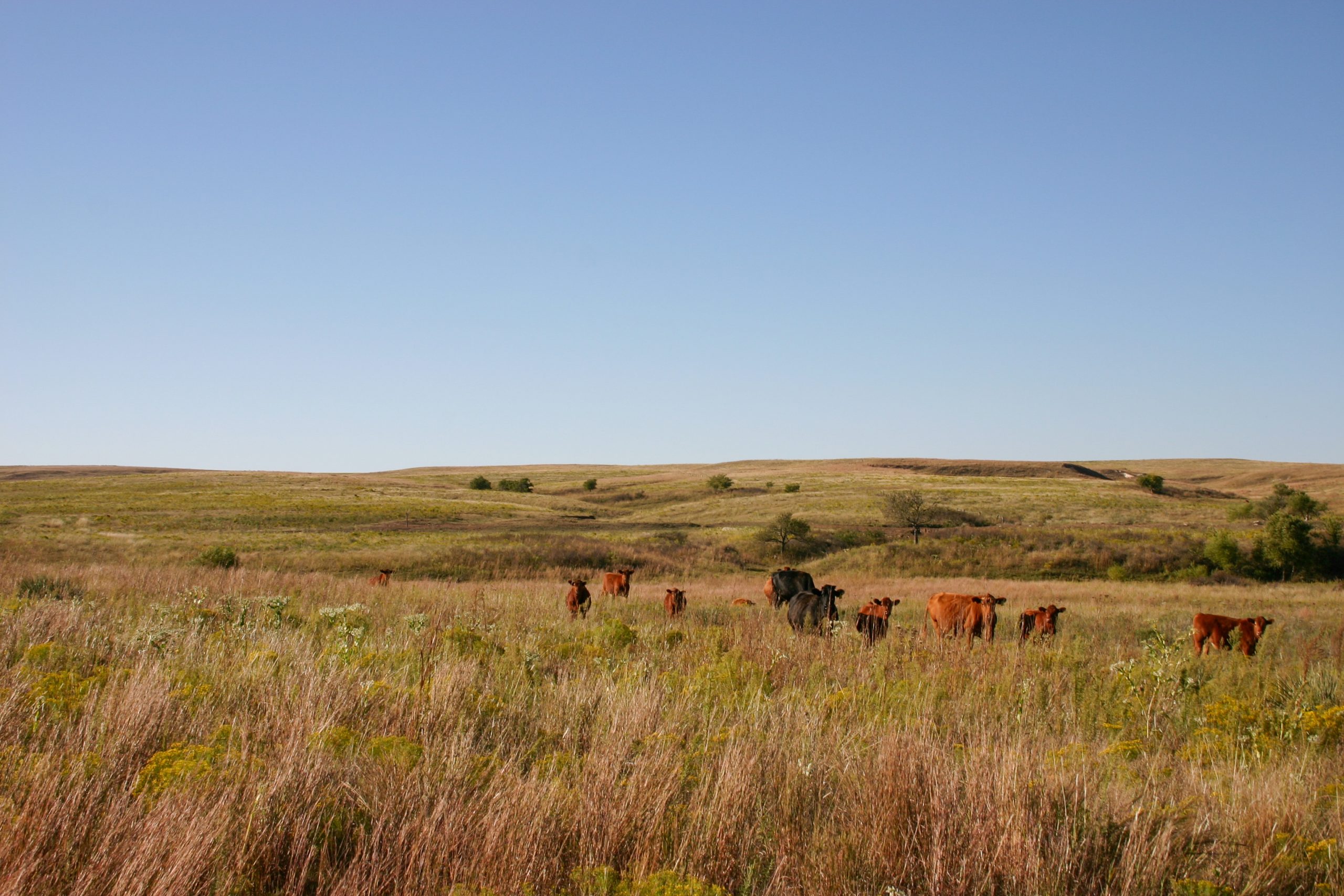
There’s likely more areas suffering from drought conditions than not by looking at the U.S. Drought Monitor at any time in the last few months.
Colorado State University Agricultural Economist John Ritten told attendees at a recent Extension Livestock and Forage Grower Update, they could either be proactive or reactive when it comes to strategies for dealing with drought on rangelands.
Ritten spent 15 years at the University of Wyoming primarily studying extensive range systems with cow-calf and yearling operations.
Ritten said it’s often easier to think about someone else’s operation and situation when learning about something new. In southeastern Wyoming (which could be comparable to northeastern Colorado), he found forage response was nonlinear in terms of precipitation events.
“In that southeast corner of Wyoming, it really is April, May and June precipitation that drives the majority of forage production in any given year,” he said.
Areas in the eastern Plains might see this too, but at the point of his late February webinar, it was too early to estimate precipitation.
“The main point here is that if we get above average years in terms of precipitation, the benefit in terms of additional forage is not as great as the negative implications of dry years,” Ritten said. “That nonlinear response really drives a lot of impacts, specifically to cow-calf operations.”
Developing a plan
As an agricultural economist, he works with budgeting—enterprise and partial budgets.
“We always talk about averages, and there really is no such thing as average,” he said. “I think we as economists do really poor job of helping people make long-term plans.”
West of Cheyenne, Wyoming, researchers have gathered 40 years of actual precipitation data and mapped into actual forage production, Ritten said.
“We need to understand variability in timing of annual precipitation and the resulting forage production,” he said. “When we start to think about specifically long-term ranch planning, and we go from wet to dry to wet to dry to wet to dry, and if we try to chase forage supply by altering our herds demand, we can pretty easily go broke,”
Ritten said buying and selling cows is a pretty good way to lose money if ranchers fail to see them as capital assets.
“How do we think about this? What are we going to do this year? We’re going to do the long term for our operation?” he said. “I always try to challenge people to stop thinking of cows, as just cows. Think of it as a manufacturing plant.”
Cows turn the raw feedstuffs into something tangible.
“What we’re really doing is we’re making money off of their production,” he said. “It’s not the cows that make us money, it’s their calves, and calves are worth a pretty penny right now.”
Cost considerations
Ranchers need to think about what impacts their costs and returns over time and noting feed prices and their impact over time.
“From a drought perspective, specifically, when I’m thinking about weather, most of the time, we talk more about drought, but also on the wetter years, that’s really going to impact the cost of our profit,” he said. “It’s going to either going to have added cost because I have to bring in some hay, some alternative feeds, or I need to lease some pasture somewhere else and move my animals to that location.”
In the years when there’s a little extra precipitation or extra forage production, winter feeding could be delayed.
“It could actually have a decrease in my costs if I do have a more favorable weather year,” he said. “But really, and I think this is where a lot of producers in Wyoming didn’t think enough about long-term forecast, is that prices really impact my revenues.”
Ritten said the 70-year low in cattle inventory numbers has impacted prices throughout the industry.
“When we make these decisions, we understand how my decisions are going to impact my revenues over time, and that really depends on where we’re in the price cycle,” he said. “Any sort of drought response that I evaluate with producers, I want to understand what’s going on to both costs and revenues.”
What to think about
There’s not going to be a single answer that’s a superior response for any drought, so why do producers care about price forecasts? When Ritten graduated from CSU he went to Wyoming just as they were coming out of a prolonged drought period. He heard consistently from ranchers when they sold cows for low prices.
“Then when they built back their herd, some of them did buy in some breeding females, but most producers retained heifers,” he said. “And they sold cows that were at the low point in the price cycle, and they retained heifer calves that were at a higher point.”
Financial advisers are likely going to tell a person to not buy high and sell low, but that’s exactly what happened in the case Ritten described.
“I would have had some maybe different strategies based on that, again, a combination of weather outcomes and prices,” he said. “It really is this interaction, and where are we now? Where do you think we’re going to go?”
Three considerations
To get through a drought period, Ritten found ranchers who managed to stay in business did three things right.
Sometimes they made a decision to sell some cows to keep their cash flow going.
The second commonly used strategy was to bring feed in and not putting the animals into a dry lot situation. The third was a smaller percentage of producers who just weaned calves early.
Many producers at that point hadn’t really adopted more proactive strategies yet, but were talking about it. Since then, many have changed their tune.
“We actually have seen some producers be more proactive in their response to drought,” he said. “They actually started actively changing their herd makeup in anticipation of the next drought, because much like Colorado right now, the next drought is coming, this is it’s not a matter of if, it’s a matter of when.”
Instead of building back with more heifer replacements to turn into cows; they started running stockers to take advantage of those years when there was more forage available, rather than to chase the grass with malice on cows.
Ritten said there’s three periods to consider when evaluating different responses when looking at a cow herd and drought. The first is liquidation.
“I’m going to sell some cows this year because it’s dry, like what happens before that drought, right before I had that trigger,” he said. “I’m stocked at near full capacity, whatever that means for you. I’ve fully allocated my forage supply to my herd, and so I’m taking advantage of all the grass that’s out there, and the average, or kind of expected year when that drought happens, I sell cows.”
Selling gives a pretty significant increase in cash flow during drought.
“I’ve got a little bit of financial stability to get through,” he said. “The biggest challenges is when that post-drought happens, when the drought finally breaks, and again, in Wyoming, most people retain from within and so I’ve actually decreased my revenues.”
Compare that to bringing in supplemental feed right before drought happens, and the scenario ends up being nearly identical.
“The difference is, during that drought instead of increasing my revenues by selling some of those cull cows that I probably would cull before the end of their productive life, I’ve actually increased my costs,” Ritten said. “Again, whether that’s purchased feed or rented pasture, I’m probably going to liquidate a few cows, but not as many. But really, again, the difference is, if I liquidate during the drought, I have more money. If I’m buying feed, I have less money on hand.”
The benefit of the feeding strategy is to get more revenue sooner. Once the drought breaks, there’s a more stable, bigger cow herd.
“I have more calves to go to market,” he said.
Forage outcomes can depend on a couple of factors, and which one is the best choice, can depend on how long the drought is/was, and the timeframe it will take to get through the year.
“Are you planning for five years or you’re planning for 50 years,” he said. “Is this a long-term decision? Are you really worried about getting through or being in a better position after the drought? And it really turns out that the price cycle has the biggest impact on which strategy was better between those two.”
If a rancher does decide to fully liquidate and that means they’re no longer going to ranch, it might not be “a terrible year to do it,” Ritten said.
“Given those cull prices,” he said. “Summer feeding is really just an inventory effect. I’m keeping more inventory on hand. I’m keeping my production, my manufacturing facilities operational.”
That way output is still produced, and if a producer expects to increase capacity in the coming years, it might be more profitable.
“If I think prices are going to drop off, regardless, we need to match our animal needs to available forage,” he said. “We can impact forage supply. We can impact forage demand. And if you do have more grass then your cows are going to eat, retain some ownership, bring in some stockers.”
Risk tolerance thoughts
If there’s some risk tolerance, Ritten suggested renting some pasture to a neighbor that has more cows than they can feed. Or give the range a break.
“It probably wouldn’t hurt to maybe decrease pressure,” he said. “Let that range recover a little bit.”
What about this year? Ritten said to question the goal or plan for the year. Time matters. Are you trying to just “get through” the year? Are you trying to position yourself for the next five years?
“And how much risk are you comfortable with? I’m also going to say how good do you know your banker? How much are they going to trust you with your decisions?” he said.
Take a look at weather and price forecasts. The 10-year forecast out of the University of Missouri Food and Policy Research Institute forecasts for prices
“We expect prices to remain pretty strong. We’re going to have a couple more years of probably increases again based on that decrease in national herd level,” Ritten said. “But even as we rebuild, we’re not going to go back to where we were 10 years ago, right? So prices are going to remain strong.”
What should be in your plan? Ritten said to look at equity and how confident you are in the forecasts.
“My strategy is right now, inventory your resources. What do you have? Identify important dates. How long can I survive on what I have?” he said. “And then set clear triggers and write them down and stick to them. Whatever that looks like.”
Even if there’s rain in time, and the grass does come, Ritten said the best time to plan for drought is coming out of one because “you remember exactly what those implications were.”
“Remember, forage production is never average, and we need to understand how we get through these ups and downs,” he said.
Kylene Scott can be reached at 620-227-1804 or [email protected].