House approves farm bill on a bipartisan vote
The U.S. House of Representatives approved a farm bill, known as the Farm, Food, and National Security Act of 2026, on a 224 to 200 bipartisan vote April 30.
House Agriculture Committee Chairman Glenn “GT” Thompson, R-PA, said the legislation addresses challenges farmers and ranchers face. The last farm bill was approved in 2018. Since the five-year legislation expired, Congress has renewed it by one-year extensions on a yearly basis.
“It is clearer every day that farm country needs updated policy that reflects current challenges, and the 2026 farm bill fills that gap. I look forward to seeing Chairman (John) Boozman and the Senate make progress on this important legislation so we can get the Farm, Food, and National Security Act of 2026 sent to President Trump’s desk as soon as possible.
“I especially want to thank all parties who were involved in the negotiations that allowed the farm bill to proceed to the floor and secure a future vote on year-round E15. Members of the Biofuels Caucus are tireless champions for rural America, and I look forward to joining them May 13 in advancing that important legislation.”
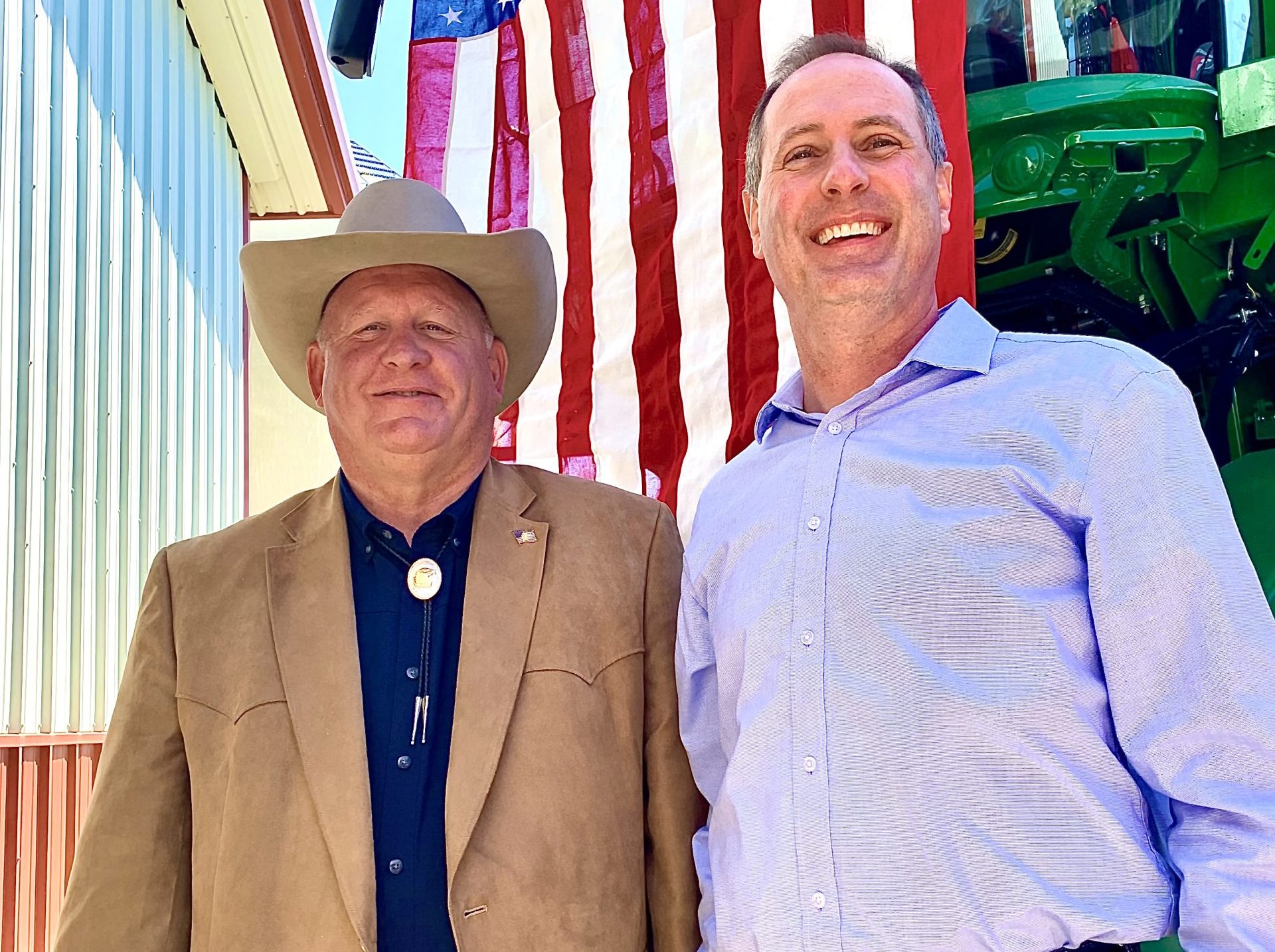
U.S. Rep. Tracey Mann, R-KS, (pictured above with GT Thompson) who is chairman of the Livestock, Dairy, and Poultry Subcommittee, said the legislation authorizes vital farm programs across all 12 titles for the next five years and will provide certainty for the ag sector, strengthen rural communities and keep America’s food supply secure. He said it was a win for the American farmer, rancher and consumer.
“This legislation follows years of bipartisan work and listening sessions around the country, hearing from producers like those in the Big First about the challenges they face every day,” Mann said. “It builds on the foundation we laid in the Working Families Tax Cuts and finishes the job by reauthorizing key farm bill programs, expanding market access, improving access to credit and investing in rural infrastructure like broadband, health care and water systems.”
Mann said legislation he authored, the Kansas-born Food for Peace program, will be permanent in the U.S. Department of Agriculture.
Among other provisions, the farm bill:
• Completes overdue reauthorization of key farm bill programs across conservation, rural development, research, trade, energy and specialty crops
• Expands market access for U.S. agriculture by strengthening export promotion programs and reducing trade barriers
• Improves access to credit for farmers and ranchers while supporting young and beginning producers
• Invests in rural communities through stronger broadband, rural health care access, water infrastructure and workforce development
• Promotes precision agriculture, research and innovation to keep American producers competitive
• Supports voluntary, locally led conservation programs that protect working lands without adding unnecessary regulations
U.S. Rep. Sharice Davids, D-KS, and a member of the House Agriculture Committee, was one of 14 Democrats to vote for its passage. She posted her comments on X (formerly known as Twitter).
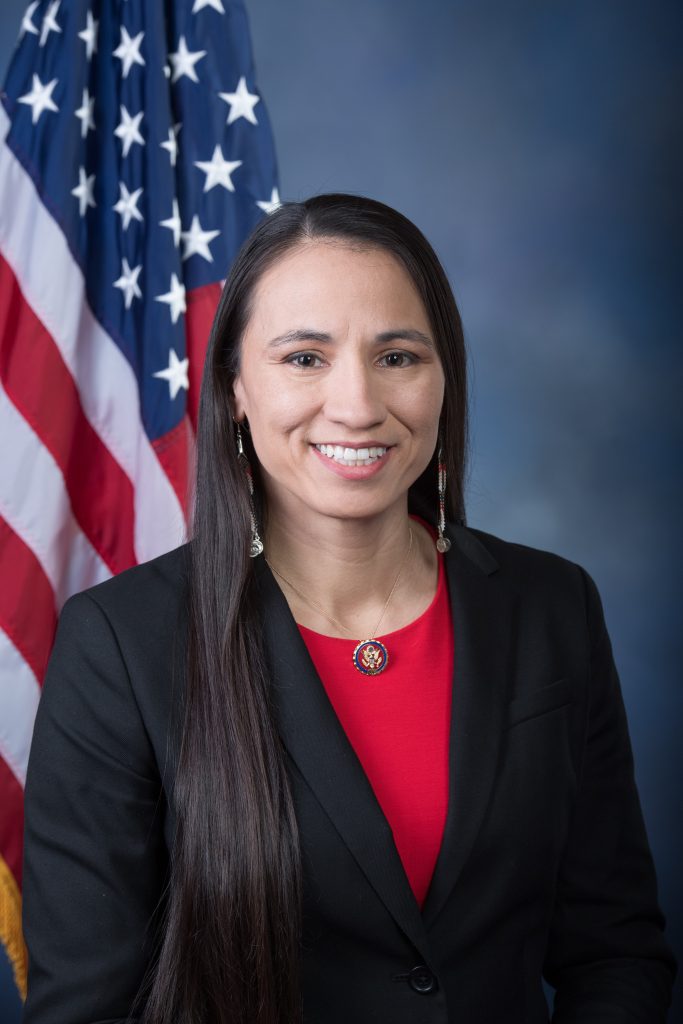
“Kansas farmers and families have been hit over and over again this past year — from unstable markets to rising input costs and the ripple effects of reckless tariffs,” Davids said. “What they need most right now is stability, not uncertainty. This bipartisan farm bill moves us toward more predictability for producers, lower costs for everyone and a system that actually works for the people feeding and fueling this country. We still have work to do to ensure no family goes hungry, but this is a step toward giving farmers and families the certainty they deserve.”
U.S. Rep. Frank Lucas, R-OK, has a unique perspective as he previously served as House Agriculture Committee chairman.

“This bill reauthorizes a suite of critical research, rural development and credit programs that will invest in our communities and create rural resiliency for decades to come. It also focuses on expanding and investing in market access programs abroad, and it ensures that voluntary conservation programs continue to reflect the needs of producers,” Lucas said. “As former chairman of the House Agriculture Committee, I have experienced firsthand what it takes to pass a comprehensive farm bill, and I commend everyone who worked so hard to get this over the finish line. I look forward to building on this success to help create a final product for President Trump to sign into law.”
National Grain and Feed Association President and CEO Mike Seyfert praised the legislation, saying it provides certainty for businesses across the grain and feed industry. He also noted the inclusion of an amendment to reauthorize the U.S. Grain Standards Act, which ensures continuity for the federal grain inspection and weighing system that underpins domestic and international confidence in U.S. grain.
A provision supported by the National Association of Wheat Growers reauthorizes the Conservation Reserve Program to preserve critical conservation tools while helping stabilize farm income. It also directs NRCS to study and report on the use of winter wheat as a cover crop, supporting innovation, soil health and resource conservation.
Ag leaders in the House indicated a vote on a bill to expand year-round consumer access to fuels with 15 percent ethanol blends, or E15, would occur in a couple of weeks.
“We look forward to working with our allies in Congress over the next two weeks to secure passage of the E15 legislation,” said National Corn Growers Association President Jed Bower. “Thanks to continued efforts on this issue from our biofuel champions, Speaker (Mike) Johnson promised a vote on E15, and we refuse to allow a handful of multimillion- and multibillion-dollar energy companies to derail our efforts. Allowing the year-round sale of E15 would help our growers by expanding ethanol sales while also saving consumers money at the pump at a time when fuel prices are on the rise.
“We are confident that when the vote is held, the E15 bill will have strong support from members on both sides of the aisle.”
American Farm Bureau Federation President Zippy Duvall said the bill’s passage was welcome news.
“After three years of extensions and eight years since a farm bill was passed, we’re grateful the House found a bipartisan path forward,” Duvall said. “Important updates to research and conservation, as well as increased loan limits and clarity on interstate commerce, will help farmers survive today’s challenges and give them the tools to thrive in the future.
“We urge the Senate to follow the House’s lead and move this important bipartisan legislation forward. Food security is national security, and investing in America’s farmers and ranchers is an investment in America’s families. We all benefit from a reliable and affordable food supply.”
National Farmers Union President Rob Larew said the bill largely continues existing farm safety net programs that do not match the scale of the economic crisis family farmers face today.
“It also maintains cuts to the nutrition safety net at a time when too many American families are struggling to make ends meet,” Larew said. “Other missed opportunities include authorizing year-round E15, restoring country-of-origin labeling, addressing rising input costs, protecting farmers and ranchers from the threat of market concentration and expanding domestic market opportunities for U.S. producers.
“Farm bill policy must evolve to meet the realities of today’s economy, and while this bill provides some needed certainty, it does not fully address what is at stake. We look forward to working with the Senate to strengthen this bill and deliver more effective safety nets for farmers and families.”
Boozman, R-Arkansas, said the House passing “Farm Bill 2.0” on a bipartisan basis was a testament to Thompson’s leadership and called it a significant achievement.
“This is an important step toward updating long-overdue policies that support our farm families and strengthen rural communities,” Boozman said. “We’ve put more farm in the farm bill through the Working Families Tax Cuts, and this legislation builds on that success. I remain committed to working with my colleagues in the Senate to continue this momentum and deliver Farm Bill 2.0 to the president’s desk to be signed into law. I look forward to releasing legislative text in the coming weeks.”
Dave Bergmeier can be reached at 620-227-1822 or [email protected].