The H5N1 strain of the Highly Pathogenic Avian Influenza continues to infect poultry in Arkansas and across the country. Extension offers both online webinars and in-person trainings designed to help poultry owners understand the virus and take preventive measures. Trainings are led by Dr. Dustan Clark, extension poultry health veterinarian for the University of Arkansas Division of Agriculture and associate director of the university’s Center of Excellence for Poultry Science.
2026 Online Trainings
May 19 — Poultry Management for Spring/Summer, Dr. Zac Williams, Extension Specialist – Poultry Husbandry and Management, University of Arkansas Division of Agriculture, 10 a.m.
Register: https://uada.zoom.us/webinar/register/WN_Ay-thJvFTjOmOp0ycwv44w
May 21 — Histomoniasis in Poultry: Bridging Field Insights, Diagnostics, and Prevention Strategies, Dr. Vijay Durairaj, Huvepharma, Inc., 6 p.m.
Register: https://uada.zoom.us/webinar/register/WN_UTclg9ioS-WAXoOmZZ3XAQ
2026 Recorded Webinars
May 12 —Zoonotic Diseases and Hazard of Poultry Production, Dr. Barry Whitworth, Oklahoma State University Extension, 6 p.m.
May 6 — How the Arkansas Department of Agriculture Supports Poultry Health, Dr. Andrew Fidler, Arkansas State Veterinarian
May 5 — Mortality Disposal as Part of Biosecurity. Dr. Zac Williams, Extension Specialist – Poultry Husbandry and Management, University of Arkansas Division of Agriculture, 6 p.m.
April 30 — Breeding and Hatching Principles in Hobby and Backyard Poultry Flocks, Dr. Sara Orlowski-Workman, extension specialist and associate professor, University of Arkansas Poultry Science Department
April 21 — Science of Happy Flocks, Shawna Weimer, assistant professor, University of Arkansas Poultry Science Department
April 7 — Poultry Coccidiosis, Aaron Forga and Taylor Schubauer, University of Arkansas Poultry Science Department
April 2 — Common Internal Parasites of Poultry, Dr. Dustan Clark, UADA
March 31 — Common External Parasites of Poultry. Dr. Barry Whitworth, senior extension specialist, Oklahoma State University Department of Animal and Food Sciences
March 24 — Poultry Disease Concerns in Commercial and Hobby/Backyard Flocks – Dr. Dustan Clark, Extension Poultry Veterinarian
Jan. 27 — Healthy Coops, Healthy People: A One Health Look at Bird Flu Risks in Humans
Jan. 22 — Biosecurity Practices for Poultry Diseases Control in Backyard/Hobby Flocks
Jan. 21 — Rodent Control
Jan. 20 — Sick Birds? There’s a Test for That!
2026 In-person trainings
June 8 — Poultry Lunch and Learn: Diseases and Biosecurity, 11:45 a.m.-2 p.m., Washington County Extension Office, 2536 N. McConnell Ave., Fayetteville, AR
Registration link: https://uada.formstack.com/forms/diseases__biosecurity
Registration deadline: June 7. Cost is $30, snacks and lunch provided.
Schedule
11:45 am -1 pm —Sign-in and unch
1 p.m. — Welcome and announcements
12:10-12:50 pm — Avian Metapneumovirus, Dr. Cole Crumpacker, Butterball
12:50-1:20 pm — Science of Biosecurity, Dr. Zac Williams, UADA
1:20-2 pm — Sample collection for lab submission, Dr. Gordon Whitbeck, Whitbeck Labs
How do I keep my birds safe from avian flu?
Use these best practices:
- Keep your birds in covered pens to prevent exposure to wild or migratory birds.
- Repair any holes or tears in the pen as soon as detected to prevent wild birds or rodents from entering.
- Practice good vermin control. Mice and rats can carry diseases that can infect your birds. They can also attract snakes. Fly, buffalo gnat, and mosquito control are also important since these insects can carry and spread diseases. Wild birds should be excluded from your poultry pens as well. Secure poultry pens are necessary to exclude other wildlife, which may be predators of your poultry or could bring in diseases. Although not vermin, pets should also be kept out of the poultry pens.
- Restrict access to any source of water that may have been contaminated by wild birds.
- If you visit an area where there are waterfowl (such as ponds, lakes, and hunting) or areas with poultry, change your clothes and shoes and wash your hands before checking on your own birds.
- Clean and disinfect. Keep poultry facilities clean and free of weeds, debris, spilled feed etc. In addition, clean areas around your poultry pens and facilities.
- Quarantine any new birds for a minimum of 30 days (6 weeks is better). This should also be done after your own bird returns from a poultry exhibit. Admittedly, poultry exhibitors are trying to place at a show and a sick bird does not win. Unfortunately, it is possible that a bird could still be incubating a disease and some diseases cause few signs unless a bird becomes stressed.
- Keep unnecessary visitors away. Visitors could accidentally contaminate your poultry.
- Keep a logbook or sign-in sheet for all necessary visitors coming onto your property. If they have been in contact with other birds, DO NOT let them come in contact with your flock.
- Have all necessary visitors clean their shoes/boots and disinfect before visiting your poultry flock. Keeping a pair of boots for visitors to wear and a pair for you wear just around your birds are even better.
- Keep your poultry pens and facilities locked to prevent access.
- Do not borrow equipment (crates, nest boxes, cages, etc) since they could be contaminated with feces contain disease organisms. If that is not possible, thoroughly clean and disinfect the equipment before taking it onto your premise and before and after usage. Please be advised that the next step to control disease may involve a quarantine of your premise.
For questions on poultry diseases, care, and husbandry contact your County Extension office or contact the numbers listed below:
- Terry Conger, DVM, Poultry Health /Epidemiologist: [email protected] , 501-224-9515
- John G. Nilz, DVM, Arkansas State Veterinarian, [email protected], 501-297-2250
- Arkansas Dept of Agriculture Livestock and Poultry Division, 501-225-1598
- Dustan Clark, DVM, Arkansas Extension Poultry Veterinarian, UA Division of Agriculture, [email protected], 479-957-4245
What is avian influenza?
Avian Influenza, commonly known as “bird flu” or “AI,” is an infectious disease of birds caused by type A Influenza viruses. The disease is carried by many wild bird species including migratory waterfowl like ducks and geese, which show few if any clinical signs of the disease. Influenza in birds is very contagious and can cause severe illness and death in domestic species such as chickens and turkeys.
How infectious is it?
The virus is also classified by pathogenicity — the ability to cause disease in domestic chickens. There are two types of pathogenicity: low and high. Low pathogenic viruses usually do not cause illness whereas highly pathogenic viruses spread rapidly and cause high mortality in poultry. The types of Influenza viruses of greatest concern are the highly pathogenic and any H5 and H7 virus, since they have the ability to change from low pathogenic to high pathogenic.
What are the symptoms of avian influenza in poultry?
Avian Influenza has a variable incubation period in birds depending on the virus dose, poultry species infected, route of exposure, and several other factors. The symptoms exhibited by an infected bird also vary and depend on the pathogenicity of the virus.
Some of the possible symptoms are:
- depression
- diarrhea
- dehydration
- appetite loss
- weight loss
- huddling
- drop in egg production
- respiratory symptoms such as cough, sneeze, and sinusitis
Lesions that could be observed include:
- a bloody nasal discharge
- facial swelling
- blue discoloration of the face
- under-the-skin hemorrhaging
- tracheal inflammation
- nasal inflammation
- hemorrhages on the shanks and in the proventriculus, which is part of the bird’s digestive system
There is no acceptable or practical treatment for poultry infected with high pathogenic avian influenza.
Can highly pathogenic avian influenza (HPAI) affect humans?
The U.S. Centers for Disease Control and Prevention (CDC) reported Jan. 6, 2025, that a Louisiana resident who had been hospitalized with severe avian influenza A(H5N1) illness (“H5N1 bird flu”) died. This is the first person in the United States who has died as a result of an H5 infection. While tragic, a death from H5N1 bird flu in the United States is not unexpected because of the known potential for infection with these viruses to cause severe illness and death. As of Jan. 6, 2025, there have been 66 confirmed human cases of H5N1 bird flu in the United States since 2024 and 67 since 2022. Outside the United States, more than 950 cases of H5N1 bird flu have been reported to the World Health Organization; about half of those have resulted in death.
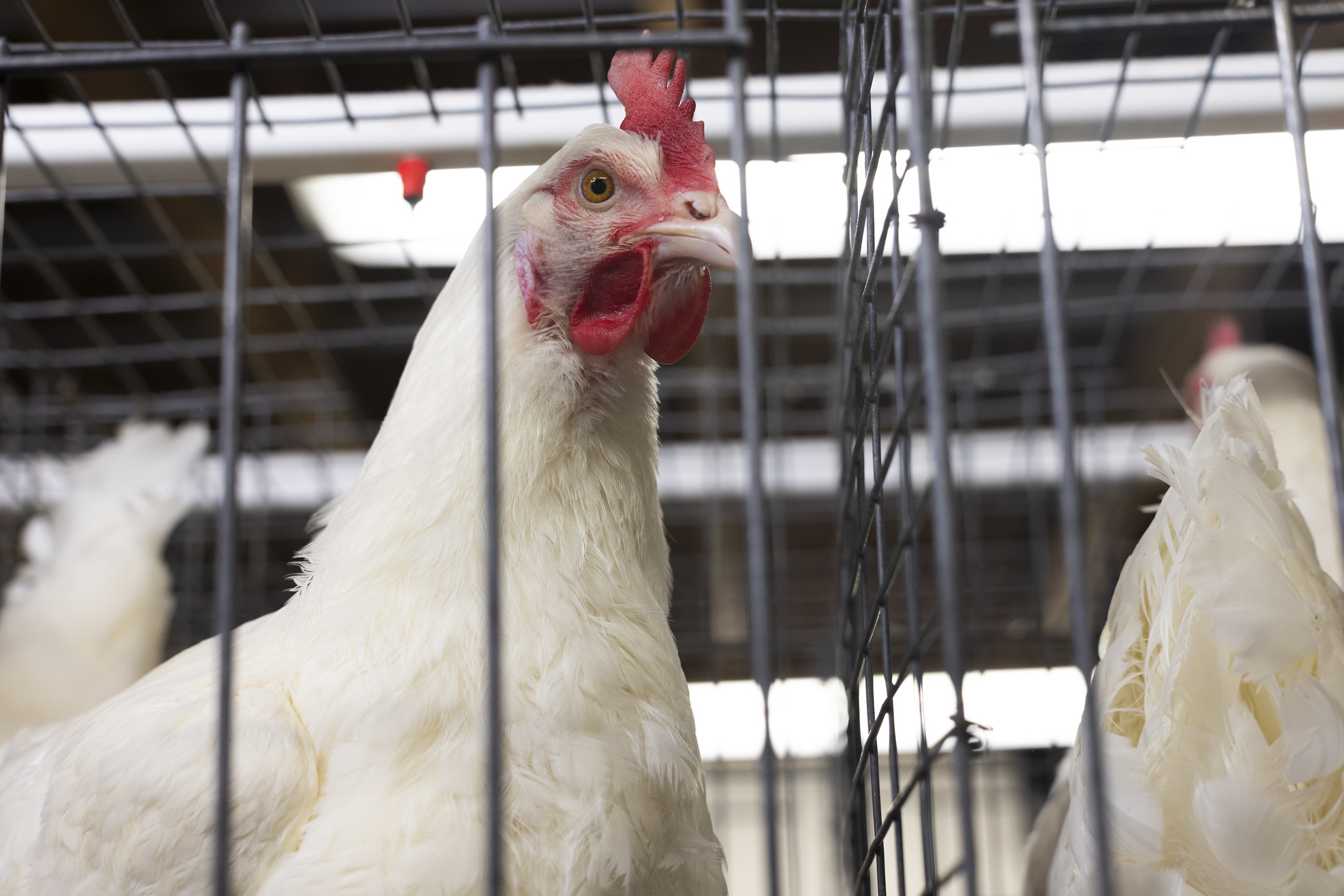
Chicken. (Photo courtesy of the University of Arkansas Extension)