Nebraska beef producers facing tough decisions, challenging year
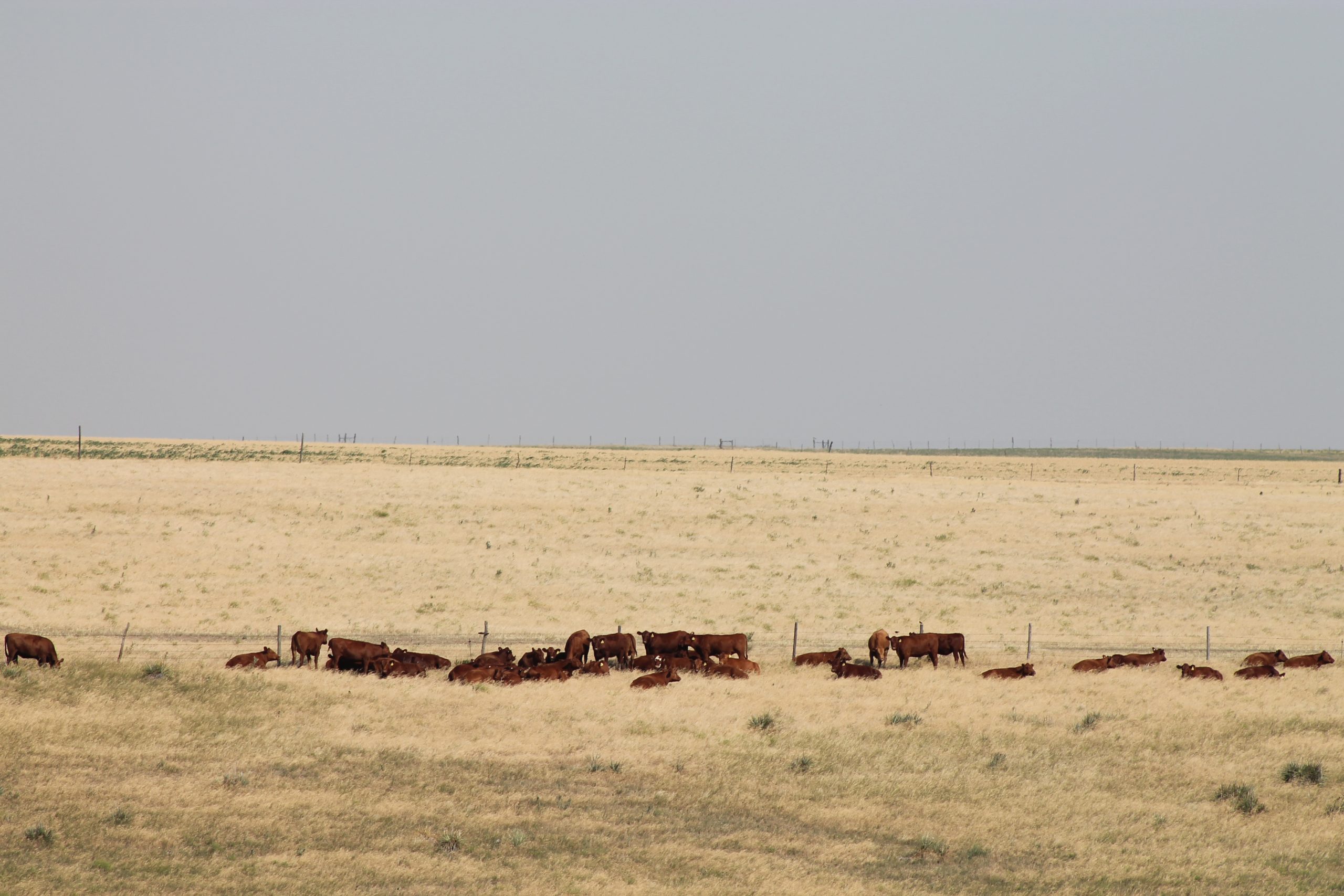
Beef producers in western Nebraska have been through it all in 2026. Drought, relentless wind, heat, wildfires and severe weather. For many, they’re having to make some tough decisions about the future of the ranch.
Aaron Berger, beef systems Extension educator with the University of Nebraska is based out of Kimball, Nebraska, in the Panhandle and he recently discussed some strategies for cow-calf producers thinking about rebuilding the herd.
The National Drought Monitor has shown for western Nebraska, eastern Wyoming and southwest South Dakota, for some time has been in the midst of the grip of drought. Many areas are rated in severe drought (D2) to exceptional drought (D4) levels and have been for many months.
“For folks that I work with here, some guys who’ve lived here their whole lives—70-, 80-years old, tell me they’ve never seen it like this,” he said. “We still look like winter here, where I’m at, it’s not even greened up at all. It’s totally brown.”
Other areas have faced recent wildfires, Berger said, but there has been some rain to be had, and chances are still in the forecast.
April, May and June precipitation in Kimball usually the region has grown 70 to 80% of its forage, which is perennial grassland .
“We’re just going to take some time to heal up,” he said.
Suggestions
Berger said the first thing to do to get a handle on the situation with a cowherd is to ask what the current financial situation is like.
“There’s been some good years in the cow-calf sector. There’s some folks that financially have some equity; they’ve been able to pay down some debt,” he said. “But that having been said, the early 2020s were not great in cow-calf sector. Those were some pretty tough times.”
In addition, input costs have risen rapidly in the last year. Berger said producers should have a conversation with their lender and talk scenarios and options.
Second, Berger said to assess water supplies where the herd is located. Where he’s at in Nebraska, there’s readily available groundwater; however, points west or north, the water may not be there since they rely on dams and streams.
“In some cases, those are just not going to be there, even if we get some thunderstorm rains. We really need winter snow, and some of those things to recharge that part of where I’m located in the south Panhandle,” he said. “We’re dependent on river water for irrigation, and that has been severely reduced, and so that’s also going to impact feed resources.”
It’s also important to inventory what feed you have on hand.
“We’ve got to figure out our feed budget, so to speak,” he said. “What do we have in inventory? What do we think we’ll have in inventory? What can we go out and purchase?”
Berger isn’t confident that people in his area will be able to turn cattle out to graze for another 13 months or more. It’s so dry in the Nebraska Panhandle that some of the grasses will need time next spring to grow, if they even come back at all.
“We’re going to see some mortality on some of our native rangeland plants, just because it’s been so dry, and it’s going to take some time to heal those up,” he said. “We really got to be thinking about at least a year out, sometimes maybe longer before we’re going to be able to use some of these perennial pastures and range land.”
Where it’s most severe, producers are going to have to think about their ability to purchase feed. Some areas might have access to crop residues, and those acres need to be secured sooner rather than later.
“We’ve got a lot of irrigated corn acres in Nebraska. I joke that corn stock grazing is really our competitive advantage here with our irrigated corn,” he said. “If I know I can get to corn stalks, which may be available mid-October, that’s a totally different scenario than if I’m in the High Plains region, and I’m not really going to be able to grow much feed till next spring and not going to be able to graze it till then.”
Berger said to look at equipment and facilities too. If there’s access to a feed wagon or a truck that’s part of your system, that leads to a “totally different set of resources” than if a producer is on the High Plains and has a bale processor and a cake feeder.
“And what I can do with those two things versus what I can do with a fence line bunk and a feed wagon are pretty different,” he said. “That’s the other thing that I think comes into scenario right now.”
Another interesting thing for Berger is how inexpensive concentrate feeds are right now.
“When you look at our corn, you look at distillers, grains, milo, soy hull pellets, some of the concentrates, especially the corn and milo, they’re below cost production,” he said. “And so that’s an interesting scenario, because we’ve got very valuable forage resources and pretty inexpensive concentrates, at least where I’m at mid Nebraska west.”
In Berger’s region, it costs $250 to $300 a ton for new crop alfalfa hay, while annual forages are pushing $180 to $220 a ton. He said wheat straw is in the $150 a ton range.
“It’s a very interesting scenario when you look at the value of forage versus the value of some of these concentrates,” he said. “In many cases, we can haul in concentrates here on a price per unit of energy and price per unit of protein, and they’re less expensive than our forage.”
Producers either need to think about taking cattle to feed or try to bring in some concentrates to go with limited forages to stretch what’s available. They also need to think about what’s the best going forward.
“Let’s say we get 2 inches of rain tonight. How quickly does this thing turn around versus if we continue to see this drought extend through the summer into the fall,” he said. “What’s that going to do? So, I think you have to look at a best-case scenario, worst-case scenario.”
The drought comes at a time of low national cowherd numbers. But producers need to remember how productive the cowherd is now compared to 30 years ago.
“When you look at the pounds of beef produced per animal going to the rail, we’ve just started producing a lot more beef,” he said. “Record carcass weights, record carcass quality. You pay attention to the news at all, in the month of May, five out of six weeks, we had 17% of fed cattle grade prime.”
Berger said it’s incredible to think about the quality of beef being produced.
“I think the quality of the product we’ve produced has really continued to meet consumer demand, and so we continue to see just excellent demand for our product, especially as we think about competing proteins, as you think about pork and poultry, beef is continuing to capture a good percent of the consumer’s dollar,” he said. “It’s going to be interesting to see, as we think about some maybe economic headwinds and some things like that, how this beef demand continues.”
Right now, that demand is excellent, and there’s been a shift across the board with consumer demand for protein in general—whether it’s pork, poultry or dairy products.
“I’ve got two young adults and one teenager in my house, and they’re all counting grams of protein, and I think that just tells you the change and shift of what’s happened over the last 20 years,” he said. “When I was in high school and college, that wasn’t talked about at all, but now it’s ‘how much protein did you get today?’”
It’s a different environment now when it comes to protein and how consumers view them, according to Berger.
The drought has been pretty widespread in other areas of the country, and there’s been some destocking happening. In Nebraska, those cattle usually kept for stockers or yearlings have already been sold.
“We’re seeing sale barns having active sales here every week,” Berger said. “Normally, this is our slow time of year. A lot of those barns shut down for the summer, and they’re selling a lot of yearling cattle, a lot of cow-calf pairs coming to town.”
In his opinion, he doesn’t believe there will be a bigger cowherd until January 2027.
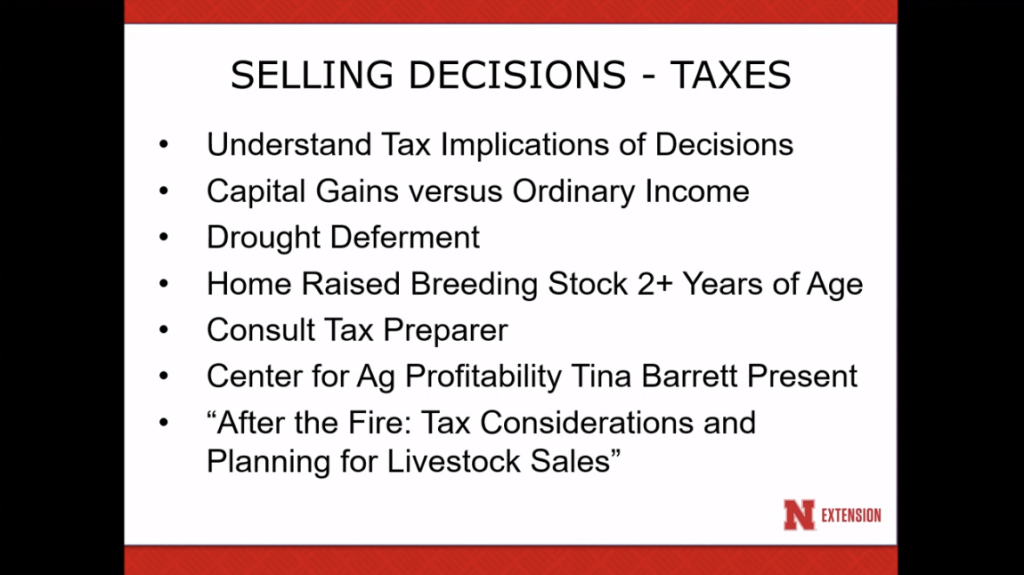
“In fact, I think we’re going to see a smaller cowherd, just because when you look at some of the major cow calf states—Texas, Oklahoma, Kansas, Nebraska, South Dakota, many of those have been impacted by drought,” he said. “So even if they were planning to restock, they probably didn’t, and in many cases they destocked. I just think we’re going to see a smaller cow herd number January one.”
The closed Mexican border is playing a role too, he said. He’s not expecting those numbers to rebound either.
“I think those cattle have been harvested now in Mexico. They’re getting that figured out,” he said. “They’re building some feeding facilities. They’re figuring out how to harvest cattle. We’re not going to get that supply of feeder cattle like we had in the past. That’s my opinion.”
Berger said there is a scenario where the U.S. has “way more” packing and feeding capacity than there are feeder cattle.
“I think we’re going to have great demand for calf production, which feeds calves into the system here for a number of years,” he said.
Producers also have to remember how slow the rebuilding potential is. A heifer calf born in 2026 isn’t going to be bred until 2027 and won’t calve until 2028. At the earliest her calf would be harvested would be 2029, maybe 2030.
Berger said producers should take a hard look at their herd and determine what animals or groups of animals can be let go. Rank them in priority of the operation and what resources are available to them.
“Make sure you know what type and kind of cow do you want,” he said. “I think there’s always a bottom end to a cowherd, and there’s also a core that you say, this is this is the kind of cow I want. These are the genetics that I want. Make sure that you have those in place.”
Take a look at management, including the calving schedule. Also review equipment and labor. Ask yourself, does the crop production match or complement what’s going on in the cowherd at the same time?
“We want to go to a later calving cow, we want to go to maybe a lower input type cow, we’re going to do more grazing, less feeding, and so the cow we have, she’s more of a feed bunk type cow, she’s not really a range and hustle cow,” he said. “This may be a time to make that shift.”
Sell those early calving cows that don’t fit the predicted or projected resources and management that will be available.
“I’m going to go out and replace those with the type and kind that I want,” Berger said. “If that’s the case, I think this may be an opportune time to do that.”
According to Berger, one of the most valuable cows or bred heifers on the ranch is the ones that are carrying heifer calves.
“I think weaned heifer calves are just super valuable as you think about trying to rebuild the cow herd,” he said. “They have some significant advantages that I think you can’t overlook, in terms of flexibility and also tax benefits, as we think about selling those versus retaining them versus selling a mature bred cow.”
Heifers also allow you to think about rebuilding the cowherd when taking advantage of sexed semen to get heifer calves.
“If I’ve got heifers in a dry lot, that’s a pretty easy place to utilize artificial insemination to utilize sex semen, we can, often be a little less in terms of conception, but if I know I want to rebuild a cow herd, those lend themselves to that really well, and I think that’s another advantage of these heifer calves,” he said.
If a producer has to sell a lot of cows this year because of drought and other conditions, this might be a time to think about shifting genetics.
“There’s some other folks out there that are having to sell heifers as well, and they’re in a drought, and so maybe there’s some folks that have some heifer calves that you want their genetics, or that’s the kind of cow you want going forward,” he said. “This may be an opportune time to trade some older, mature cows that don’t fit your resources and environment, go buy some heifer calves, put them in a dry lot somewhere, have some ownership of them, and just allow you to do some things going forward with that, in terms of your desired genetics.”
Kylene Scott can be reached at 620-227-1804 or [email protected].