New research offers practical biosecurity tools to limit poultry disease spread
Even imperfect, low-cost disinfectant practices help curb disease risk amid ongoing bird flu concerns
New research from a Texas A&M College of Agriculture and Life Sciences doctoral graduate could help producers better protect poultry flocks from disease outbreaks while reducing costs.
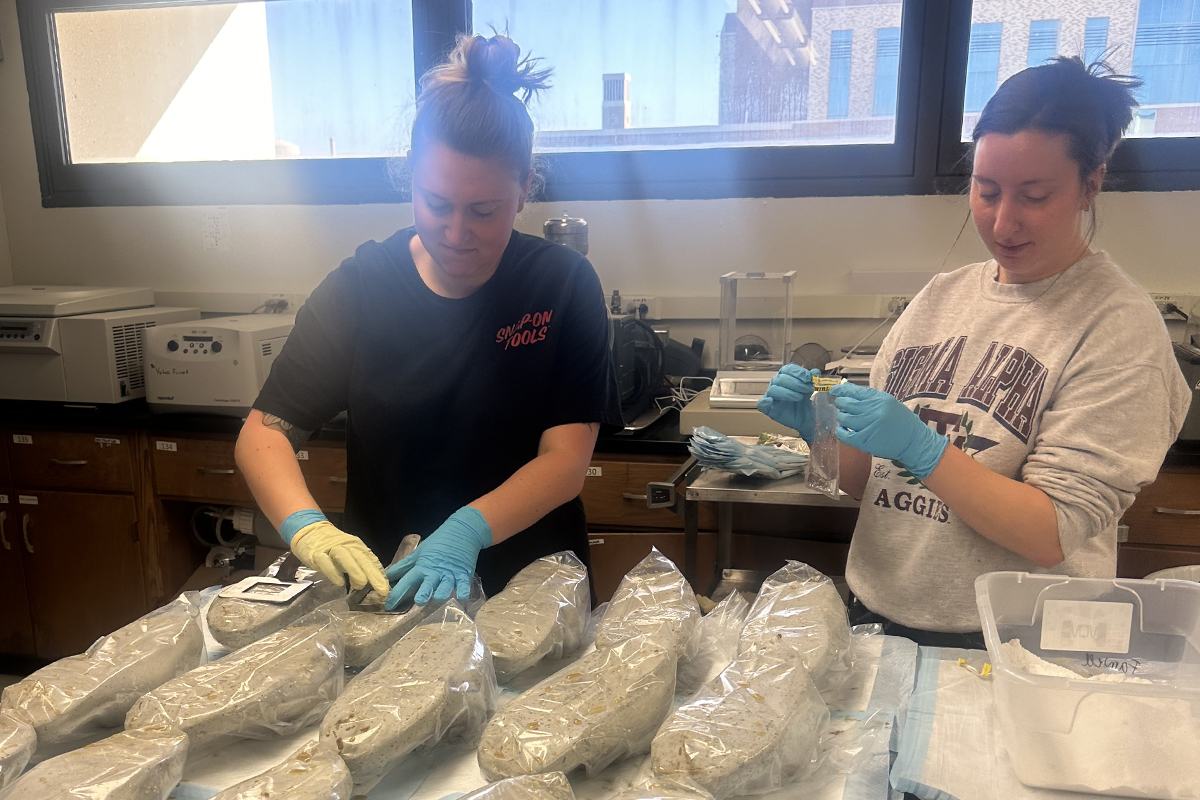
Lindsey Wythe’26, Ph.D., who recently defended her doctoral thesis in the Texas A&M Department of Poultry Science, published three studies this year examining how biosecurity practices perform under real-world farm conditions. The work was conducted in the laboratory of Morgan Farnell, Ph.D., professor, associate department head and Texas A&M AgriLife Extension Service program leader for avian microbiology and immunology.
Wythe’s research comes as the poultry industry continues to battle Highly Pathogenic Avian Influenza, HPAI, which has led to the loss of millions of birds nationwide and contributed to volatile egg and poultry prices.
Following graduation, Wythe will continue the work as a postdoctoral researcher in Farnell’s lab, studying campylobacter isolates that cause spotty liver disease in layer hens and foodborne illness in humans.
“Dr. Wythe’s research bridges the gap between theory and practice, giving poultry stakeholders clear, actionable guidance on developing and adhering to real-world biosecurity programs,” Farnell said.
Testing biosecurity in real-world conditions
Biosecurity refers to practices that prevent disease from entering or spreading within farms, such as controlling movement of people and vehicles and disinfecting equipment and footwear.
Wythe’s research focused on testing the efficiency of on-farm measures to keep pathogens out of poultry operations and limit spread through routine farm contact points.
“One of the big gaps we saw was that disinfectants are typically tested under ideal laboratory conditions,” Wythe said. “But those conditions don’t reflect what’s actually happening on farms.”
Farm environments often include dust, litter and manure, which can reduce disinfectant effectiveness. Workers also face time constraints that make strict protocols difficult to follow.
Her research asked a practical question: Do these measures still work under less-than-ideal conditions?
Mapping contamination across the farm
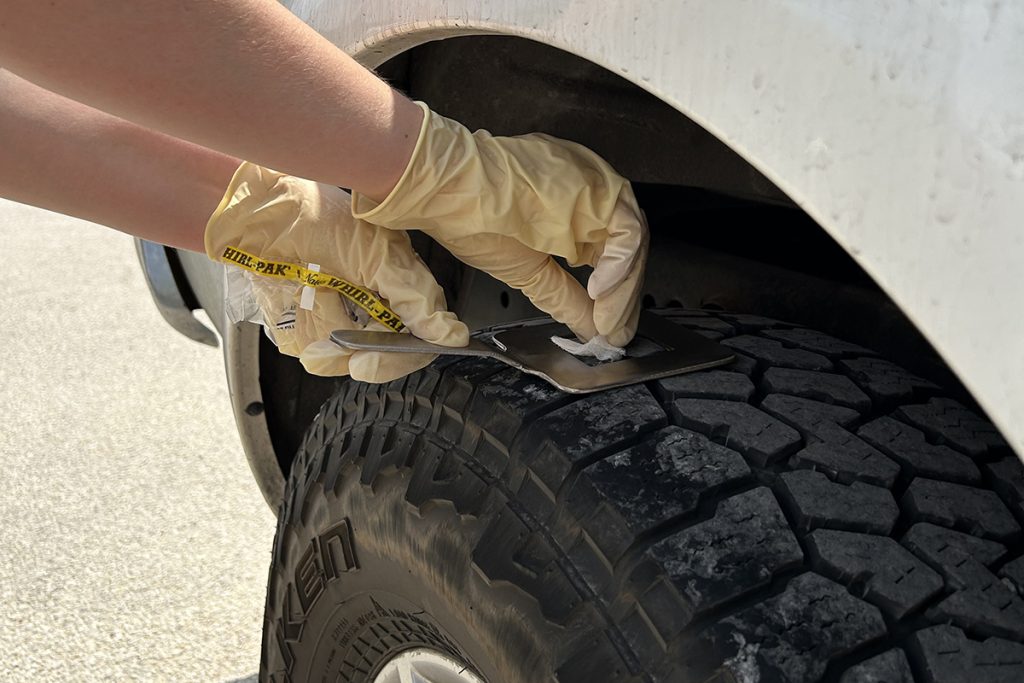
One study mapped where microbes accumulate throughout poultry operations. Researchers sampled high-contact surfaces, vehicles, air, dust and cooling systems inside broiler barns.
They identified consistent hotspots for contamination, including doorknobs, floor mats, vehicle tires, ventilation inlets and evaporative cooling reservoirs. These areas can act as pathways for disease spread if not properly managed.
The study also evaluated common interventions such as boot covers, footbaths and tire washes under realistic conditions. Results showed boot covers reduce contamination but do not eliminate it, especially when boots were not cleaned beforehand.
Footbaths and tire washes proved more effective when surfaces were cleaned first and disinfectants were given enough time to work.
Wythe said surfaces must first be clean for disinfectants to work effectively, and users should follow the recommended 10-minute contact time whenever possible.
The findings highlight the importance of targeting high-risk areas and combining multiple steps rather than relying on a single barrier.
Powdered disinfectants show promise
A second study focused on disinfecting footwear using powdered products in foot pans at entry points. Wythe found the formulations significantly reduced microbial contamination, even with short contact times and in the presence of organic material.
“I expected there might be a clear winner among the products or that shorter contact times wouldn’t be effective,” she said. “Instead, we saw consistent reductions across the board.”
Wythe said powdered disinfectants showed cost advantages. Liquid products often require frequent replacement, while powders remain effective longer in dirty conditions and may reduce both labor and supply costs.
Real-world behavior still matters
The research also points to a persistent challenge: human behavior. Workers may skip steps such as thoroughly cleaning boots before disinfection because of time pressures.
“There’s a human element to biosecurity,” Wythe said. “People are busy and trying to get through their day.”
Even so, the studies show that partial compliance can still reduce risk. Stepping through a foot pan without fully clean boots is less effective but still beneficial.
Implications for producers and consumers
Outbreaks of avian influenza can lead to complete flock losses for producers. Major regional outbreaks can disrupt supplies and lead to higher prices.
Wythe’s findings show that practical, affordable measures can reduce disease spread when applied consistently and strategically. By identifying where contamination occurs and how to interrupt those pathways, the research helps move biosecurity from theory to action, offering tools that can protect animal health and support a more stable food supply.