K-State dairy unit on path for upgrades
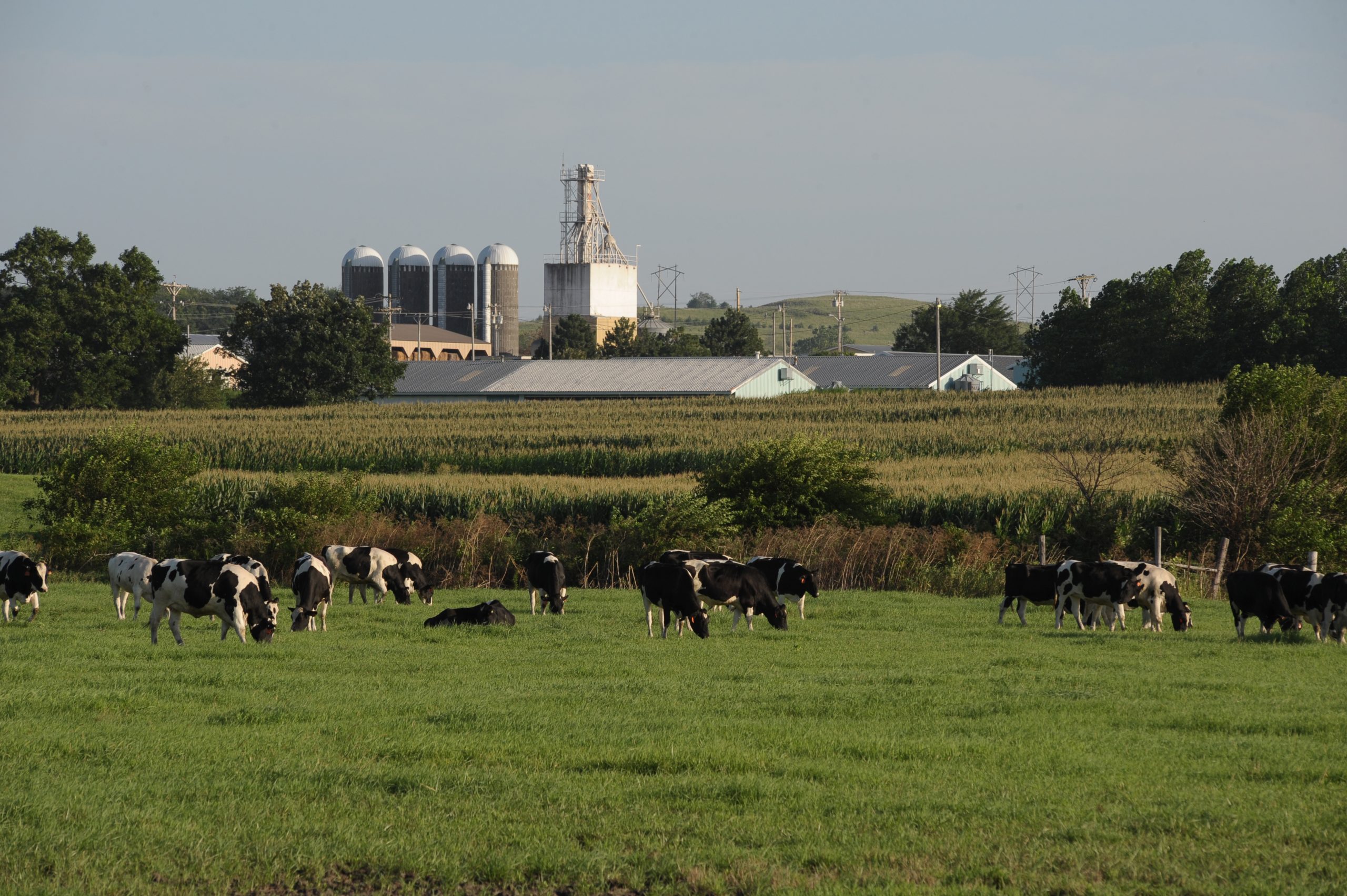
The dairy industry in Kansas has changed immensely during the last several decades. And now it’s time for an update at the university level to reflect the needs of students, potential workers and researchers.
Mike Brouk, Kansas State University professor and dairy Extension specialist, said the current dairy unit was built in 1977 and has just about reached the end of its useful life.
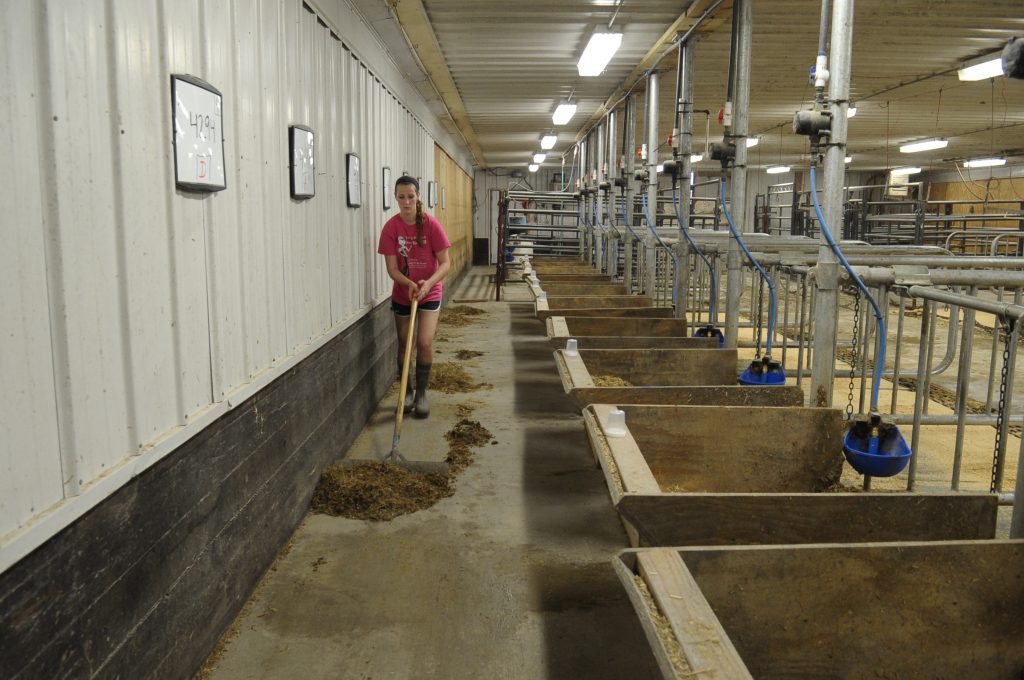
“(It’s) basically free stalls, but with the size of cows today, they’re not nearly long enough to really accommodate the cows from a cow comfort standpoint, not really much for heat abatement,” he said. “It functions basically as a research facility, teaching facility, and Extension facility.”
As one of the highest producing dairy herds in Kansas, the dairy cows that call K-State home, 250 are in the milking herd, 35 to 50 are dry depending on the tie of year and about 300 replacement heifers.
That’s based on production per cow, Brouk said. The state average per cow is around 24,600 pounds, and the K-State herd is more than 34,000 pounds.
The difference in production is variable and depends on a couple of things.
“Part of it’s genetics, part of it’s nutrition, part of it is our facility,” Brouk said. “We use some electronic tracking devices to monitor rumination, and movement, so if an animal starts to have any issue, we pick it up really quick.”
Early intervention is key in dairy herds, and the technology in the barns helps the farm stay on track.
“We weigh the milk every milking as well, so we’ve got some animal behavior data as well as milk production data to review to see if an animal’s having some issues,” he said.
Plus, Brouk said the work force at the dairy unit is very dedicated to animal care and performance.
“Between our full-time employees and our students—they do a really excellent job of looking after cow comfort and managing the cows. That’s all critical when you look at high production averages,” he said.
Timeline
Brouk said the upgrade at the facility is a little bit of a unique project in that the funding is actually being collected over a three-year period.
“So, the state passed legislation, and the governor signed it into law. Over a three-year period, the state will put up $15 million total, $5 million each year,” Brouk said. “Then the university will put up $5 million each of those three years, and then the industry needs to either have gifts in kind or financial support equal to $5 million each of those three years.”
That means with the partners it is an estimated $45 million project. Being a state project, the dairy unit project is already in process.
Brouk expects that after the June meetings there will be an announcement on the bid awarded with the design phase going through the fall.
A plan has to go back to the Legislature by the Feb. 1, and Brouk expects construction to start perhaps as early as spring. Once the engineering is complete, there will be more rounds of bids for general contractors and sub-contractors.
Picture perfect
Brouk hopes the final design can be a single facility that will replace about “seven different pieces” that’s in the current dairy.
“Everything will be under one roof,” he said. “There’ll be two different types of milking systems. We’ll have a small rotary deck, and that represents what we do with large herds, and then we’ll have two robotic boxes, so again it’s a teaching facility, so we’re trying to create a situation where we’ve got examples of what we might typically see on a dairy today.”
By having the rotary deck and the robotic boxes it allows different milking styles to be represented from a research standpoint, and that’s exciting.
“The facility is heavily utilized by the vet school for training of veterinary students as it relates to the dairy industry, and so being able to have something that’s a little more modern and a little closer to what we’d see on a commercial basis, the dairy is pretty important to the whole process,” he said. “They’ll be involved in the planning and design as well.”
Expanded research
Brouk is also hoping to create some unique research opportunities and when it comes to dairy nutrition, a section of the barn will feature individual feed intake collections.
“That basically replaces what we have in our tie stall barn now, and that’ll all be electronic, so we’ll be able to do feeding behavior for transitioning cows, as well as early lactation cows,” Brouk said. “We’ll still have some group pens where we can do some group studies, groups of 10 animals per pen, and there’s eight of those pens in the barn.”
Some of the larger groups will be used in reproductive studies, but also for teaching and research purposes.
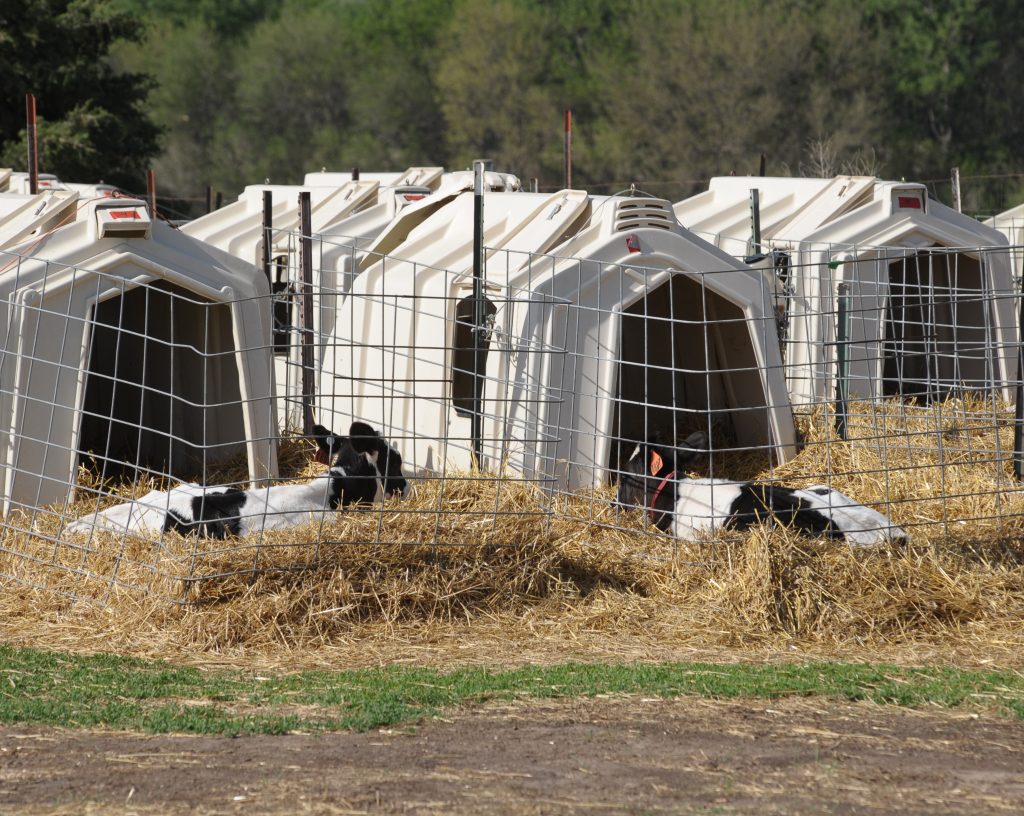
The heifer facility will be rebuilt, and according to Brouk, that will be a big help. Currently, heifer calves start out in hutches, which allows students to have the opportunity to work with animals and learn about husbandry skills.
“Our student population here in the animal science department, we’re heavily influenced by our pre-vet students in terms of numbers, and a lot of these young people are coming out of situations where they’re not coming off farms or the dairy. Sometimes this is really their first opportunity to gain some large animal experience,” he said. “We want to have a facility that really represents what they’re going to see when they, when they go out in the industry, is as veterinarians.”
Its critical veterinary students understand how the dairy works, how to work a palpation rail or headlocks, how individual animal chutes work and where to do certain tasks and when, plus having all the proper working parts of the milking parlor.
Brouk said K-State does have a dairy science certificate program, but most at the university are animal science majors who will use the new facility.
“A lot of our students that we’ve seen through the program, because the nature of our dairy industry today, many of them will choose to do a business or ag economics (degree), and then they’ll come over and take some animal science courses,” he said. “I fully support that, because we understand the business side of operating a dairy it’s critical.”
K-State students need experience and having an updated dairy unit on campus can help prepare them even more.
“Our students that work at the farm, we typically will have 25 to 30 students working on a part-time basis with us at any one time, and those students rotate,” he said. “Some of them may only be with us a semester, some of them might be with us for four or five years. They might graduate and become a full-time employee for us.”
There are a variety of students at the university and for many of the pre-vet majors, the dairy is an opportunity to gain large animal experience. The dairy science club has about 30 to 40 members in any given year, but it’s made up of all majors.
The K-State fit
When compared to other universities in the region with a dairy program, Brouk said it’s important to recognize how impressive it is K-State still has a dairy.
“Unfortunately, a lot of our universities in the High Plains region have actually lost their dairies over the last 15 to 20 years,” he said. “Colorado State doesn’t have an active dairy. The University of Nebraska does not have one. They’ve got a place where they can bring animals in and do research, but they don’t have a dedicated dairy, so with ours, we hope to be able to expand the herd a little bit.”
In the new facility, Brouk hopes to be able to milk about 350 cows and increase the research capacity, as well as teaching opportunities for both the undergrad program with animal science and the vet school.
“What will be neat is that we’ll be the only university dairy in the High Plains region that has both robotic milking and conventional style milking in the same facility,” he said. “There are some other universities that have those capabilities, but they’re in two different facilities. Ours will actually be under one roof and give us the ability to move cows back and forth if we so desire.”
K-State has a very active dairy processing program, and part of the design of the facility will be able to segregate milk from different pens.
“We can bring that milk into town and then follow that that milk through cheese or fluid milk, ice cream,” he said. “If you do a nutritional change, does that impact the quality of the dairy product that we’re going to put on the shelf and those sorts of things? There’s a lot of interest in having that kind of data today, and we’ll, we’ll have the ability to do that.”
There’s one thing that’s kind of neat for Brouk.
“When you look at a research and teaching unit, you want a good number of faculty involved. You want to have students, and you want to have facilities that really represent what’s the current norm in the dairy industry,” he said. “And you need a really good herd of cows, and young compared to a lot of our counterparts.”
Dairy industry
Brouk said the dairy industry in the region has, as a whole, been growing, but it’s been a slow climb.
“It’s been a process, and there’s been a lot of reasons why we’ve seen the dairy industry here in Kansas actually grow in a phenomenal way,” he said. “When I first moved here, our dairy industry was in a decline, and K State assembled a group of Extension specialists with expertise in nutrition and heifers and facilities, and we were fortunate to have a very talented ag engineer that was willing to spend a lot of time learning about the industry and designing dairies.”
That took some time to get the ball rolling and economic development people in western Kansas thought dairies could be a way to expand the ag economy in that region and create another market for grain and forages.
The growth of dairy operations in the region has been steady. “We’re really reaping the benefits of a new plant in Dodge City, and the need for milk there,” Brouk said.
U.S. Department of Agriculture numbers for dairy cows during the month of April this year compared to 2025, was up—187,000 in 2025 versus 234,000 in 2026. According to Brouk, there was one point two decades ago where the dairy cow number didn’t even reach the 100,000 mark.
“The growth in the last year has been pretty phenomenal. We’re the fastest growing segment of the agricultural industry here in Kansas, and we’ve made huge investments in our processing facilities,” Brouk said. “The Hilmar plant basically doubles our processing capacity here in the state.”
For many years, Kansas dairies were hauling milk to other places to make sure other plants were full, and according to Brouk, it’s now staying here.
“That has huge benefits to us in an economic standpoint,” he said. “It’s really a growing industry, and we’re going to see it continue to grow, maybe not as fast as what we have in the last year, we’re going to continue to grow.”
Kylene Scott can be reached at 620-227-1804 or [email protected].