Texas A&M AgriLife responds after New World screwworm found in Texas
Experts emphasize prevention, early detection and reporting protocols as Texas enters heightened awareness
Following the June 3 announcement from the U.S. Department of Agriculture Animal and Plant Health Inspection Service, APHIS, confirming the presence of New World screwworm, NWS, in Texas, experts across Texas A&M AgriLife are supporting state and federal agencies in their response and providing educational programming and resources to help protect livestock producers, wildlife managers, veterinarians, public health professionals and Texas families.
The USDA-APHIS confirmed the detection of a New World screwworm in a 3-week-old calf in Zavala County on June 3.
Although the parasite presents serious risks to livestock, wildlife, companion animals and, in rare instances, humans, experts emphasize that Texas is not in crisis mode but rather is entering a period of heightened awareness and coordinated response.
Texas A&M AgriLife is here for Texas
Texas A&M AgriLife Research and the Texas A&M AgriLife Extension Service have prepared educational materials, training, fact sheets, guidance documents and surveillance support to help Texans detect potential infestations early and reduce the pest’s impact.
Experts from across Texas A&M AgriLife’s agencies and the College of Agriculture and Life Sciences, including specialists in the Department of Entomology, Department of Animal Science, Department of Rangeland, Wildlife and Fisheries Management, the Texas A&M Veterinary Medical Diagnostic Laboratory, AgriLife Extension Agricultural and Environmental Safety Unit, and the AgriLife Extension Disaster Assessment and Recovery unit. The College of Veterinary Medicine and Biomedical Sciences will also play a vital role in this effort.
These experts will continue to support USDA-APHIS, the Texas Animal Health Commission, and the Texas Parks and Wildlife Department as federal and state agencies respond and manage the emergency.
Preparing for the New World screwworm
The New World screwworm is an invasive tropical fly whose larvae feed on the living tissue of warm‑blooded animals, including livestock, cattle, wildlife, pets, and in rare cases, humans and birds.
The fly lays eggs in open wounds, and untreated infestations can cause significant injury or death within a matter of days.
In preparation of the pest entering the United States, Texas A&M AgriLife experts have created and updated fact sheets and public guidance resources to help Texans understand the parasite and reduce risks.
These include resources on livestock care, wildlife monitoring, human health considerations and companion‑animal protection. These digital and print educational materials, including Spanish language resources, are available now through Texas A&M AgriLife’s New World screwworm information hub.
Resources and guidance available from Texas A&M AgriLife
- Livestock and Cattle Producers: AgriLife Extension materials provide identification tips, wound‑management practices and reporting protocols for suspected cases in cattle and other livestock.
- Wildlife Managers: A wildlife‑focused New World screwworm fact sheet outlines monitoring strategies, field reporting methods and challenges unique to free‑ranging wildlife.
- Human Health Professionals and Families: AgriLife Extension’s human‑health fact sheet explains rare but possible human myiasis cases and provides prevention practices for families and outdoor workers.
- Companion Animal Owners: Guidance for veterinarians and pet owners details how to identify early signs in dogs and cats and when to seek veterinary care.
All Texans should familiarize themselves with the available materials and report suspected cases immediately to their local veterinarian or the Texas Animal Health Commission. The most effective way to control New World screwworm is early reporting so that authorities can suppress the pest before the population gets large. For other questions, contact your county’s AgriLife Extension agent.
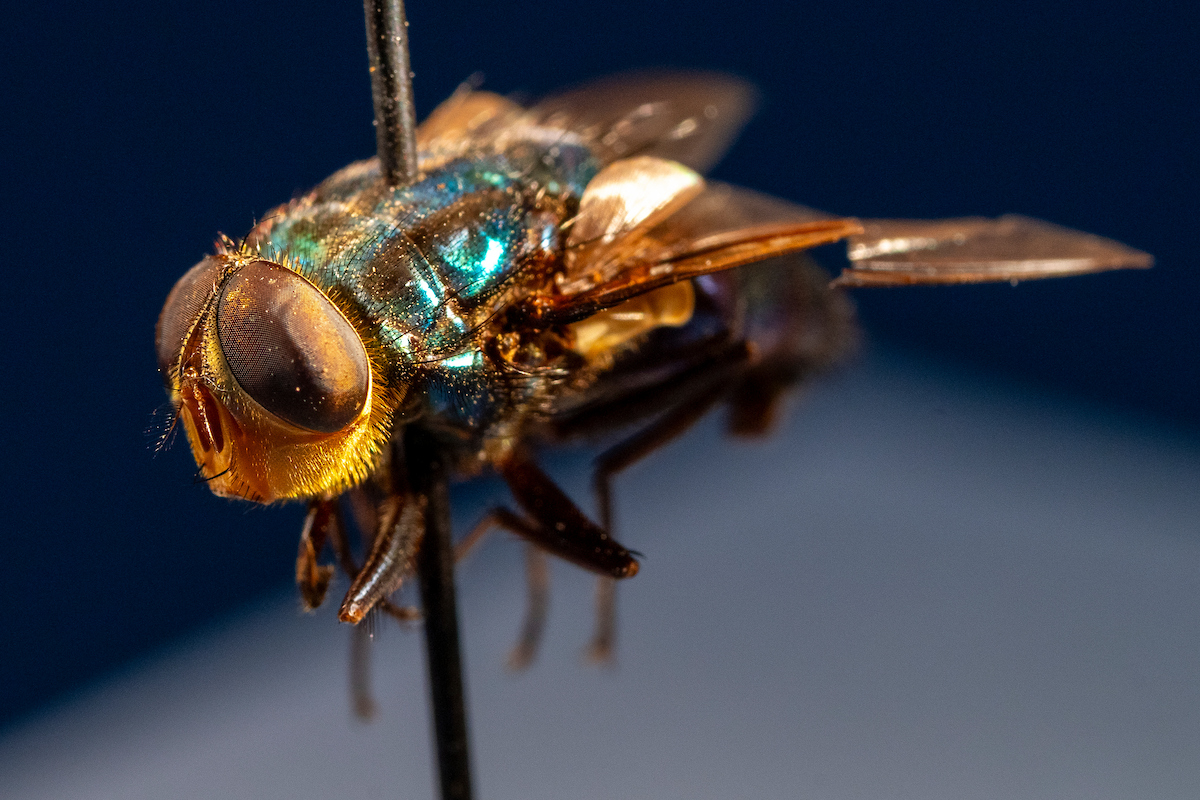
PHOTO: New World screwworm fly (Cochliomyia hominivorax) on Friday, Jun 06, 2025, in College Station, Texas. (Michael Miller/Texas A&M AgriLife)