Helping Baffin Bay: Researchers and communities team up for water quality
Unique bay receives support from Texas A&M University System and conservation coalition
The Texas Water Resources Institute, TWRI, and the Harte Research Institute, HRI, at Texas A&M University-Corpus Christi have joined forces with a group of stakeholders to preserve the economically and ecologically important Baffin Bay along Texas’ Gulf Coast.
Baffin Bay lies 45 miles south of Corpus Christi and is considered by some to be a “jewel of the Texas coast.”
“Baffin is known for its world-class fishing and for providing critical habitat for marine life, birds and wildlife,” said Shaylynn Postma, TWRI research specialist, Bryan-College Station. “Those who work, live and recreate there care deeply about the health of the system.”
With funding from state agencies and local organizations, the coalition has made significant strides toward improving water quality in and around the bay after decades of challenges. They recently came together to discuss the successful projects, including interventions in septic system management, water quality improvement, litter clean-up and habitat protection.
Ongoing efforts to help Baffin Bay
“Baffin Bay is an incredibly unique system, but it’s also a vulnerable one,” said Athena Frasca, HRI watershed restoration coordinator.
The bay’s water quality has faced mounting challenges. Fish kills, loss of seagrass, harmful algae blooms, and bacterial and nutrient contamination from the tributaries that feed into the bay have raised concerns among scientists and residents alike.
In 2013, the Baffin Bay Stakeholder Group began working to improve bay water quality. In 2022, HRI and the Coastal Bend Bays and Estuaries Program, CBBEP, launched the Bringing Baffin Back initiative.
Building on the foundation established by the stakeholder group, Bringing Baffin Back brings together partners, stakeholders, funders and projects in a shared effort to protect and restore water quality in Baffin Bay.
“With the right partnerships and resources, the program will ensure that current and future generations can enjoy the bay and make memories in it,” said Michael Wetz, Ph.D., HRI chair for coastal water health.
Successful projects serve Texans
Jointly, the stakeholder group, Bringing Baffin Back, TWRI, HRI and other partners have helped communities in the region protect natural resources and water quality through the following projects with collective impacts across the watershed:
Watershed protection plans
In watershed protection planning, TWRI, part of Texas A&M AgriLife Research, has led the development and implementation of plans along Petronila and San Fernando creeks, two of the three major tributaries that feed the bay.
All watershed protection plans are community-driven, non-regulatory and completely voluntary. The Watershed Protection Plan for Petronila and San Fernando Creeks was implemented in 2022, with extensive support from HRI and the stakeholder group. TWRI helps support plan implementation with advice and technical assistance.
Septic system replacements
To help residents with septic systems, coordinated efforts among the Nueces River Authority, CBBEP, Texas Commission on Environmental Quality, TWRI and HRI have resulted in 82 septic systems inspected, pumped out or replaced in the watersheds.
In Nueces County, an additional 34 septic systems were replaced, a project overseen by Precinct 2 Commissioner Joe Gonzales, with 12 more scheduled and a goal to service 200 systems.
This work helps prevent septic systems in disrepair from leaking into waterways and the bay, which causes major water quality concerns.
“The watershed is primarily rural, and a lot of this population relies on their own individual septic systems,” Frasca said. “When those systems are functioning properly, they’re very effective. But when they get old, fill up or have some kind of other maintenance concern, they can contribute bacteria and nutrients to nearby waterways, creating both water quality concerns and potential health hazards.”
Illegal dumping
Residents are also reducing illegal dumping through the Up2U Litter Prevention program, a partnership between CBBEP and Clean Coast Texas. It is educating residents and providing tools for litter prevention and proper bulk waste disposal to combat illegal dumping on the Texas Coast.
Rain gardens
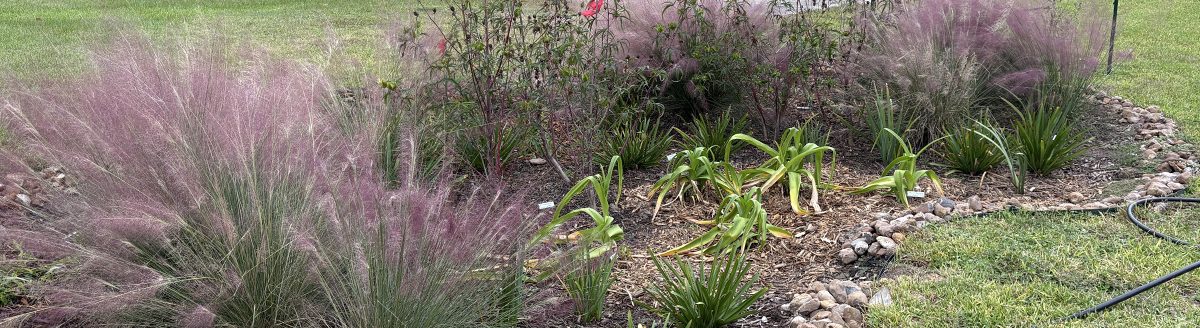
Rain gardens in the Baffin Bay watershed are helping clean stormwater and provide green spaces, thanks to funding support from the Rotary Foundation and Rotary Club of Corpus Christi.
In partnership with the Kenedy County Wide Common School District, CBBEP constructed the first rain garden in the Baffin Bay watershed at Sarita Elementary School. This rain garden provides ecosystem services, filters pollutants from stormwater runoff, creates wildlife habitat, and is an outdoor learning space.
More rain gardens were also built at elementary schools in Alice and Kingsville, with funding from Apex Clean Energy.
Stormwater infrastructure
Through a grant from the National Fish and Wildlife Foundation’s National Coastal Resilience Fund, HRI has worked with community members to identify and assess sites for nature-based stormwater infrastructure to help mitigate flooding, improve habitat and greenspace, and benefit water quality.
Designs will be finalized later this year, and many of the designed projects will be implemented in Kingsville.
Water quality management
A Water Quality Management Plan program is helping agricultural producers implement voluntary conservation practices to reduce runoff, support soil health and support producer operations.
This program has supported the implementation of best management practices on over 1,500 acres. It is administered by the Kleberg-Kenedy Soil and Water Conservation District and funded by a 319 grant from the Texas State Soil and Water Conservation Board.
“TWRI and HRI have partnered with the Nueces River Authority to conduct additional water quality sampling at 11 sites on Petronila, San Fernando and Santa Gertrudis creeks,” said Postma. “This data allows us to evaluate changes in water quality over time and helps facilitate adaptive management of the watershed protection plan.”
Conservation practices
In new opportunities, the Petronila Creek Watershed Nutrient Reduction Project in Nueces County project, a U.S. Department of Agriculture Natural Resources Conservation Service effort funded by the Deepwater Horizon Natural Resource Damage Assessment, is accepting applications for funding to implement conservation practices on agricultural land in the Petronila Creek watershed.
Eligible practices include conservation crop rotation, reduced till and filter strips, and aim to help agricultural producers manage nutrient and sediment runoff from working lands.
Algal blooms brought together Baffin Bay conservation partners
This giant community response was sparked by major algal blooms in the bay in 2013.
“In 2013, as a long-lasting algal bloom was causing mass fish kills and seagrass loss, researchers collaborated with a team of volunteers to conduct rigorous water quality monitoring and better understand what was happening in the bay,” Frasca said.
That work helped identify sources of pollution, like excess nitrogen and phosphorus, that were driving algal blooms and degrading water quality.
“Over time, those impacts make it harder for the bay to sustain the habitats and fisheries the community depends on,” Frasca said.
As stakeholders in the area learned about the issues facing their home and way of life, they banded together with scientists, researchers and conservation groups to form the Baffin Bay Stakeholder Group.
“So many folks have deep connections to Baffin Bay,” Frasca said. “Through the Baffin Bay Stakeholder Group, we’re able to bring partners together who are invested in improving water quality, restoring key habitat, and fostering a stronger sense of stewardship, especially in younger generations, so the bay ecosystem can thrive and continue to support the communities that depend on it.”
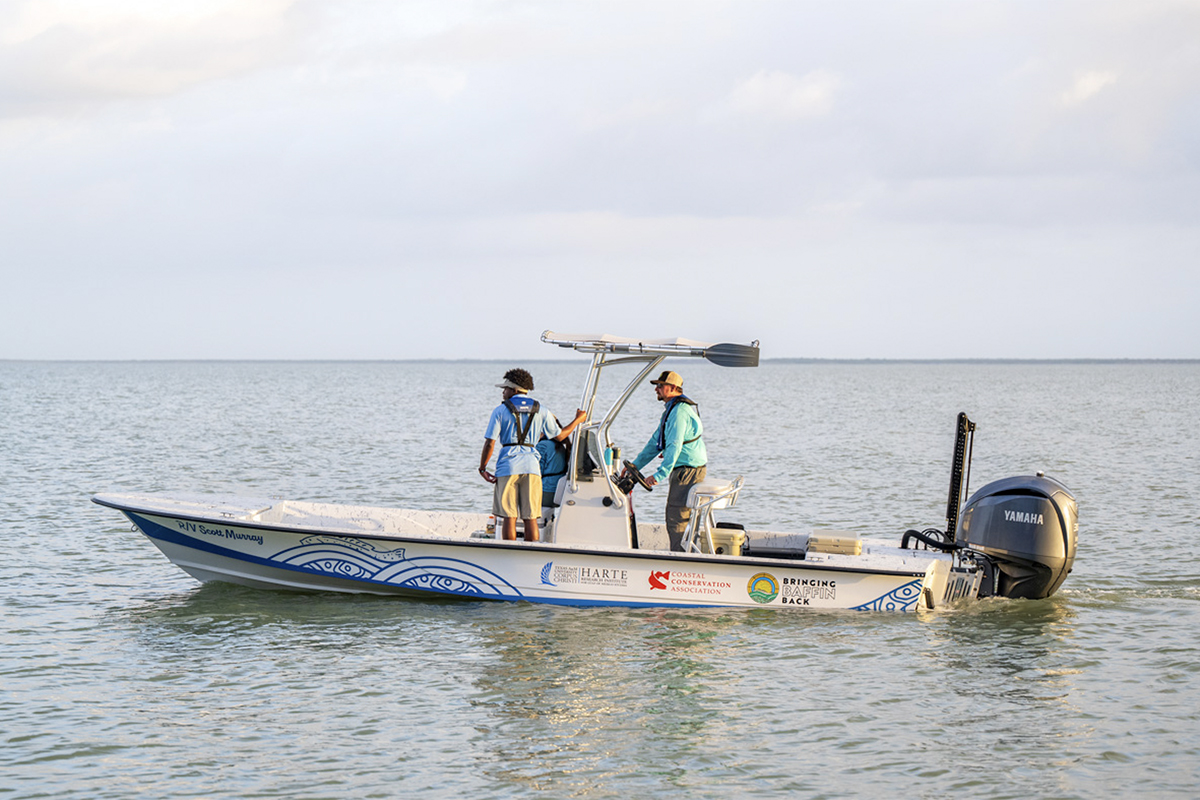
PHOTO: Bringing Baffin Back team members on the research vessel Scott Murray in Baffin Bay. (Harte Research Institute, Texas A&M University-Corpus Christi)