
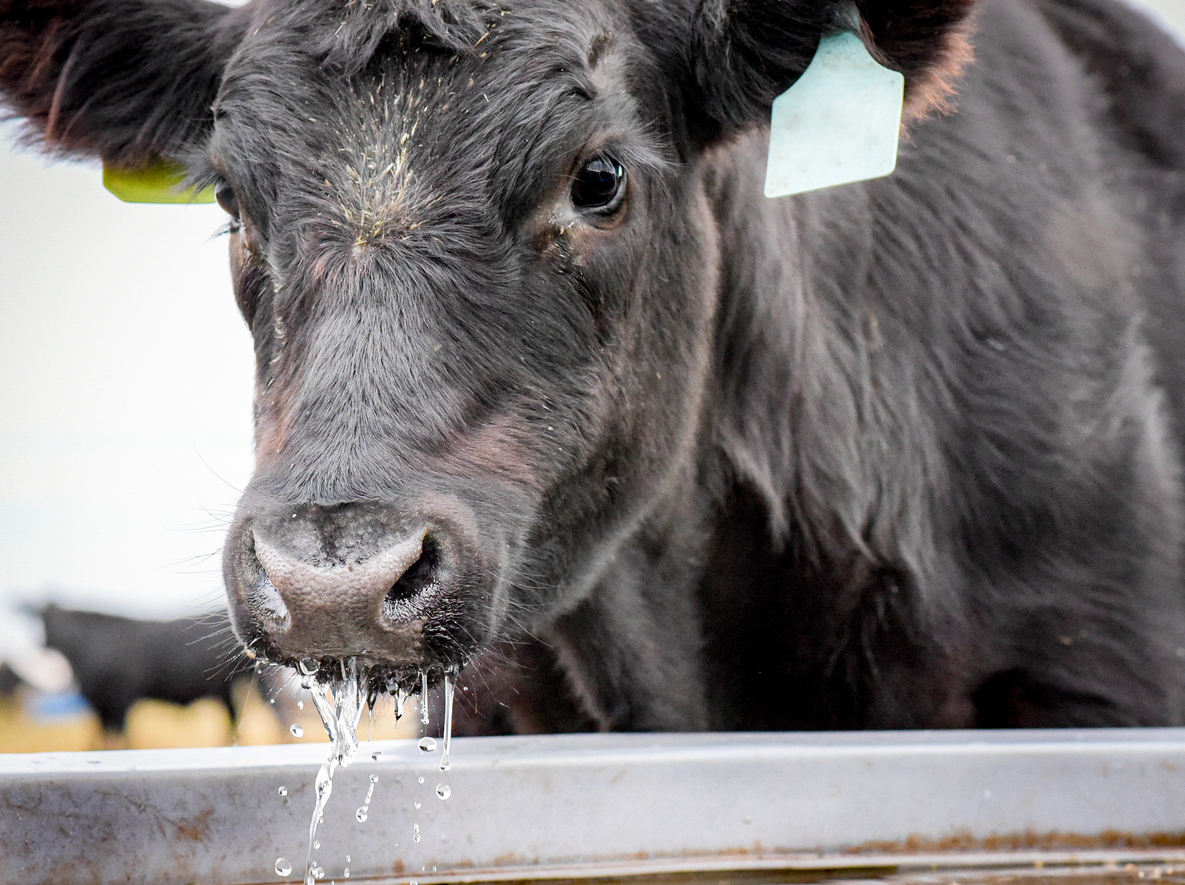
K-State beef cattle experts discuss how this time of year is particularly important for making sure cattle have access to clean water
When cattle have been without water, a producer’s first instinct may be to give them unlimited access as quickly as possible.
But Kansas State University Beef Cattle Institute experts say that response can sometimes create a life-threatening situation.
During a recent Cattle Chat podcast produced by K-State’s Beef Cattle Institute, veterinarians discussed water management challenges and the risks associated with poor water quality, limited water access and improper rehydration of severely dehydrated cattle.
“In western Kansas and other drought-prone areas, sometimes a producer will discover that a well has gone dry and cattle have been without water for a period of time,” said K-State veterinarian Brad White. “When you find that situation, it is important to not simply give cattle all the water they can drink.”
According to K-State veterinarians Scott Fritz and Bob Larson, cattle that have been severely dehydrated can develop a condition known as salt toxicity if they consume large quantities of water too rapidly.
“We call it salt toxicity,” Larson said. “The cattle don’t have to be eating a high-salt diet. If a cow becomes really dehydrated and then suddenly gets all the water she wants, that rapid change can cause a brain lesion and often leads to death.”
Because of that risk, Fritz recommends gradually rehydrating cattle that have been deprived of water.
“As difficult as it sounds, you have to allow them to have a little bit of water at a time,” Fritz said. “If cattle have been without water, the best approach is to try and rehydrate them over a 24-hour period.”
While emergency situations can occur, the veterinarians emphasized that prevention is the best strategy. Larson encouraged producers to regularly monitor water sources and develop contingency plans before problems arise.
“Just because you have a pond doesn’t mean you don’t need to monitor that water source,” Larson said. “You need to think about alternative water sources as well, whether that’s hauling water or encouraging cattle to utilize more than one water source.”
If hauling water becomes necessary, Fritz said producers should be careful about the equipment used.
“Hauling water is stressful and labor intensive, but sometimes it becomes necessary,” Fritz said. “One concern is using tanks that have previously been used for crop chemicals. Even small amounts of residue can create severe health issues for livestock.”
Fritz recommends using water tanks dedicated exclusively to hauling water rather than repurposing containers previously used for pesticides, herbicides or other agricultural products.
The veterinarians also discussed water quality concerns, particularly the threat posed by blue-green algae blooms in ponds.
“There are several types of algae that can occur in ponds, including blue-green algae,” Fritz said. “If you suspect a problem, you can have a water sample tested.”
Blue-green algae, also known as cyanobacteria, can produce toxins harmful to livestock. Fritz noted that blooms often develop following large rainfall events when nutrients wash into ponds and create favorable growing conditions.
“If blue-green algae is present and blooming, livestock should not be allowed to drink that water,” Fritz said.
In those situations, producers may need to temporarily fence cattle away from the affected pond and provide an alternative water source until testing confirms the water is safe.
“Fencing cattle out and keeping them away until the pond tests clear may seem expensive up front,” Fritz said. “But it can save producers significant losses and cattle health problems in the long run.”
“Water is one of the most important nutrients cattle consume every day,” Larson said. “Making sure it is available, safe and properly managed is a critical part of herd health.”
The full discussion is available on the Beef Cattle Institute’s Cattle Chat podcast. Send questions by email to [email protected].
PHOTO: Beef cow enjoys drink of water. (iStock-#1721673716 │ Timothy Vining)



