Pasture mealybug raises alarm for Texas livestock producers
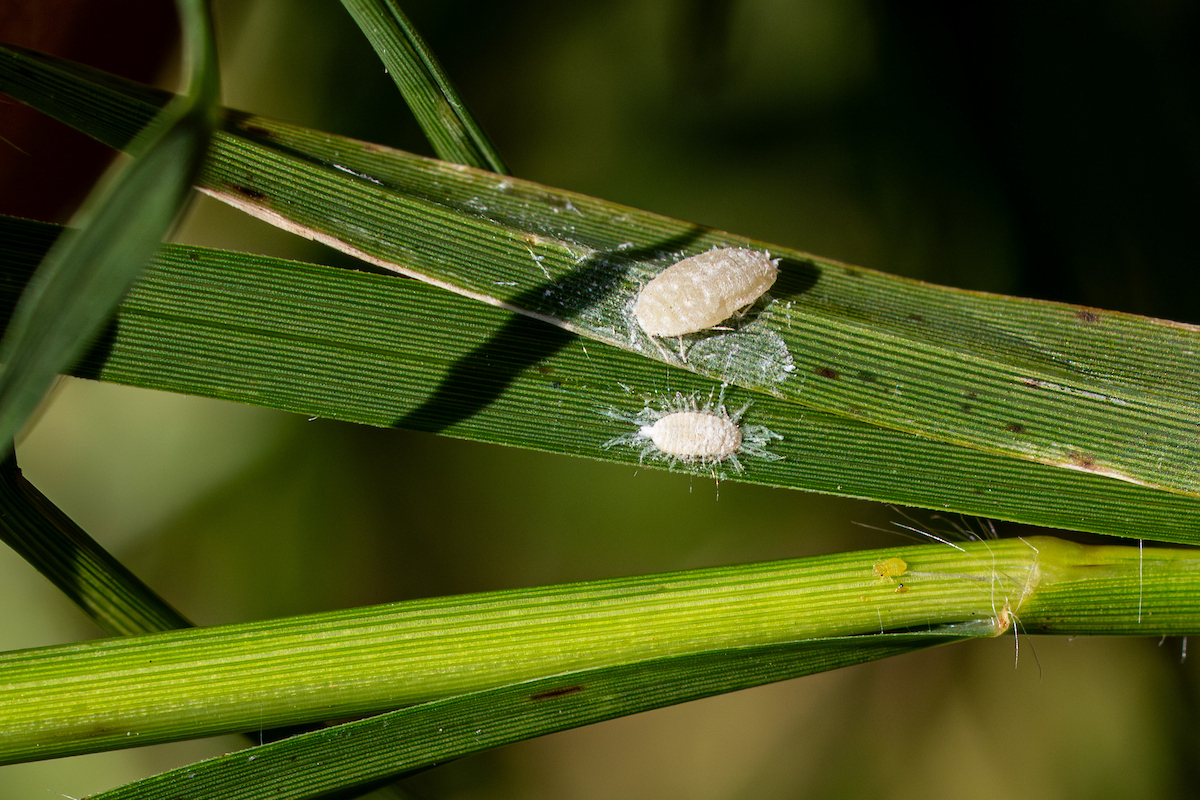
As Texas producers come to grips with the threat of New World screwworm, another new invasive pest — pasture mealybug — is casting a growing shadow over the state’s forage and livestock industries, according to Texas A&M AgriLife Extension Service experts.
The pasture mealybug continues to spread rapidly across Texas, threatening pastures, hayfields and forage resources that underpin the state’s $15.5 billion cattle industry as well as the state’s other pasture-based livestock industries.
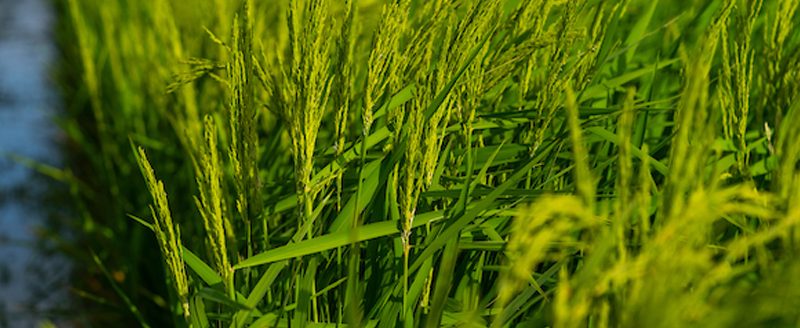
AgriLife Extension entomologists first confirmed the pest in Texas in 2025. The insect has been confirmed in 70 Texas counties so far. The insect feeds on a wide range of native and improved warm-season grasses, including Bermuda grass, Bahia grass, bluestems, johnsongrass and other important forage species.
Immature mealybugs feed on plant sap and inject toxins that weaken plants, often resulting in a condition known as pasture dieback. In severe cases, fields can turn brown, thin dramatically or die outright.
David Kerns, Ph.D., AgriLife Extension statewide integrated pest management coordinator and associate department head in the Texas A&M Department of Entomology, Bryan-College Station, said the pest’s distribution continues to expand at an alarming pace.
“It seems like we add new counties every week, sometimes every day,” Kerns said. “We have counties with confirmed cases, and there’s probably another 56 that we consider as being imminently threatened. I get up to a dozen calls every day from producers who think they have them in their pastures.”
Control options remain limited
What concerns Kerns most is the pest’s broad host range, the lack of any truly resistant forage grass and the lack of pesticide control options.
Kerns said AgriLife Extension and Texas A&M AgriLife Research experts have been evaluating management options while working to better understand how the pest spreads and how producers can protect valuable forage resources.
However, at this point, there are no labeled pesticide products approved to effectively control pasture mealybug. Kerns said one labeled product — Sefina — has shown some ability to suppress low populations in pastures.
He is in the process of submitting an emergency insecticide use exemption with the U.S. Environmental Protection Agency for pesticides that have shown to be effective in test trials.
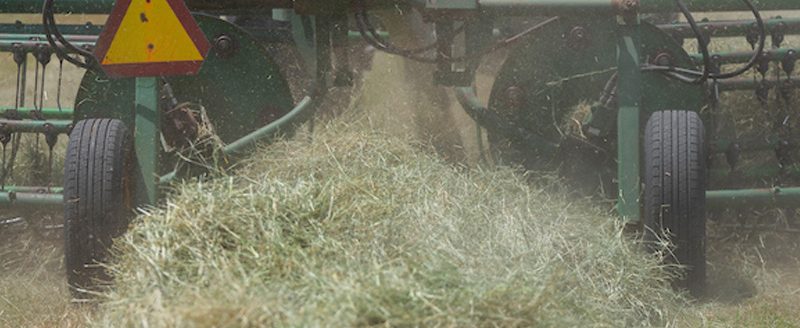
Current recommendations focus on early detection, reducing dense grass canopies through grazing or hay harvest, and preventing movement of insects on animals and equipment between fields. Kerns said tests have shown that pasture mealybugs are highly unlikely to survive beyond two weeks in baled hay.
“Pasture mealy bugs love tall, dense grass canopy,” he said. “So, if you think you have them and your pasture is close to a cutting, cut it and bale it. That will reduce the populations considerably, and the short grass is not going to be hospitable to those remaining.”
Kerns also is concerned because he suspects that early life stage pasture mealybugs could be dispersed by prevailing winds. The pest’s distribution is too widespread to be explained by equipment or livestock movement alone.
Researchers are investigating wind dispersal as a working hypothesis as that scenario offers the most plausible explanation for the pest’s rapid expansion, he said.
Producers are encouraged to contact their local AgriLife Extension office to report potential infestations or for updates and guidance on monitoring and management.
Economic impacts ripple from the pasture
The potential economic implications related to pasture mealybug are staggering.
Recent assessments by AgriLife Extension experts estimate that 20.4 million rangeland and improved pasture acres lie within infested counties. Counties considered under imminent threat of infestation raise that total to 35.7 million acres.
David Anderson, Ph.D., AgriLife Extension economist and professor in the Texas A&M Department of Agricultural Economics, Bryan-College Station, said early estimates suggest annual direct forage and grazing losses for Texas could range from approximately $100 million to more than $1 billion depending on infestation severity and acreage affected. Some improved forage varieties, particularly Bermuda grass hay fields, can require expensive reestablishment if stands are lost.
If widespread pasture replanting becomes necessary, one-time reestablishment costs could be $1 billion to $2 billion statewide.
Texas’ livestock industry depends on healthy, productive forage systems. Reduced grazing capacity also means higher supplemental feed costs, lower stocking rates and increased financial pressure on ranching operations. Hay producers could face reduced yields and declining stand quality, while wildlife enterprises and hunting operations may also be affected by widespread habitat degradation.
“Pasture mealybug and New World screwworm are a potential one-two punch that our producers hope to avoid,” Anderson said. “To have one pest threatening the grass our animals need and another threatening the animals themselves poses some serious challenges, but ranchers are a resilient bunch.”
PHOTO: Male and female pasture mealybugs side by side on blades of grass. (Hannah Harrison/Texas A&M AgriLife)