Emerging disease threats discussed at Crops & Cattle animal health session

Justin Smith, Kansas Department of Agriculture animal health commissioner, discussed several emerging threats to the cattle herd—New World screwworm and theileria—at the recent Crops and Cattle event in Kansas City hosted by High Plains Journal.
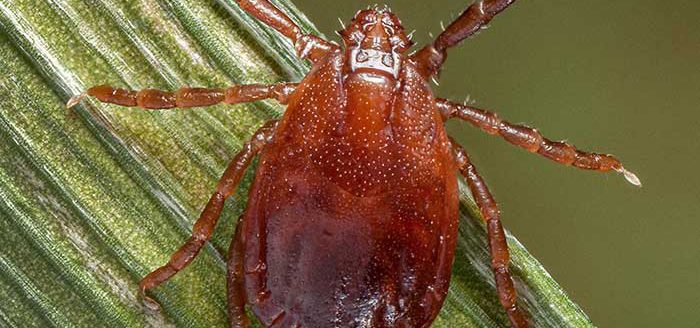
New World screwworm lays eggs in open wounds, and the larvae eat living flesh. Wounds become larger and can be fatal if not quickly treated. NWS was eradicated in the 1960s but has had a resurgence in recent years. Theileria orientalis Ikeda is a tick-borne protozoa that primarily infects red blood cells in cattle. Symptoms can be similar to those of anaplasmosis, but cattle can become symptomatic at any age. It’s believed the Asian longhorn tick spreads theileria.
New World screwworm
New World screwworm lay eggs in open wounds, and the larvae eat the living flesh, rather than dead tissue like other maggots. This causes the wound to become larger and can be fatal to the animal if it’s not quickly treated.
As of Aug. 29, there were 47 confirmed cases of NWS, with only two still in active status in the United States.
Smith said all warm-blooded animals are susceptible to NWS—birds, people, animals, and livestock.
“It’s not a contagious disease, and that’s something that’s key to remember. That isn’t something that’s going to pass from animal to animal,” he said. “It’s actually a parasite. It is a fly that has to lay those eggs. So, an animal is not going to spread it to another animal.”
The flies tend to lay eggs around the wounds and “covet” the wounds since they’re a great environment for the larvae or eggs to hatch and survive.
“But they’re also going to be looking at some of the areas on an animal, such as the umbilicus or the vulva or some of those mucous membrane areas that are really conducive for that survival of that larva,” Smith said. “If they don’t find a wound, they will lay those eggs up there. But they prefer to find a wound out there to lay those eggs.”
The NWS feeds on living tissue. Most flies and maggots common in livestock feed and consume dead tissue.
“Left unchecked, it will kill the animal. It will ultimately just eat it alive,” Smith said.
The female fly only mates one time in her life, he said
Smith stressed NWS is not a food safety issue and won’t taint the food supply.
“We can trim that product out, trim that abscess out, or treat that wound, and it’s not going to be a longstanding food safety issue,” he said.
Spread factors
Moving livestock from infested areas has allowed NWS to spread.
“But frankly, what it amounted to is that the movement of this larva so fast up through Mexico and up in Central America was not the fly itself,” he said. “It was we put wheels underneath those animals. Those animals that were that were infested, had the opportunity to get on a truck and move north, that’s where we see this moving out.”
Surveillance for NWS is ongoing, and Smith said the U.S. Department of Agriculture’s screwworm playbook is working very well. The response to NWS is what he describes as a three-legged stool.
“We’re looking at surveillance, so we’re out there actively looking. And I say we. A lot of this obviously is Texas right now, but from a Kansas perspective, we still have our veterinarians on high alert. We have producers on alert. They’re actively looking,” he said. “We’re doing investigations.”
Those investigations are on a weekly basis or as soon as someone reports a suspicious wound. Kansas has conducted about 50 to 60 inspections the past two years, Smith said.
Theileria
Smith said theileria is “starting to be an issue” in the state and region. The tick-borne protozoa primarily infects red blood cells in cattle and often is mistaken for anaplasmosis since the clinical signs are similar. Cattle can become symptomatic at any age with theileria infections. Most commonly theileria is associated with the Asian long-horned tick.
According to Smith, once the protozoa is in the blood, it destroys the red blood cells. Common signs can include anemia, tiredness, lethargy, fever, or jaundice. The yellow tissues come from the breakdown of red blood cells. Signs will often show up three to four weeks after the animal is truly infected.
If it’s a naive herd, and the first time they’ve gotten into an area, the death loss can reach 20% from anemia issues. It seemingly hits feeder cattle or those in the yards a little harder.
“We’re actually seeing some mortality rates of 35% in some of these cattle,” he said. “The animals, if they can get over that first initial (infection of) theileria, they will develop some—I won’t say resistance, but their ability to live with it is there—and so those animals will tend to go on.”
Smith has heard reports of cattle in the Virginias and Tennessee that are 80% to 90% infected or endemic, but the herds have adapted and are able to survive
“Where the impact comes is those new crop of calves that come every year, or if you happen to bring in a new bull or a set of heifers,” Smith said. “That’s where the impact is out there. We don’t have a treatment. There’s no licensed treatment in the United States for this for this organism.”
Smith has seen some contradicting information about feeder cattle, but if the calves getting infected are likely those that end up being poorer performing because of theileria.
The Asian long-horned tick is usually the cause of infection, and it’s referred to as a three-host tick. It’s only been found twice in Kansas—once on a dog in Johnson County, and the other wasn’t on an animal, but in a surveillance trap.
“In fact, the dog we found back in October of 2025, we’ve had no indications that we have additional ticks out there. We’re looking for them, but they haven’t found them yet,” he said. “So, it doesn’t really fit with the pattern of why the tick and is the tick spread and the number of polarity cases we have out there.”
In the case with the dog, there was no reported movement of the animal from or into the area. Smith said he’s heard speculation that the ticks are harder to find in eastern portions of the state of Kansas because of pasture burning. That could help maintain or reduce numbers.
Advice
Re-use of needles on cattle can spread theileria too, from calf to calf or cow to cow.
“Again, it’s going to be a little slower progression, but it can happen,” he said. “Biting insects—it’s been proven that the lice and the biting flies actually have theileria within their biting mouthparts.”
However, they’re not nearly as effective spreading theileria as the tick.
Smith said they were likely infected prior to getting to Kansas, particularly those cattle coming from eastern areas of the U.S.
“They become symptomatic once we get them here, and a lot of that is due to stress,” he said. “We’re seeing mortality rates as high as 30% in some of these herds. Then basically, what they’re presenting is a BRD or a bovine respiratory disease complex-like look, but they’re non-responsive to treatment. They just don’t respond, and then they end up going into a chronic state and ended up dying on this. It is clinically respiratory.”
What’s unique about symptoms is they are not associated to anemia-like signs, meaning the cattle aren’t anemic after blood tests were ran.
Theileria is a reportable disease in Kansas, and Smith recognizes it’s highly under reported.
“We don’t do anything, meaning that there’s no regulatory response before reporting it,” he said. “Our goal was to just try to get an idea what we’re dealing with out there. “We’ve had we have several cases out there, 60% of what we have of the cow-calf cases are Kansas origin cattle, meaning that they didn’t move.”
How did it get there?
Biting flies can’t be ruled out when nearby. Typically, it’s been one or two cows or a bull in the herd that’s positive in these herds. Producers know their cattle, and there wasn’t any movement of the animals from the east or impacted by the tick that they know of.
Cows seem to survive the infections better than bulls, Smith said.
To better understand theileria, Smith met with a small group of producers and veterinarians from Iowa, Kansas, Nebraska, Missouri, and Virginia Tech. Virginia has had to deal with theileria for quite a while and what Smith does know is, “what we don’t know.”
“And more frankly, unfortunately, we don’t know a lot of the things that we want to,” Smith said. “There’s research starting, but there’s not a lot of money in it right now. There’s not a lot of grants out there, capability of researching. So, it’s been kind of just piecemeal here, there, wherever.”
There needs to be a place to get all the information together in one room and have a discussion about the knowns and unknowns, according to Smith.
“But we frankly don’t know what that prevalence rate looks like,” he said. “We don’t know how many of those animals are affected.”
Smith has a lot of questions—how does it progress in cows; why does it do what it does in the cow and then how? Plus, what is she doing to help stabilize herself in an effort to survive? And what kind of biological mechanisms is she employing to help that happen?
“We’re not sure yet. But also, why are we seeing what we’re seeing in the animals, and the fact that we’re not seeing the anemia, but we’re also seeing high death loss?” he said. “Is it an immune suppression issue that the theileria is capable of producing, or is it a toxemia? Again, not enough work’s been done on it yet to really understand what that impact looks like in these calves.”
Smith doesn’t have recommendations for producers to mitigate theileria in herds or what to do about it yet.
“Other than understand that the fact of how it affects the animal, and if you can reduce that stress or spread your stress out over a period of time, there is some work being done now that it looks like those animals that have been pre-weaned and frankly have some growth to them before we move into the feedlots are not as impacted as those weaning calves that we’re kicking out here and doing it,” Smith said. “There is a stress component to it. So, how do we how do we minimize that and how do we spread that that stress component out over a period of time to minimize the impact on it.”
Kylene Scott can be reached at 620-227-1804 or [email protected].