I am frustrated with the current fuel prices that all Americans are dealing with.

If you consider how the White House has repeatedly interfered with the cattle/beef market in the past few months and the volatility that has resulted, you may be fighting mad about fuel after you read what I have dug up here on oil. The question is, “Why would Trump continually talk about making beef more affordable for the consumer and then assist in the increase in fuel prices to record high levels?”
First off, remember the United States has achieved self-sufficiency in oil production and consumption. While the U.S. is the world’s largest producer of crude oil, averaging 13.6 million barrels per day in 2025 and expected to reach record highs in 2026, it remains the world’s largest oil consumer. We have what they refer to as a “mismatch.” The oil refineries off the Gulf Coast region use heavy crude, which is imported from Canada. We refine about 4 million barrels a day, which is 90% of Canada’s production. Meanwhile, our growth in oil recovery has been in light, sweet crude.
We have an oil refinery problem not an oil recovery problem.
I might also add that, because of the tariff games Donald Trump is playing with Canada, that oil from our northern neighbor is at risk of not being available. Canada is reporting the following:
In August 2026, China sharply increased its imports of crude oil and liquefied natural gas (LNG) from Canada, with oil volumes rising 35% and LNG volumes surging 227% year-on-year. This surge occurred as Ottawa sought energy-market alternatives following the collapse of U.S.-Canada trade talks and the imposition of 50% tariffs by U.S. President Donald Trump.
While he gives rhetoric to the false notion that “we must beat China in the AI data center race,” it appears he is personally helping to deliver oil from Canada to China.
Federal energy data shows that the closure of several refineries, combined with continued fuel consumption, is expected to reduce inventories of gasoline, distillate and jet fuel to levels not seen since the early 2000s. According to the Energy Information Administration, two pending refinery closures, already factored into its Short-Term Energy Outlook, will cut domestic production of refined products, contributing to a projected dip in finished fuel stocks through 2026.
- LyondellBasell (Houston, Texas): Permanently shut down in January 2025 after a seven-year failed sale process.
- Phillips 66 (Los Angeles/Wilmington, California): Ceased operations in late 2025, removing 139,000 barrels per day.
- Valero (Benicia, California): Idled operations in April 2026, removing 145,000 barrels per day.
What I find very interesting in the whole discussion about higher fuel prices is the lack of a discussion about the 2017 sale of the Port Arthur oil refinery, our nation’s largest, to Saudi Arabia.
The Port Arthur refinery in Texas is North America’s largest oil refinery, and as of this week (May 2017) Saudi Arabia controls all of it. With the stroke of a proverbial pen, Saudi’s state-owned oil giant Aramco took on 100 percent ownership of the port, cementing its access to the lucrative U.S. energy market at a critical time.
Why was this allowed to happen? Why was the largest oil refinery in the U.S. (656,400 barrels/day in production) not considered a key component of national security? In fact, that conversation needs to accelerate in all domestic food and fuel discussions. We continue to have foreign financial interests owning the production of our American resources and forcing us to be at the behest of those who don’t have our best interest at heart.
Let’s just take a peek at the impact Saudi Arabia has on global oil.
Saudi Arabia is the world’s largest oil exporter and a critical swing producer that stabilizes global energy markets. In 2025, its oil exports were valued at $187 billion, accounting for a 16.3% share of global oil exports. The nation holds approximately 17-20% of the world’s proven oil reserves and possesses the largest spare production capacity, allowing it to rapidly adjust supply to mitigate geopolitical disruptions or price volatility.
As I write this on Sept 28, the Saudi Press has just published a story about the Trump family:
The most striking recent estimate places the Trump family’s gain from Saudi-connected transactions in 2024 at roughly fifty million dollars.
The Trump Organization itself has also publicly announced new Saudi-linked luxury developments: for instance, a Saudi developer agreed in late 2024 to launch Trump Tower Jeddah, followed by further expansion announcements in the Kingdom this year.
My fellow Americans, it is time we fully understand that America First should not be just a catchy campaign phrase, but something we live by and fight for.
Editor’s note: The views expressed here are the author’s own and do not represent the view of High Plains Journal. Trent Loos is a sixth generation United States farmer, host of the daily radio show, Loos Tales, and founder of Faces of Agriculture, a non-profit organization putting the human element back into the production of agriculture. Get more information at www.LoosTales.com or email Trent at [email protected].
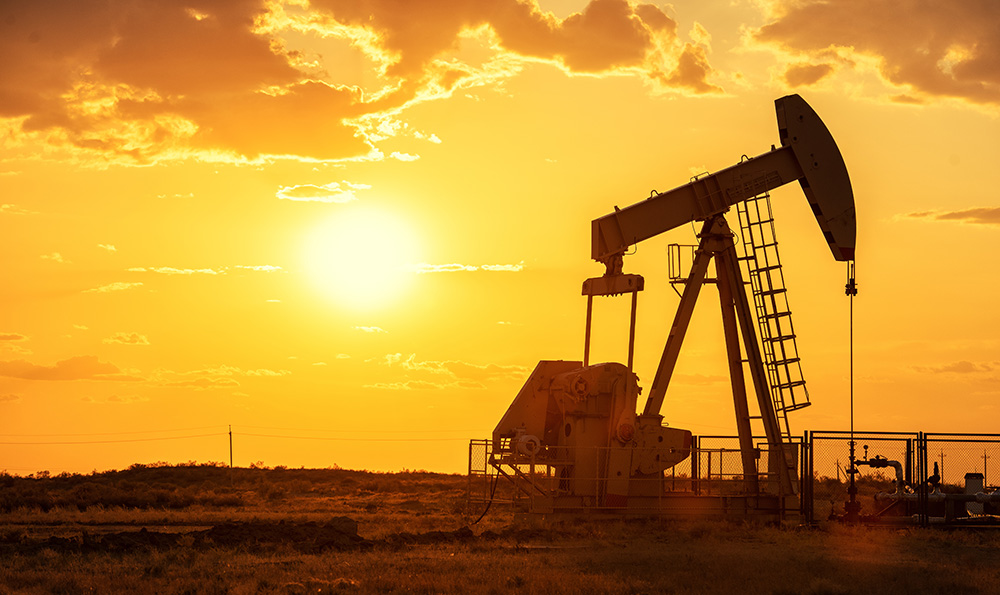
PHOTO: Oil pump oil rig energy industrial machine for petroleum in the sunset background. (Adobe Stock-#315838943 │ Sasint)