
Drones help inventory cattle at feedyard
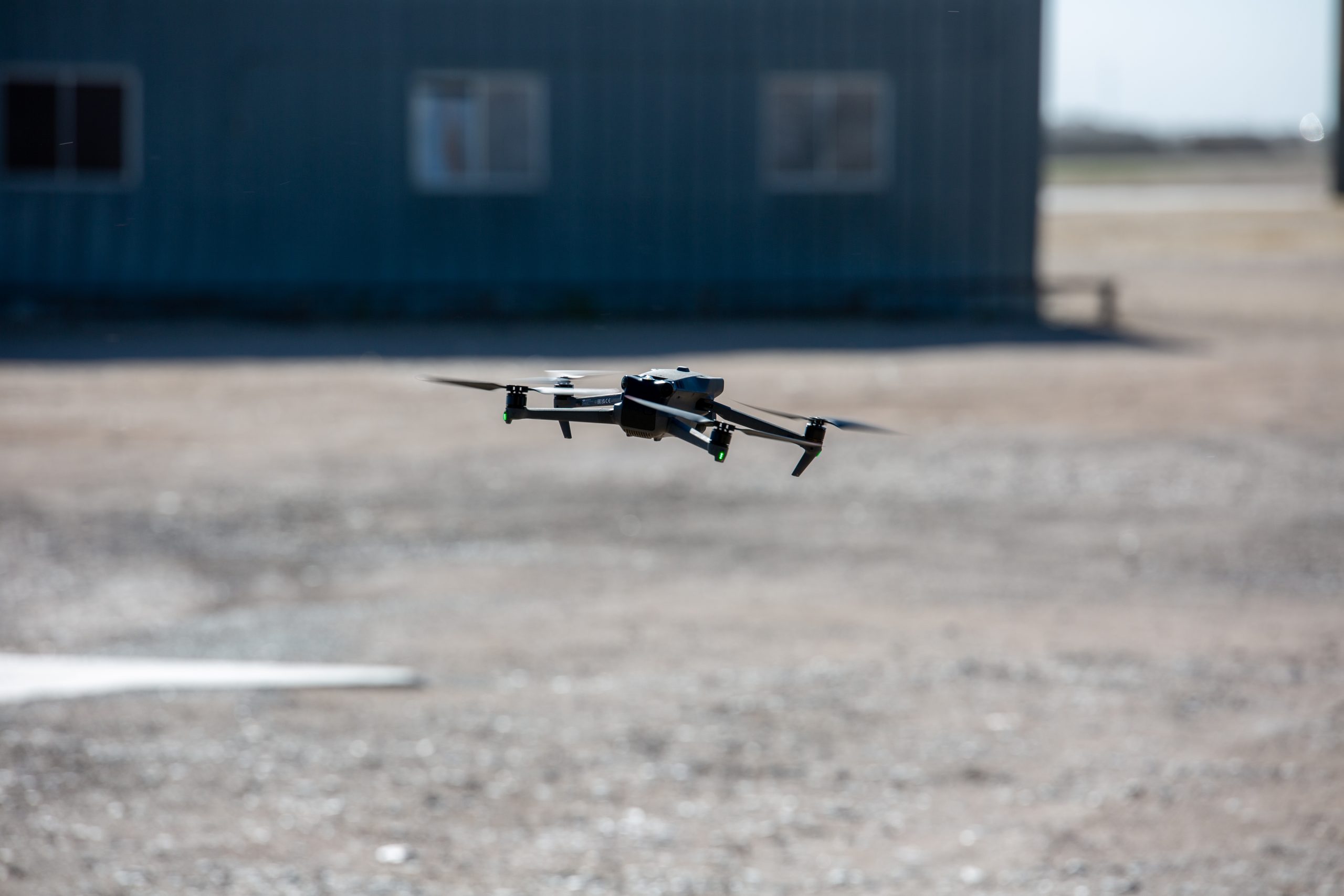
Imagine it only taking minutes to get a count on a pen of feedyard cattle ready to ship. No cowboys to dispatch to pens. No cattle to count by hand or to get stressed. Data shared with those who need it.
That’s exactly what the HeadCount inventory system does. Tyson Johnston, director of operations of the HeadCount inventory division, which is part of Crop Quest, Inc., Dodge City, Kansas, said the program started in 2021.
“It started out as a precision agriculture tool that was targeting the feed yards at the time,” he said. “There was a local feed yard that was having some discrepancy issues.”
At the time Crop Quest had already invested in drones but wasn’t exactly sure what direction it wanted to go. According to Johnston, the company had become pretty heavily invested in precision agriculture and was testing many tools at the time.
“When that feed yard called, they asked if there would be any kind of opportunity to maybe try to inventory their feed yard, and so we took that endeavor on,” Johnston said. “Back then, we didn’t have any kind of autonomous solution. It was kind of an R&D project. We were able to manually capture all of the pens, and then we spent time quality controlling that throughout the precision ag department.”
When the data was delivered back, it identified what information was valuable to the yard and Head Count began doing discovery in the market to understand what kind of need was out there.
“And from there, we just started building around it, formed a division specifically focused on just HeadCount. And fast forward, we are now on 60 feedyard locations,” he said. “We are working with the financial sector as well, performing third-party audit.”
Johnston said there are two services HeadCount offers. One where Johnston’s team comes out to the yard and sets the feedyard up with a drone, subscription to the platform and then the feed yard captures the head counts themselves; and another where a third party orders an audit.
“We will audit a feedyard direct and provide that back either to the feed yard or if it’s a bank or an auditor requesting that, we deliver it back to them and facilitate between the feed yard and the auditors,” he said.
The team members have two main value offerings when it comes to the drones too. The first one they’ll come out and set it up.
“So, they (the feedyard) own the drone, and then we train them on how to use our system,” he said. “That system is a one-man operation, so we’ll find somebody internally. Usually, the cattle manager is the person that’s in charge of this.”
This service shows them what fat cattle are shipping out that week and going to the processing plant.
“Instead of them dispatching cowboys like they do—that’s the traditional method—they will order a flight plan through their headcount system, which takes roughly two to three minutes to select their show list,” he said. “Then they will basically just launch the drone, and it’ll execute the flight plan.”
The drone acts as a data acquisition tool.
“Right now, there’s a couple other projects on the market that are not ours that are attempting to retrieve the same type of data through various methods,” he said. “Our method is specifically through the drone.”
The main drone HeadCount uses in the feedyard is the Mavic Three Enterprise, but there are four or five different DJI models deployed across 60 locations.
Johnston said for the cattle managers it’s a really easy process. They order a flight plan, and the plan sends it to the controller. Then they hit the play button, and it executes it from anywhere from five to 10 minutes and is uploaded in the system.
“That provides them the quality control on that image that they collected autonomously, and then they get a head count inventory back,” he said. “So, we’ve taken a six-to-seven-hour process and put it into about a full turnkey 30-minute process.”
Right now, the company is focused on is just the head count. Long-term, Johnston is eyeing to be able to add more layers. It also has a commodity inventory model that feedyards can subscribe to and it allows the customer to essentially get a count on what commodities are available.
“We have pre-programmed flights over their commodities that they go and press play, and it autonomously captures it, and then it provides them a tonnage and reports back,” he said. “A couple of the feedyards are using with that right now for middle month and end month inventory.”
This helps customers track the commodities more accurately.
HeadCount has worked on more than 200 locations with 60 of them utilizing the subscription service, but if they’re not using the subscription, Johnston said many will hire them for year-end inventories that creditors or any financial or accounting firms are requiring an audit.
“Right now, we are working with Cactus Feeders, Five Rivers, Friona Industries, Irsik and Doll, Cobalt Cattle, Foote Cattle Company—so all of your bigger corporations,” Johnston said. “Broad variety of our services, so not only we’re doing their full yard counts for their lending institutions and accounting institutions, but they do have our drones enabled on site where they can perform their weekly show list counts, and then also their commodity.”
They have custom cattle feeders all over, according to Johnston, with some work in South America and more interest abroad.
HeadCount’s primary focus is on Kansas, Nebraska, Colorado, Oklahoma, and Texas, he said.
Cost is calculated on a per-head basis, Johnston said, and is currently around 15 cents per head. The commodity part of the subscription is around $4,000 a year, with unlimited inventory, middle month, and ending month inventories.
“They can do feedlot assessments too,” he said. “If they have construction projects or whatnot going on, they can utilize the drone to fly after a weather event,” he said. “If the pens are super saturated and they need to get maintenance on them, it gives them an aerial perspective that they can go and dispatch their maintenance crews instead of ground level, trying to assess what needs attention first.”
Water tanks are another project that’s on Johnston’s wish list, and he’s working to get a model out there for that type of monitoring.
“So, wintertime, obviously wind chill gets down and some of those tanks on the feed yards are prone to freezing up, so they are able to utilize a tool for feedlot assessments, water tanks, commodities and head counts,” he said.
But helping reduce stress on humans and animals, is one of the main value propositions, Johnston said.
“Obviously, heat stress has been a wide problem throughout most of our footprint, especially this year and in previous years,” he said. “When it gets up to 100, the last thing you want to do is get your kill weight animal riled up in the pen. These drones, they’re programmed to fly at or above 200 feet, so the animal can’t hear it, can’t see it. That’s one of the things we eliminate human to animal contact when it’s capturing the data.”
For more information about HeadCount visit https://www.headcountinventory.com/.
Kylene Scott can be reached at 620-227-1804 or [email protected].



