Groundwater level declines impact state’s future

Groundwater level declines in the Ogallala–High Plains aquifer in western Kansas have been known for many years. In fact, declining water levels were one of the key reasons the Groundwater Management District Act was passed in 1972.
While some progress has been made in the intervening 54 years, groundwater levels continue to drop.
After years of talking about the issue, the Kansas Legislature decided it was time to act before more areas were completely dewatered and more attention needed to be paid toward conservation. As a result, the Legislature passed House Bill 2279 in 2023 along with a bill to provide funding for water conservation. While we often focus on political disagreements, the vote on HB 2279 was not close, particularly among legislators representing areas that have experienced severe groundwater level declines. The bill passed the Senate 34 to 6 and the House 116 to 6.
HB 2279 set out a process for each GMD to identify high-priority areas of concern within the district and develop an action plan to address those issues. The bill mandated action plans to be submitted to the Chief Engineer by July 1, 2026. The Legislature required that, as Chief Engineer, I was to review the GMDs’ submitted action plans and determine whether each plan reasonably addressed the problems.
Since 2023, my staff and I have worked with the GMDs to implement that law. In 2024, Southwest Kansas Groundwater Management District No. 3 identified the entire district as a high-priority area of concern based largely on continuing groundwater level declines throughout the district. In November 2025, I provided a letter to all of the GMDs outlining what I would consider a reasonable plan to address the issues identified within each district’s high-priority areas of concern, and I provided guidance stating that I believed it was reasonable to expect action plans to stabilize groundwater levels within 20 years of implementation of the plan.
GMD3 submitted an action plan by the July 1 deadline. In early August, I returned the plan for GMD3 as well as GMD2 and GMD5 and asked each GMD to do additional work because their action plans failed to reasonably address certain water quality and quantity issues. After resubmitting their plans, I determined that GMD 2 and GMD 5 had met the statutory requirements of HB 2279
For GMD3, on Sept. 30, I approved the portion of the plan related to water quality issues and agreed that the entire district should be a high-priority area. I again rejected the portions of the action plan related to groundwater level declines because the actions proposed by GMD3 failed to stabilize groundwater level decline at any point over the next 60 years, implementing modest cuts, but allowing the aquifer levels to continue to drop by thousands of acre-feet.
I sincerely appreciate all the work that the GMDs across the state put into this effort, including GMD3. That said, as is apparent in GMD3’s own plan, in most of the district at the end of 50 years, the groundwater resources available to farmers and communities would be on the verge of being unusable.
In my role as Chief Engineer, I am obligated by state law to regulate and conserve the water resources of the state of Kansas for the benefit of the people of the state consistent with the public interest. In fulfilling that mandate, I cannot say that continued depletion of the Ogallala–High Plains aquifer over the next 50 to 60 years is acceptable. It does not reasonably address the issue of groundwater level declines, and it is not in the public interest.
Without reductions in water use, water levels will continue to decline until the aquifer is effectively dewatered and most, if not all, of the area returns to dryland farming. What will the economy and communities of southwest Kansas look like if we allow that to happen? Knowing that the total depletion of the aquifer there could take hundreds or thousands of years to reverse, the economic devastation of the communities and the impact to agriculture in the region would be brutal and irreversible in our lifetimes.
We must follow the legislative direction set forth in HB 2279 and take action now to reduce water use and ensure a viable water supply for the future.
Farmers and ranchers across our state overcome difficult challenges all the time as they work to make their operations productive and profitable in an ever-challenging national and global market. In my work in Kansas water resources for almost 35 years, I have witnessed farmers’ and ranchers’ creativity and ability to adapt, including to reduced water availability.
Just as they have overcome these challenges, I fully expect that water users in GMD3 will be able to continue to make a living now while ensuring that the Kansans who follow will have the opportunity to farm, use water, raise families, and support their communities.
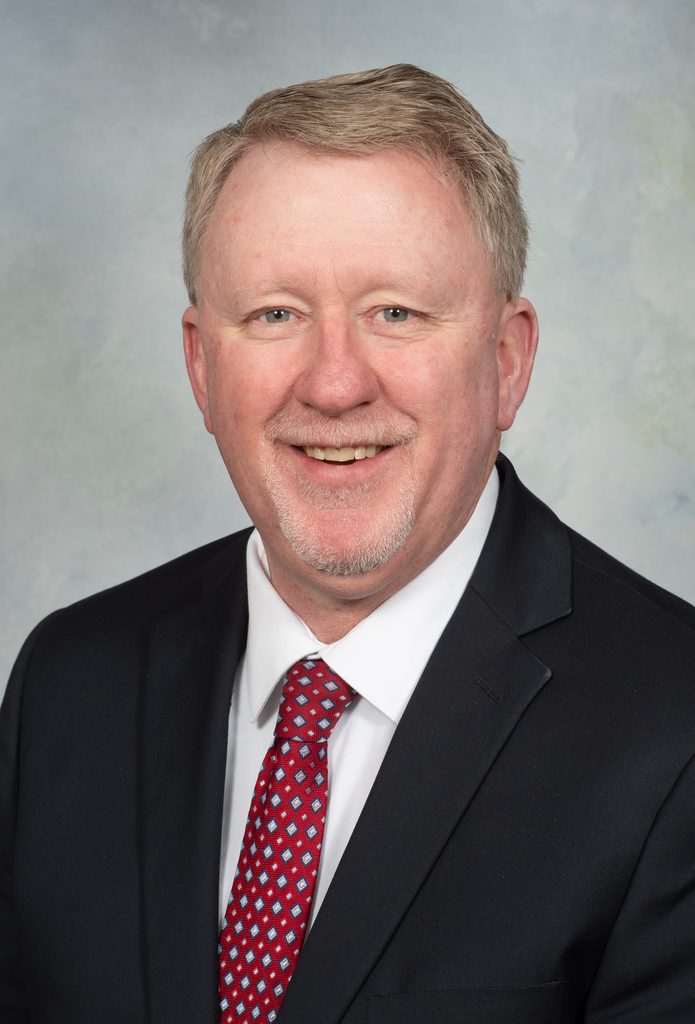
Earl Lewis is the Chief Engineer and director of the Division of Water Resources for the Kansas Department of Agriculture.