Insignum AgTech enables plants to ‘talk’ and signal to farmers when specific plant stresses begin

A ruling by the U.S. Department of Agriculture’s Animal and Plant Health Inspection Service allows farmers and growers to run trials on corn plants developed by Insignum AgTech. These plants use naturally occurring pigment to signal when specific plant stresses begin.
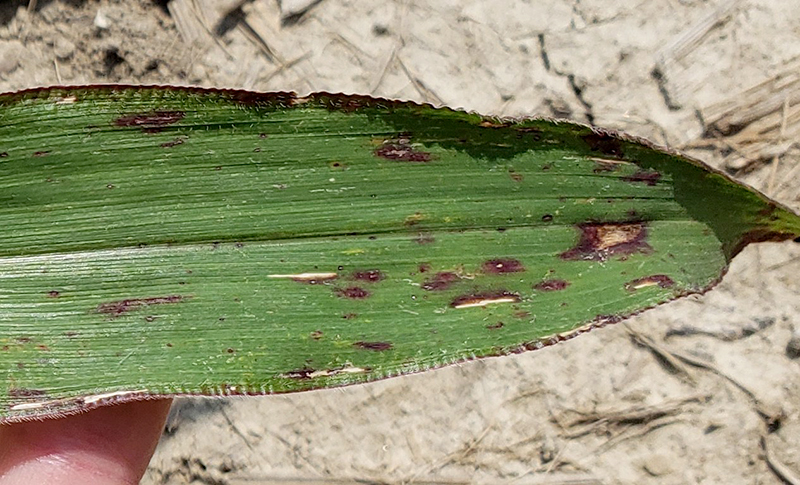
Insignum AgTech CEO Kyle Mohler said the plant turns purple to indicate that a fungal infection has started but is not yet apparent.
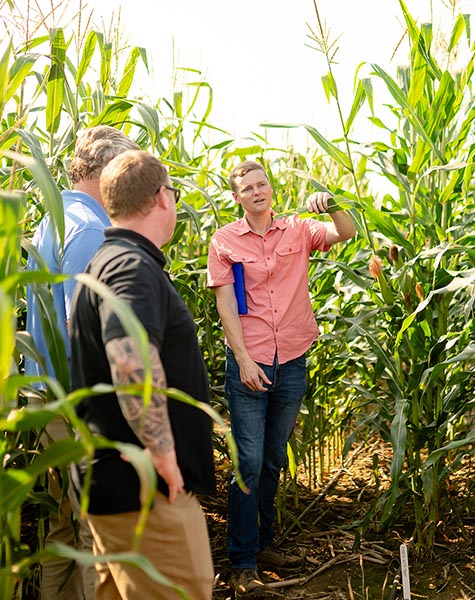
Mohler, who earned his bachelor’s in biochemistry from Purdue University’s College of Agriculture, founded Insignum AgTech in 2019.
The USDA APHIS decision and its impact
A Nov. 14 news release from the USDA stated, “The U.S. Department of Agriculture’s Animal and Plant Health Inspection Service recently reviewed 12 plants modified using genetic engineering to determine whether they posed an increased plant pest risk as relative to non-modified comparators.
“APHIS found these modified plants were unlikely to pose an increased plant pest risk compared to other cultivated plants. As a result, they are not subject to regulation under 7 CFR part 340. From a plant pest risk perspective, these modified plants may be safely grown and bred in the United States.”
Mohler said the announcement represents a milestone for Insignum AgTech and its customers.
“It means our edited plants can be grown and tested across the U.S. without restrictive permits, opening the door for our customers to run trials,” Mohler said. “It strengthens our ability to help farmers treat specific problems affecting their crops exactly when, precisely where and only if needed to sustainably increase crop production.”
Mohler said the company will develop additional plant traits that utilize other natural pigments, like red or blue, to give an early indication of yield-limiting factors such as insect pests or fertility loss.
“Farmers will gain the ability to sustainably and precisely treat when and where needed, ultimately increasing yields without arbitrarily increasing costly inputs,” Mohler said.