
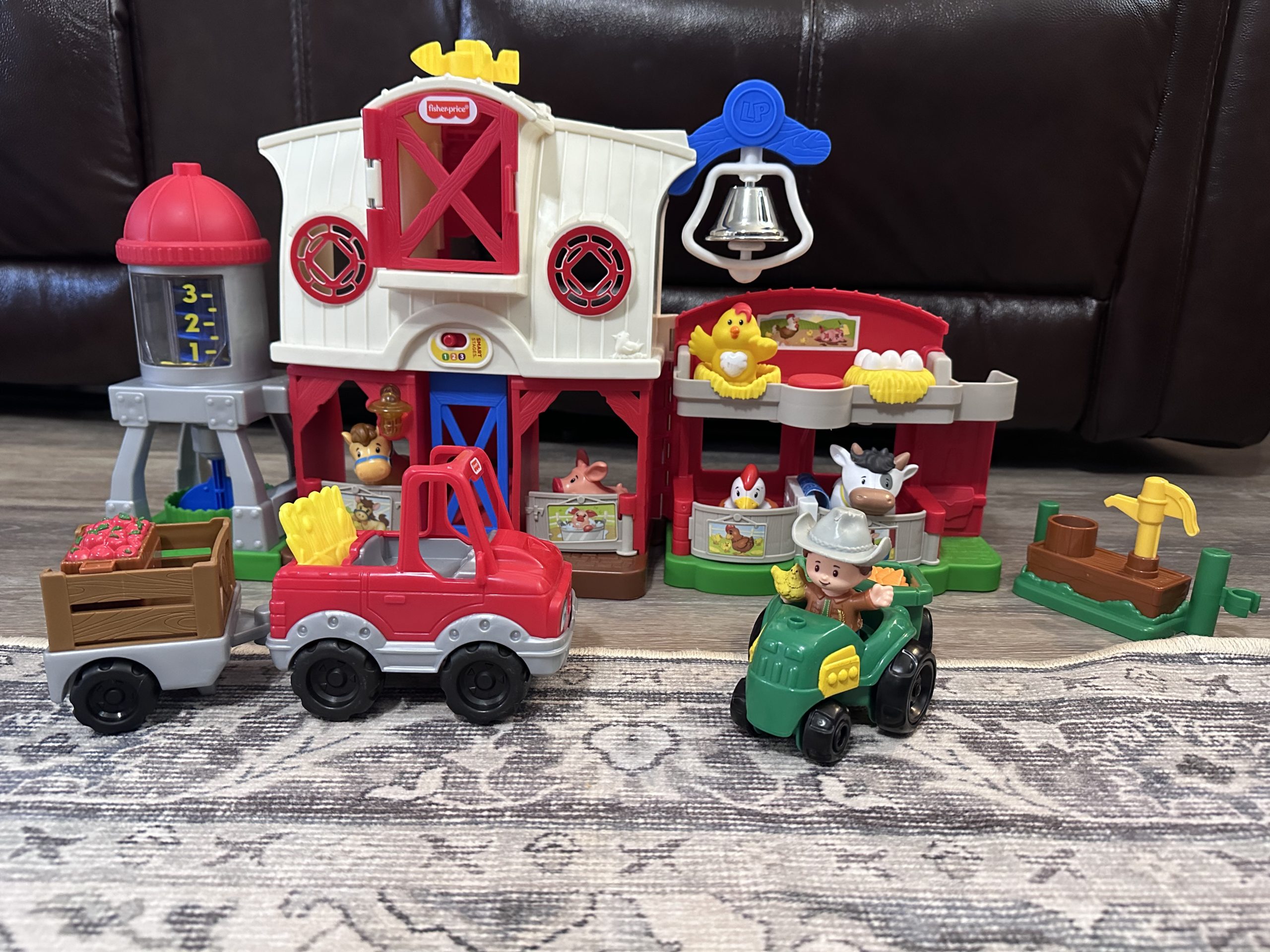
Just about every farmer’s son has the quintessential toy barn, complete with livestock, machinery, and a farmer figurine. My almost 2-year-old son has one, and he is always “farming” in the living room—putting the animals in the stalls and driving the tractor around on the floor.
This type of play allows children to use their imagination, decreases screen time, and they often develop an interest in agriculture at a young age and in turn, want to learn more as they grow up. For many farm and ranch families, that interest carries a deeper hope: that the next generation will one day return to the operation. But that expectation has not always extended equally to daughters.
According to the 2022 Census of Agriculture—the most recent ag census—1.2 million producers were female. Women accounted for 36% of the country’s 3.4 million producers in 2022. Additionally, 58% of farms included a female producer, and 8% of farms were run entirely by women.
These statistics have grown since I was a child in the 1990s. According to the 1992 Census of Agriculture, women accounted for roughly 7.5% of all agricultural producers recorded that year. Additionally, 27.7% of female farm operators considered farming their primary occupation in 1992.
Those numbers reflect broader changes in agriculture, where women are taking on larger roles in management, labor and decision-making. Still, early exposure often shapes who sees a place for themselves in the industry.
As a little girl, I loved my play kitchen, baby dolls and anything pink, but I also played with my younger brother’s farm toys. I don’t know how many Ertl farm animals he had, but it was enough for us both to have sizable cow herds with a large catalog of livestock “sales” in which we would sell our cattle to each other for pennies or sometimes dimes, if it was a bull with “good” papers or a high-performance cow.
Although this was make-believe with plastic toys, it had an impact. My exposure to agriculture at a young age most likely contributed to involvement in 4-H, FFA, a bachelor’s degree in animal science and agricultural communications, and later a career and as an agricultural journalist.
There’s no way to know for sure, but limiting my involvement with our cattle operation, daily livestock chores, hauling round bales, and play “farming” might have changed my life trajectory. Who knows, if I’d been kept inside with my Barbies and discouraged from taking my place next to the hydraulic chute during cattle processing, I could have ended up pursuing an entirely different career and my life would look very different than it does now.
My family expanded in December 2025 with the birth of a little girl, and although I expect her to be a “girly-girl,” I’m not going to limit her imagination or interest in agriculture one bit. She has just as much right to become a farmer or rancher as my son does.
For families considering gifts for young children, the choice does not have to follow traditional lines. A toy tractor or farm set can be just as meaningful for a girl as it is for a boy. Interest in agriculture does not depend on gender, and neither should the opportunity to pursue it. Little girls can farm too.
Lacey Vilhauer can be reached at 620-227-1871 or [email protected].



