Rural America steps up when country needs it
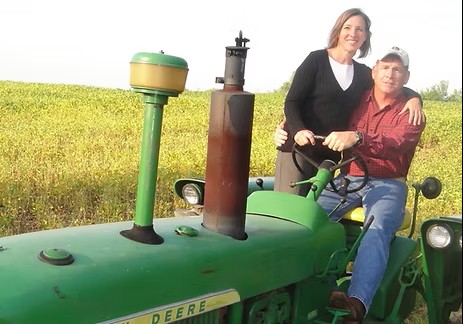
Army veteran Ken DeVan has a passion for serving others, and it is intertwined with duty and agriculture.
DeVan majored in agriculture at Southwest Missouri State University in Springfield before entering the Army and those roots stayed with him. When he was deployed to Germany and throughout stateside postings, he remembered taking his family to You-Pick produce farms and how much they enjoyed the experience.
After 28 years of military service, he finished his career as a Colonel and began a career tied to agriculture. Ken served in numerous worldwide deployments, 11 duty stations and three combat tours in the Middle East. Ken, with his wife, Cindy, reside in Leavenworth and they are owner-operators of Oregon Trail Farm LLC, a sustainable berry farm and apiary located along the original trailhead of the Oregon Trail.
When he retired, the DeVans decided to relocate to rural Leavenworth in 2010. In retirement, he returned to his agricultural roots, and Ken and Cindy started their version of a You-Pick farm. After testing several crops, they settled on blueberries, blackberries and raspberries and expanded to 800 bushes.
He also remembered getting manure from the Fort Leavenworth stables and more than 1,500 pounds of coffee grounds to improve soil quality. One last ingredient needed to develop the farm was pollinators, and starting with three colonies he expanded his apiary.
He is quick to credit the U.S. Department of Agriculture, Farm Service Agency and Farmer Veteran Coalition for their expertise. Other entities, including Kansas State University Extension and the Kansas Department of Agriculture, also played key roles.
It brought another full-circle moment because he not only built a successful farm where locals and tourists could enjoy a unique experience, but he could also help veterans and their families. DeVan is president of the Farmer Veteran Coalition of Kansas, a nonprofit veteran organization that helps cultivate a new generation of farmers and food leaders by developing viable employment and meaningful careers through collaboration between the farming and military communities.
FVC encourages veterans to reach out to other veterans and their families to build connections, he said. Those relationships can lead to a career in production agriculture or a support role, DeVan said.
“There is an opportunity to find ways to further a veteran’s career in agriculture, and we can help with outreach,” he said. “I live about six miles from Fort Leavenworth, and every year there are 1,000 new families that come to the Command and General Staff College.”
The berries become ripe for picking about the time the new personnel and their families arrive, he said, and that provides an opportunity to connect.
“There’s nothing better than helping families,” he said. “They can go to Oregon Trail Farm, and their kids can pick berries.”
The DeVans decided to wind down the berry operation, but Ken will retain his honey business.
Agriculture and patriotism
DeVan remembers attending a conference where then-U.S. Secretary of Agriculture Tom Vilsack spoke, there he learned that, on average, about 46%of the men and women who serve or have served in the military have a rural background.
He believes two possible reasons are a sense of patriotism and the opportunity to develop a career that might not be available in their hometown. Regardless of those reasons, it is a proud brotherhood and sisterhood that recognizes the importance of duty.
“Rural America has consistently answered the call,” he said. “If it wasn’t for some of the American farmers in World War II, who knows how it would have turned out. They were tackling the hedgerows with their welding skills, their mechanical skills, their ingenuity, creative thinking, and the right skill sets. They were able to transform the Sherman tank into a hedgerow-cutting machine.”
Those timeless skills, ingenuity and work ethic continue to serve those men and women well, DeVan said.
“I’ve watched throughout my career these kids that grew up on a farm. They know their way around equipment,” he said. “Farm equipment and military equipment—there isn’t a whole lot of difference when it comes to high-pressure hydraulics and diesel engines.”
DeVan said one statistic sums up the commitment of rural America to military service.
“Only a rare few carry the weight of a nation on their shoulders,” he said. “As a veteran and a farmer, we belong to both: the 1% who stood on the front lines to defend American freedom, and the 1% who work the land to feed American families. FVC members can be defined by two sacred duties—protecting our country’s soil and nurturing it.”
DeVan uses that statistic to show how important rural communities are to the nation’s livelihood.
O’Gorman paved the way
Kansas has a state chapter of the Farmer Veteran Coalition, which was started by Michael O’Gorman, a fresh produce grower and entrepreneur. O’Gorman had a vision to connect veterans with agricultural careers. He understood agriculture could provide mental health benefits.
In DeVan’s case, agriculture provided a way to simplify life, and working with the soil can benefit mental health. He also saw it as a natural career move.
The Farmer Veteran Coalition has members in all 50 states and Puerto Rico. DeVan also assists veterans who live in nearby Missouri and southeast Nebraska. He said the FVC works in partnership with other organizations, including the National Farmers Union, American Farm Bureau Federation, Farm Credit Services, Kubota, and veterans groups.
Working in partnership can help veterans feel more comfortable and build a network. Farm tours and field days also can help by allowing participants to see demonstrations, he said. Farmers can answer questions whether they involve specialty crops, livestock or important business details.
The Kansas group includes not only veterans but also active service members because, at some point, those men and women will transition out of military service and need a career.
A “Critter Day” was started so participants could learn about smaller farming operations.
Participants toured beef, sheep, dairy, and hog operations in the morning. In the afternoon, speakers gave presentations on available services and how to get questions answered.
A common story
Unless a veteran or service member has a spouse involved with a family farm, DeVan said entering agriculture is a challenge many younger men and women face.
“It not the cheapest thing to do, land ain’t cheap, and, as I say, they’re not making any more of it.”
He advises participants to keep an open mind because agriculture offers many opportunities. Even if participants decide agriculture is not for them, DeVan said that realization can still provide valuable insight as they transition into a new career.
DeVan has been a major supporter of the congressionally mandated Transition Assistance Program. The program helps soon-to-be-discharged military men and women explore career opportunities.
As a supporter of agriculture, DeVan said TAP allows servicemen and women to learn about opportunities while they are still in uniform. They also can work with mentors and, in some cases, complete an internship.
“It is designed to give servicemen and women an idea of what might be available for them and allows them to take a test drive,” DeVan said.
One effective program is the Farmer Veteran Fellowship Fund a small grant program that provides direct assistance to veterans who are in their beginning years of farming or ranching. The fellowship fund supported is supported by Farm Credit, Wounded Warrior Project, Tractor Supply Company, Kubota, and from other donations to FVC. Applicants, all veterans or active-duty service members can apply for grants ranging from $500 to $5,000. That money can be used to help build a business plan, for example. It also requires recipients to share their story.
The fellowship fund helps plant the seed for future success. He received a $3,400 grant that he used to improve his beekeeping skills and expand his apiary.
Kubota, he noted, also awards seven tractors through the program each year and Kansas and Missouri have received several times. Kubota has also shared facilities in Edgerton, Kansas, to host tours along with business planning workshop,
He encourages High Plains veterans to take advantage of programs that help them transition to post-military careers, just as many men and women have done during the past 250 years. For High Plains readers, FVC is always looking for mentors, successful farmers and ranchers to help veterans educate and share their success.
For more information, visit https://farmvetco.org/state-chapters/. DeVan also said the Kansas chapter has a Facebook page.
Dave Bergmeier can be reached at 620-227-1822 or [email protected].