
USDA’s $700 million regenerative ag announcement draws range of reactions
Just before Christmas, the U.S. Department of Agriculture announced an ambitious $700 million Regenerative Pilot Program, administered through the Natural Resources Conservation Service. It called the program “a farmer first, outcomes-based approach to conservation designed to return the agency to its core mission–helping people help the land.”
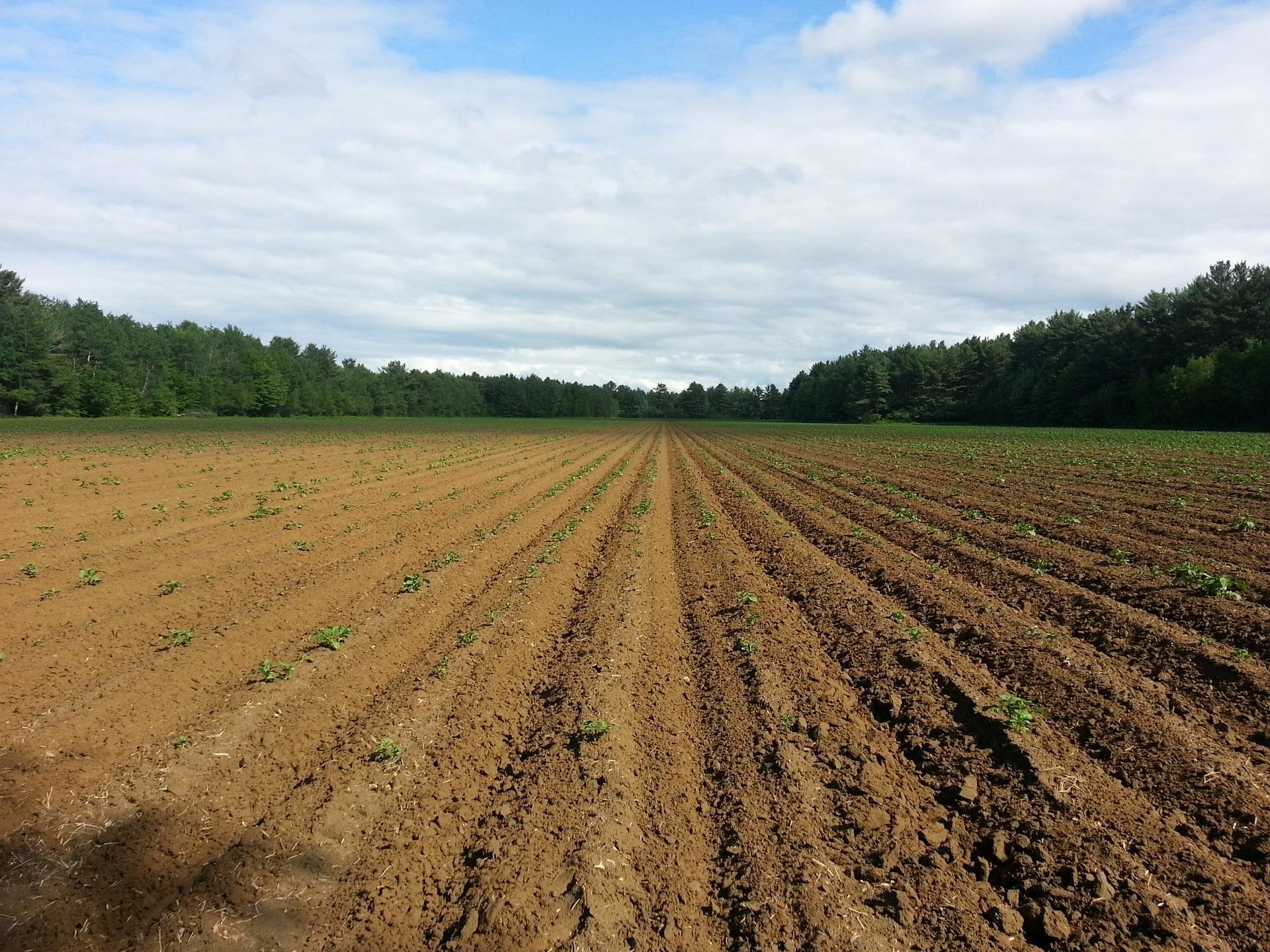
Its aim is to support farmers in adopting whole-farm practices that enhance soil health, water quality, natural vitality, and long-term productivity, while reducing input costs. (Pictured at top is dirt rows by Public Domains Pictures.)
Groups promoting soil health and regenerative policies generally reacted positively, while some interests expressed skepticism or had a wait-and-see response.
The program’s funding has $400 million via the Environmental Quality Incentives Program and $300 million via the Conservation Stewardship Program for fiscal year 2026, with a streamlined application process to encourage participation from beginning and advanced producers alike.
The program bundles together previously siloed soil health initiatives into a single application process. Its website promises, “Bundled practices will be integrated into a single application, making programs easier to access and more impactful; whole-farm holistic conservation planning is the centerpiece of the program, ensuring that all resource concerns (soil, water and natural vitality) are addressed together, not piecemeal.”
Whole farm focus
The regenerative initiative aligns with the Trump administration’s “Make America Healthy Again” agenda, emphasizing healthier food systems and what is says will be reduced administrative burdens for farmers. The Regenerative Pilot Program’s FAQ sheet says states should set aside 25% of their EQIP and CSP financial assistance funding to dedicate to the RPP. “Both technical and financial resources will be available to producers at all stages of implementing regenerative agriculture, from those just starting out to those with more experience.”
The RPP has a “whole farm” focus, including a requirement that “all land that the operator has control of for five years to be a part of the application and thus the whole farm plan.” Program participants must agree to perform soil health testing in the first and last year of the contract (at a minimum) to establish a starting baseline and to record the resulting changes. Financial assistance for soil testing will be available to both producers who have not previously completed soil testing and producers who are already testing their soil.
On Jan. 7, the USDA released its widely anticipated MAHA-aligned “reset” of nutrition guidelines, with it called “historic” and “the most significant reset of federal nutrition policy in decades.” It includes numerous common-sense and already widely practiced recommendations: Eat veggies and full-fat milk and dairy, limit alcohol and “highly processed” foods. Its two most attention-getting recommendations are to “prioritize protein at every meal,” and urging folks to avoid sugary drinks, which could accelerate a consumer movement away from soda and other sweetened drinks.

Measured responses
CropLife America, which represents America’s pesticide makers, issued a cautious statement on the RPP: “CropLife America welcomes the United States Department of Agriculture’s new regenerative agriculture pilot program. Growing food is resource-intensive, requiring land, water, and constant protection from pests and disease. Farmers are the original stewards of the land, and their livelihoods depend on preserving natural resources for future generations. We hope this pilot program helps clarify operational challenges and provides growers with practical, outcomes-based conservation plans that strengthen long-term soil health and keep farmland viable.”
President Donald Trump’s head of Health and Human Services, Robert F. Kennedy Jr., has a well-documented history of opposition to pesticides. Before joining the Trump administration, he was an environmental attorney and was prominent in a 2018 case against Monsanto for Roundup exposure.
The Weed Science Society of America, on the other hand, gave the RPP strong support: “Weed control is what will make regenerative agriculture possible, as practices that help to improve soil health and water quality will also minimize reliance on tillage,” said Lee Van Wychen, WSSA executive director of science policy. “Without tillage, weed control can become quite challenging, and farmers will need technical help from weed scientists and weed-science research to succeed.”
Council membership
While nominations to the 15-member council have not yet been named, at least one member should have weed science expertise, Van Wychen said. “We’d like to see at least one science-based representative on the council who can advise on incentivizing the best weed control practices to achieve agricultural regeneration goals. We’d also like to see a clear definition of agricultural regeneration for this program, based on science.”
Stanley Culpepper, WSSA past president, said, “Implementing practices to improve soil health and farm sustainability are a priority for family farms as they strive to better the farm for the next generation.”
“Including an applied weed scientist in the development and implementation process would help address these challenges and ensure weedy pests are not overlooked,” he said.
WSSA said it “stands ready to assist USDA NRCS to implement the new project,” but it added that other existing organizations would be excellent resources as well. “For example, GROW (Getting Rid of Weeds) has already been doing the exact work that needs to be done to successfully implement a regenerative ag pilot program,” said Van Wychen. “Their Weed Management Planner is the perfect resource on which to begin.”

The GROW network’s website covers a range of regenerative and integrated weed management tactics, such as cover crops, harvest weed seed control, weed electrocution, precision sprayers and more. Farmer-led education, such as Farmer Forums and Farmer Case Studies, have proved a popular way to introduce these concepts, said GROW Director of Outreach and Extension Emily Unglesbee.
“The goal is to provide science-based and Extension-vetted tools to farmers and also to help farmers learn from each other when trying out new sustainable, or regenerative weed control practices,” she said.
Craig Stevenson, CEO at regenerative-organic certified food brand Lundberg Family Farms, told AgFunderNews, “Bipartisan support for farm bills affirms that investing in regenerative and organic is not a political stance but a shared commitment to our farmers and the land they steward, our rural communities, and a healthier future for all Americans.”
Force of Nature cofounder and CEO Robby Sansom told AgFunderNews, “While the NRCS has been around for some time, it has received inadequate attention, support, and funding. I believe doing this in partnership with them is particularly encouraging. This sort of effort may reinvigorate the NRCS in its mission, which already aligns with much of what is being addressed with this pilot.”
David Murray can be reached at [email protected].



