Understanding mineral tags can help guide cattle supplement decisions
K-State beef specialist provides information on making mineral selections for cow herds
With spring and summer grazing months upon us, a Kansas State University beef cattle expert explains the importance of understanding what minerals a producer needs to provide a cow herd, and where to find that information to make the best decision.
Justin Waggoner, a beef systems specialist with K-State Extension, said that with the information listed on the mineral tag, some knowledge of the mineral requirements of the cow herd can be used to help producers make mineral supplement decisions.
“There’s a tremendous amount of information that can be found on mineral tags in terms of mineral levels, including target intake or consumption levels,” Waggoner said.
Waggoner explains that if a producer takes a picture of the tags of mineral they are considering, those can easily be shared with an extension specialist or a nutritionist to be able to help them better understand which product would fit their herd’s needs.
“If a producer takes a picture of those mineral tags, it is easier to make comparison between different mineral supplements
Waggoner said that one of the main reasons producers provide minerals to cattle in grazing systems is to supply phosphorus which is a common deficiency in grazing.
“Early vegetative spring grass is going to be higher in phosphorus content, and forage phosphorous content will steadily decline as that forage matures, and it’s going to be at its lowest during the dormant period during the winter months,” Waggoner said.
While making sure that the cow herd has access to phosphorus, Waggoner warns about over-supplementation.
“If we greatly exceed the requirements of that animal, they’re going to be excreted. Phosphorus is one of those where we certainly need to be aware of over-supporting,” Waggoner said.
Alongside the caution and management of over-supplementing, Waggoner said other important considerations are intake and consumption.
“We also want to look at those target consumption levels on the mineral tag,” he said. “We commonly see mineral supplements formulated based on two to four ounces of intake. That’s another good bit of information that can be utilized or found on the mineral tag.”
Waggoner adds that producers need to acknowledge and be aware of their herd consumption levels.
“We often look at the average, right? How much minerals did they go through,” Waggoner said. “We put out a sack, put out another sack, and how long did it last, right?”
He said producers should understand that there is also variability in intake among a herd, as some will eat more than others, but also should make sure that their herd is consuming the mineral at a level relatively close to the intake listed on the mineral tag.
More information on cattle management and mineral supplements is available online at K-State Beef.
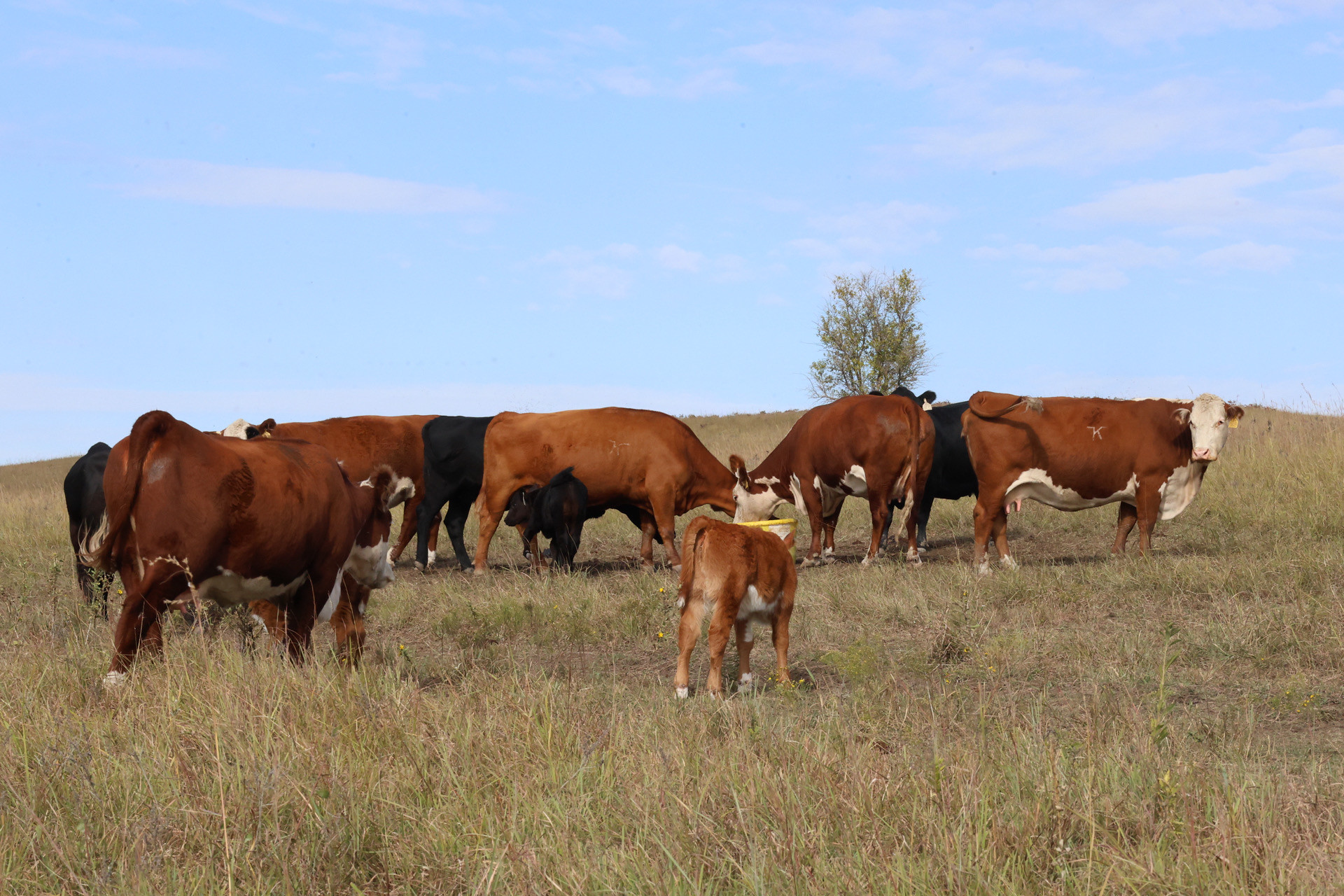
PHOTO: Hereford and Angus cattle owned by K-State Purebred Beef Unit. (K-State Research and Extension)