Texas A&M AgriLife opens High Plains Research and Extension Center
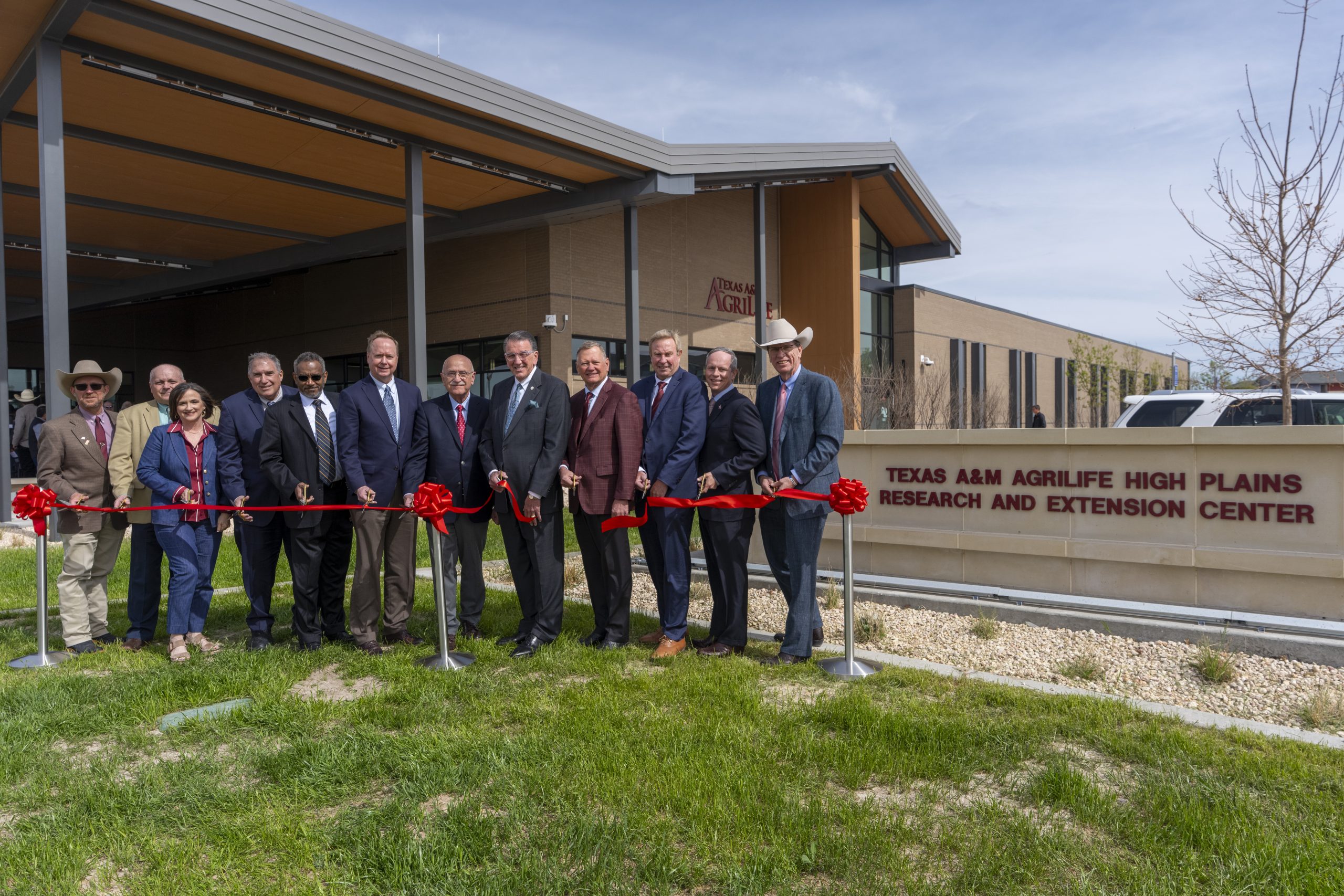
High Plains Center ribbon cutting on Tuesday, Apr 07, 2026, in College Station, Texas. (Michael Miller/Texas A&M AgriLife)
Texas A&M AgriLife marked a major milestone with a ribbon-cutting ceremony celebrating the opening of its new High Plains Research and Extension Center, a state-of-the-art facility designed to unite research, education and outreach efforts across the Texas High Plains.
The new research center is part of Texas A&M University’s Charles W. “Doc” Graham ’53 DVM Complex, which is a premier veterinary facility located on the campus of West Texas A&M University in Canyon, Texas.
The complex also houses the Texas A&M Veterinary Education, Research and Outreach program, and the Texas A&M Veterinary Medical Diagnostic Laboratory.
John Bellinger, of the Texas A&M University System Board of Regents, attended the ribbon cutting and emphasized the broader significance of the investment.
“The High Plains generates more than $20 billion annually in agricultural economic activity, and what happens here reaches far beyond this region,” Bellinger said. “This facility represents a long-term commitment to the people and industries that rely on this work every day.”
A hub for research and outreach
The $30 million multi-purpose facility will house approximately 60 faculty and staff from AgriLife Research and AgriLife Extension. It will also serve as the district hub for Extension programming across 22 surrounding counties.
Designed with both science and service in mind, the building features modern laboratories for applied research and flexible meeting spaces for educational programs and community events. Key research sectors include beef cattle and dairy production, wheat genetics, irrigation and water management, forage systems, plant health, entomology, soil science, agricultural engineering, economics, and human nutrition.
According to Jeffrey W. Savell, vice chancellor and dean for Agriculture and Life Sciences, the center will focus on locally driven solutions backed by statewide resources.
“Local work—paired with the strength of our statewide mission—ensures we’re addressing the opportunities and challenges unique to this region,” Savell said. “When researchers, Extension professionals and producers collaborate, ideas move faster and solutions become more practical.”
Built on partnership
Leaders highlighted collaboration as a central theme for the new center. Walter V. Wendler, president of West Texas A&M University, said the facility reflects the cooperative spirit of the region.
“In the Panhandle, we understand partnership,” Wendler said. “No single farmer, rancher or institution can meet the demands of feeding and fueling the world alone. This center represents what’s possible when we work together.”
The High Plains region is a powerhouse of agricultural production, producing commodities such as fed beef, corn, sorghum, cotton, dairy, and wheat—often exceeding the output of entire states.
G. Cliff Lamb, director of AgriLife Research, said the facility will help advance cutting-edge agricultural innovation.
“This world-class center marks a new era in our scientific journey alongside producers,” Lamb said. “The work done here will strengthen trust with our partners and drive practical, science-based solutions across key commodity systems.”
Serving communities across the region
Beyond research, the center is designed to strengthen outreach and community engagement. Rick Avery, director of AgriLife Extension, said the facility will expand the agency’s ability to serve the region.
“This center allows us to better connect counties, align priorities and deliver meaningful programs at a larger scale,” Avery said.
For Brent Auvermann, director of the High Plains Research and Extension Center, the facility represents both tradition and progress.
“We stand on the shoulders of generations whose livelihoods depended on this land,” Auvermann said. “This center continues that legacy—serving as a place where science, education and relationships come together to support the people of the Texas High Plains.”
Lacey Vilhauer can be reached at 620-227-1871 or [email protected].