
Eastern redcedar trees are already the villain of the High Plains, costing producers forage production, groundwater and increased wildfire risk. Now, Oklahoma State University researchers say the invasive tree is also creating ideal habitat for lone star ticks, allowing them to survive in areas that otherwise would be too hot and dry.
Bruce Noden, associate professor of medical and veterinary entomology in OSU’s Department of Entomology and Plant Pathology, and Scott Loss, professor in the OSU’s department of Natural Resource Ecology and Management, started work on this research project in 2014 to better understand ticks in Oklahoma.
Their findings add another potential cost of cedar encroachment for producers already battling these invasive trees.
Unexpected findings
Noden said early in the research process he noticed lone star ticks were concentrated in the western part of the state, which seemed odd to him.
“Lone star ticks are more associated with wetter and more humid areas, characteristically the eastern part of the Oklahoma, so it got me asking how they were surviving in hot, arid parts of the state,” Noden explained. “Driving around, I saw eastern red cedars invading many areas and started asking questions.”
Those observations led the researchers to examine whether cedar tree encroachment was providing more hospitable environments for tick populations in areas they would not normally thrive. The evidence gathered supports their hypothesis. The research concludes redcedars create a “humidity dome” under their shaded canopy, which provides ticks with their humidity requirements.
“Our study clearly shows that cedar encroachment plays an important role,” Loss said. “Further, the types of changes that are occurring (in western Oklahoma)—longer dry periods, with fewer rain events that are more intense—would not be expected to lead to the types of abiotic conditions that would support tick populations in the absence of cedar trees.”
What is a tick-friendly environment?
Although most think of ticks as the cockroaches of the great outdoors, which can survive in all conditions, Noden said these members of the arachnid family are actually highly sensitive to humidity levels and dry out quickly.
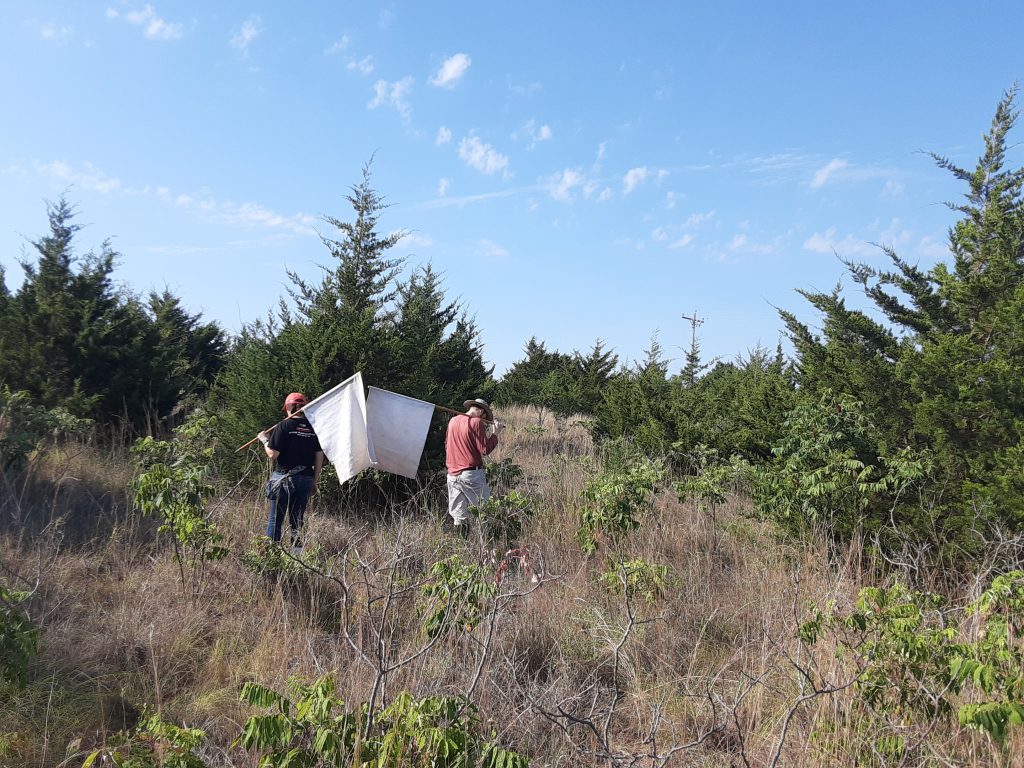
“They need habitats that retain humidity so when they come down from questing on grass, they can draw in moisture into their bodies from the leaf litter and live to quest another day,” Noden explained.
He said ticks only feed on blood three times in their lives: Once for every life stage—larvae, nymph and adult. Additionally, they can live for two to three years by absorbing moisture from the surrounding humidity.
Eastern redcedars provide an optimal habitat for the lone star tick, because this species thrives on high humidity and is generally found in areas with higher precipitation. However, Noden said the American dog tick is also using the increased humidity within cedar trees to expand its territory.
Noden said the study determined that for ticks, even the most basic encroachment—3-to 4-foot Eastern redcedar tree—is enough to sustain the lone star tick population in a pasture that would normally be inhospitable due to heat and low humidity.
“Per tick bite, there’s probably an equal chance of getting bit by an infected tick in all cedar encroachment levels; however, since there are far more ticks in encroached areas compared to open grasslands, and in early encroachment stages compared to later stages of encroachment, that means you are more likely to encounter and get bit by an infected tick in cedar encroached areas,” Loss added.
Tick-borne diseases
The main concern with the spread of ticks is disease for both humans and animals. One condition spread by infected ticks that has drawn more attention lately because it seems to be spreading in the human population is Alpha-gal Syndrome, also known as red meat allergy. The most common vector for this condition is the lone star tick.
The current number of Alpha-gal cases in Oklahoma is unknown because the condition—which can be difficult to diagnose—was only identified in 2009. However, cases in the High Plains are increasing with the spread of the lone star tick.
Due to an influx of confirmed cases, Oklahoma Gov. Kevin Stitt signed legislation in 2026 making AGS a reportable condition, requiring medical providers and labs to submit suspected cases to the Oklahoma State Department of Health.
“Ranchers and other producers may be experiencing increased tick risk with cedar encroachment,” Loss said. “There are even increasing examples of ranchers having to leave the industry due to Alpha-gal allergy. Imagine being a beef producer that is allergic to beef and other animal products. Redcedars are likely playing a role in some cases.”
Transportation
Although Noden said a tick only moves a couple meters on its own in the span of its life, ticks are hitching rides that take them much further to establish populations across Oklahoma where they have not been found before.
Wildlife and livestock transport ticks far beyond the few meters they move on their own. White-tailed deer and coyotes are the primary hosts, but cattle and horses also carry ticks between locations. Noden said researchers also found ticks attached to 25% of the birds they captured, suggesting migratory birds may play an important role in moving ticks across the landscape.
“Interesting, wildlife including migratory birds have probably always moved ticks into parts of the state that are inhospitable to ticks, but when ticks drop off of an animal under an eastern redcedar tree, the conditions under the tree increase the chances the ticks will survive and establish a population,” Loss explained.
How to slow the spread
Whether it is by controlled burn, chemical or mechanical means, Loss and Noden say a reduction in cedar trees is the answer to slowing tick populations.
Loss said any reduction in cedar cover can help slow future encroachment and create grassland patches with fewer ticks. Noden cautioned, however, that reducing tick risk may require more extensive cedar removal.
The team’s study found the highest tick numbers and the highest prevalence of Ehrlichia bacteria in areas with relatively low cedar density, leading researchers to conclude complete cedar removal may ultimately be necessary to minimize tick habitat.
The researchers plan to expand the work into Kansas, Nebraska, Texas, and other regions experiencing Eastern redcedar encroachment to determine whether the same relationship between cedar invasion and tick populations exists elsewhere. They also hope to determine whether increases in tick abundance ultimately translate into higher rates of Alpha-gal Syndrome and other tick-borne diseases.
Lacey Vilhauer can be reached at 620-227-1871 or [email protected].
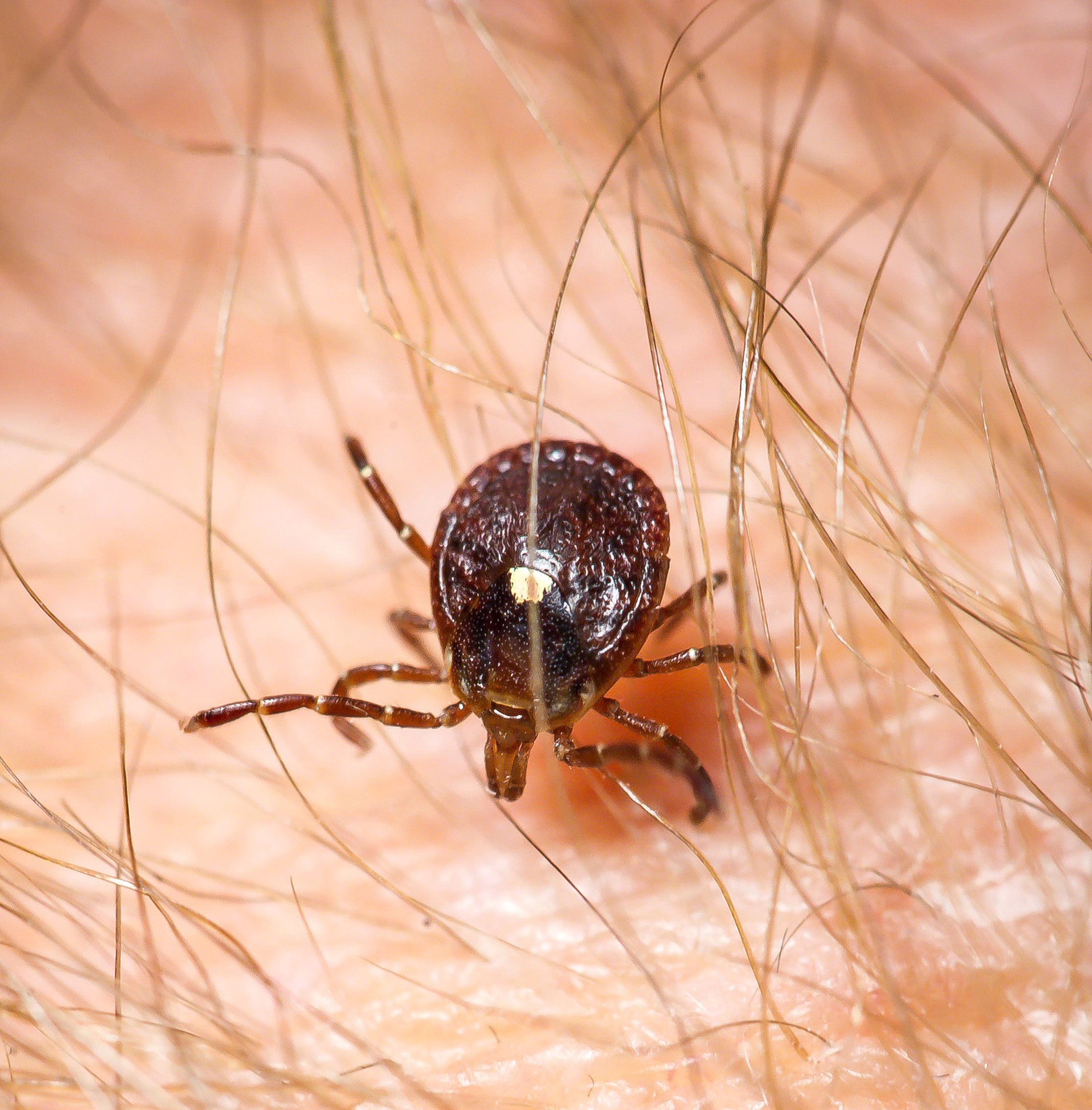
PHOTO: The lone star tick. (Photo courtesy Todd Johnson.)
Related coverage and resources
- Related on HPJ: Changing Missouri weather fuels tick populations
- Related on HPJ: Drones take on Eastern redcedar: A high-tech solution for rangelands
- Outside resource: Oklahoma State University — Eastern redcedar and lone star tick research



