If there is one thing the summer has, it’s heat. Along with heat, we also experience long sunny days and usually a lack of moisture. All of the factors can make it very difficult to grow healthy fruits and vegetables, let alone spend time in the garden. So, can fruits get sunburned?
Yes, not only can they get sunburned, but summer weather can also cause tomatoes to crack and cucumbers to wrinkle. The first culprit here is the sun. Many fruits, and this includes ‘fruits’ like peppers, can be damaged by an abundance of sunlight. This typically happens when a normally shaded fruit is exposed to direct sunlight. Sudden sun exposure can occur if the upper plant canopy is pruned or if branches break off in a storm. The thin skin can’t protect from the stronger light, and the fruit starts to sunburn. Peppers, as well as tomatoes and melons, will get tan lesions that are soft to the touch. The tan area may also develop into dry, leathery skin.
To prevent sunburn, you should use sunblock. Now, the most sustainable form of sunblock would be a nice, thick, undamaged canopy to shade the fruits. However, there are some options, such as kaolin clay or other film-type applications, that can block the sun for a very brief period. It’s better to find some shade rather than put on a sweater.
Other plants, especially shade loving plants like hosta, will get scorched leaves as a sign of sunburn. This can happen in the garden, but usually on transplants, early in the season. The process is the same for both leaves and fruits; unprepared tissues receive too much light and become bleached and necrotic.
Another problem, one primarily affecting tomatoes, is cracking. Tomatoes develop cracks in the summer when their skin tightens during dry periods, and then a sudden influx of water causes them to burst. Maintaining consistent moisture will reduce the sudden swelling. The crack will eventually dry out and develop a thin skin.
These issues are only skin deep and don’t make the entire fruit inedible. However, it is important to note that soft lesions or large cracks can invite insects or mold. Once mold or insects begin to infest the wounds, it’s better to dispose of the fruit. Harvesting tomatoes earlier and letting them ripen indoors is a way to avoid cracking.
Keep an eye on those plants and make sure they have water and shade; It is summer, after all.
For more information, please contact Kenny Dodson, Horticulture Extension Agent, at [email protected] or 620-670-5018.
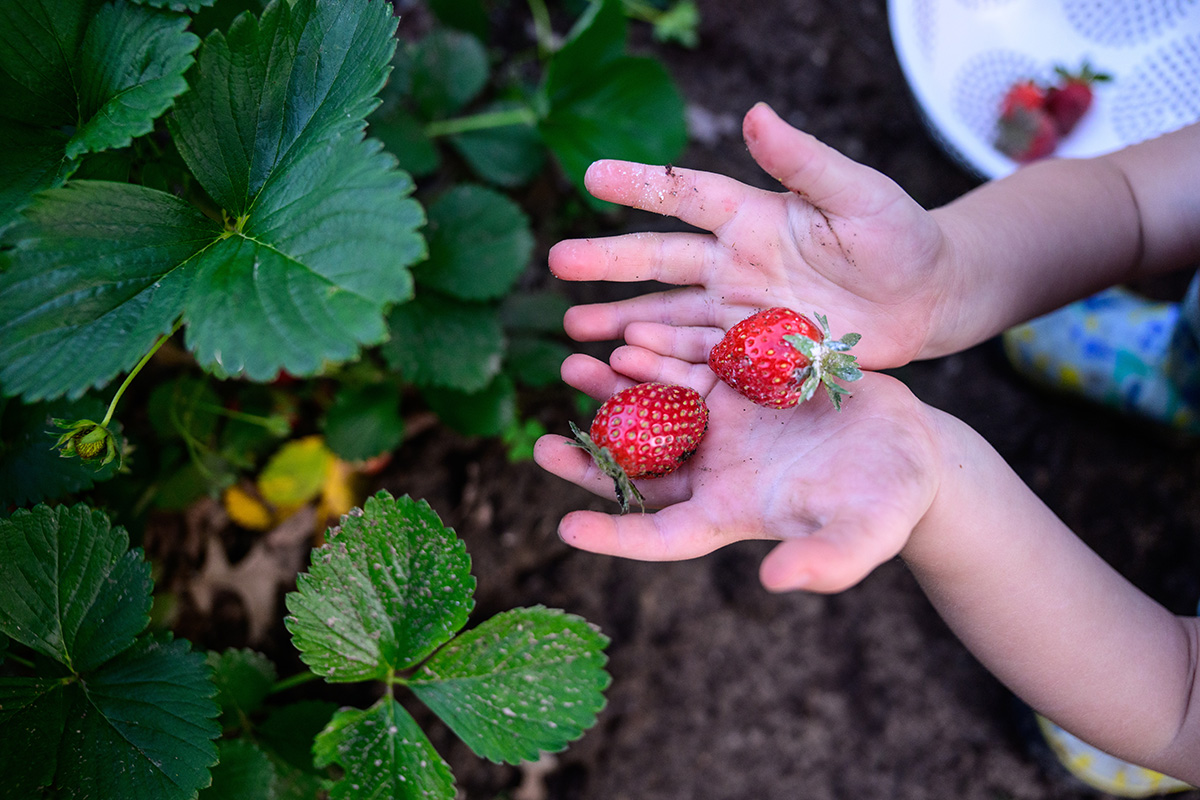
PHOTO: Tiny hands holding strawberries in strawberry patch with green leaves. (Adobe Stock-#1198172203 │ Schaefer Photography)
Related coverage and resources
- Related on HPJ: Helping gardens survive summer heat
- Related on HPJ: Common tomato plant problems and how to fix them
- Outside resource: University of Maryland Extension — Sunscald on Vegetables