
Cattle on feed report signals bullish market
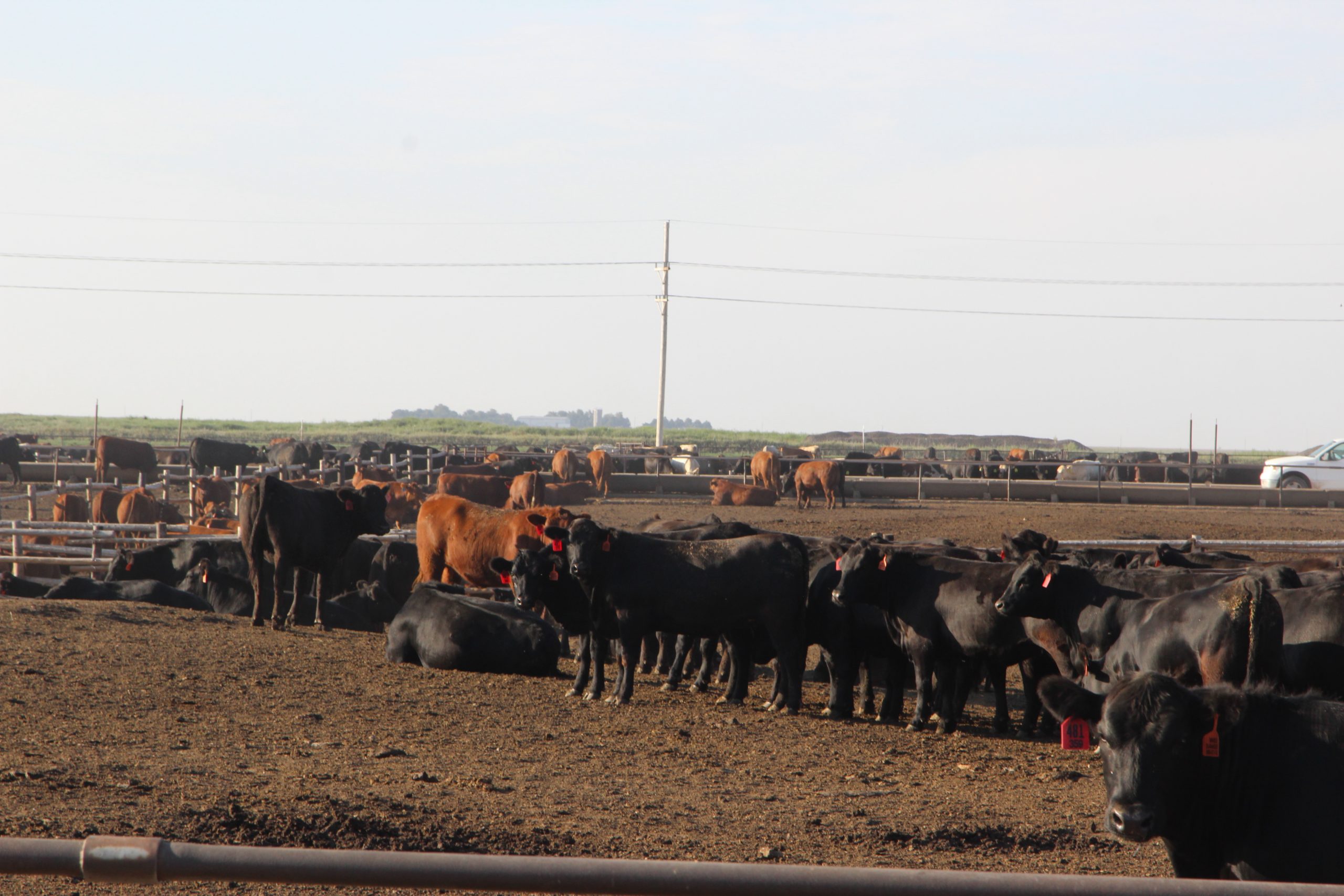
Livestock economists described the October U.S. Department of Agriculture Cattle on Feed report as bullish.
Derrell Peel, who holds the Charles Breedlove Professorship of Agribusiness in the Department of Agricultural Economics at Oklahoma State University, said placements were significantly below expectations for the third consecutive month. Marketings were near expectations, and on-feed inventory was slightly below year-ago levels after five months of apparent year-over-year growth.
“I think it’s going to be interpreted as a bullish report mainly because the placements came in significantly smaller than expected,” Peel said. “It’s the third month in a row with a very sharp drop in placements.”
The report, issued Oct. 23 by USDA’s National Agricultural Statistics Service, showed 11.37 million cattle and calves on feed for slaughter in U.S. feedlots with a capacity of 1,000 or more head as of Oct. 1. The inventory was slightly below the year-ago total of 11.42 million head.
“I’m not sure it was that big of a surprise,” said David Anderson, a professor and Extension specialist for livestock and food product marketing at Texas A&M. “While placements were lower than the average pre-report estimate, most of the analysts expected the smallest placements for the month on record so it was stronger than that. That gets on-feed numbers below a year ago, which makes sense too.”
Peel said the on-feed total had been above year-ago levels for the past five months, likely reflecting a slower rate of cattle moving out of feedlots.
“We’ve had this race between decreased placements and decreased marketings,” Peel said. “When we decreased the marketings faster than placements, that allowed the on-feed total to show a year-over-year increase. But now the with the lack of cattle in terms of placement it is really becoming apparent, and the marketings rate is already at an all-time level.”
Marketing rate low
The marketing rate has been very low, allowing the on-feed total to remain higher on a year-over-year basis for the past five months, Peel said.
“But it’s been coming down,” he added.
The inventory included 7.07 million steers and steer calves, up slightly from the previous year. Steers and steer calves accounted for 62% of the total inventory. Heifers and heifer calves totaled 4.3 million head, down 1% from 2025.
Anderson said the number of heifers on feed supports the idea of a possible slow herd rebuilding process.
“The low placements could reflect a lot fewer heifers being placed but then the heifers on-feed doesn’t really support that idea. But all in all, more evidence of a slow rebuilding.”
Glynn Tonsor, a professor of agricultural economics at Kansas State University, said more time is needed before making predictions about herd rebuilding.
“We need to wait for consecutive cattle on feed quarterly reports to show a decline in the share of placements that are heifers before confidently saying expansion efforts have increased,” Tonsor said.
Placements hit a 30-year low
Placements in feedlots during September totaled 1.78 million head, down 12% from 2025. The Cattle on Feed report said placements were the lowest for September since 1996.
“One reason for low placements is that the cattle really aren’t out there,” Anderson said. “Another reason is that feedlot returns are looking pretty bad given the correction in prices. So that really cut the financial incentive to place cattle, and the futures didn’t give much opportunity either. With few cattle coming from Mexico in the month as the border began to open we were comparing close to apples to apples with only domestic cattle available to place.”
Tonsor said years of smaller calf crops made the decline in placements unsurprising.
Marketings of fed cattle during September totaled 1.52 million head, down 7% from 2025. Marketings were the lowest for September since the series began in 1996.Marketings have been down for some time, Anderson said.
“We’ve certainly reduced packing capacity and keeping them longer on feed works to reduce marketings.“Packer margins have turned around a bunch. But marketings are also a function of how many cattle packers are trying to buy. So lower marketings are coming from both sides—the sellers and buyers.”
Anderson said marketing numbers will be watched closely over the next year.
Peel said he expects inventories to continue tightening as low placements take effect, with marketing rates already at historically low levels.
“The on-feed total has been above year-goal levels for the past five months, but you know that is misleading in some ways,” Peel said. “It’s above because we’ve slowed down the rate of moving cattle out of feedlots.”
Herd rebuilding remains on hold
Evidence of herd rebuilding remains limited. Heifer slaughter was down about 11%, while the percentage of heifers on feed was slightly higher and remained above average, Peel said.
“I think we’ll continue to see the on-feed inventory declining and it had been declining for 18 months until about five months ago,” Peel said. “We’ve had this race between decreased placements and decreased marketing. When we decreased the marketings faster than placements that allowed the on-feed total to show a year-over-year increase.”
The economists said the beef market could remain strong in 2027 if the overall economy holds steady. Anderson noted that the October World Agricultural Supply and Demand Estimates report projected steady prices.
Anderson said tight supplies likely mean ranchers can expect favorable pricing opportunities in 2027.
“Reduced marketings, weights getting closer to last year, maybe more expensive corn should pressure weights a little and low beef cow slaughter and higher dairy cow slaughter will factor into less beef production,” Anderson said. “More Mexican cattle getting through the system will offset some fewer domestic cattle. I think there is room for fed cattle prices to increase. Tighter beef supplies and it looks like demand is staying good so I think prices have room to rise.”
Peel said market signals continue to indicate favorable prices. Over the past year, the industry has weathered what Peel described as “external noise,” most notably from the White House, that has caused temporary price fluctuations. However, he said it has not changed long-term demand, which indicates consumers remain willing to pay for quality beef.
Beef prices have increased substantially on a year-over-year basis for more than three years, he said. Although he does not expect prices to continue increasing at a record rate, Peel expects prices to remain high because heifer retention has not strengthened substantially.
Anderson and Peel said ranchers will need to continue monitoring their expenses, which also have increased, but there is reason for optimism that bullish prices will remain.
“We still don’t have any real evidence that we’re saving enough heifers to rebuild this thing so the numbers are still getting tighter,” Peel said.
“We’re seeing a little bit of seasonal weakness in box beef prices, but when you look at it across the board, consumer demand continues to be very strong for beef and so that’s certainly a key to going forward to the idea that we’re going to see a bull market even with tighter supplies,” Peel said. “If you don’t have the demand, it doesn’t matter. I think we will have the demand.”
Dave Bergmeier can be reached at 620-227-1822 or [email protected].



