
Alpha-gal Syndrome: The “red meat allergy” caused by ticks

These tiny, innumerable arachnids—known as ticks—can be hard to spot, but their bite can lead to several serious medical conditions in humans, such as Lyme disease, Rocky Mountain Spotted Fever, and anaplasmosis. Another tick-borne disease that has been receiving more attention as of late is Alpha-gal Syndrome, also known as “red meat allergy.”
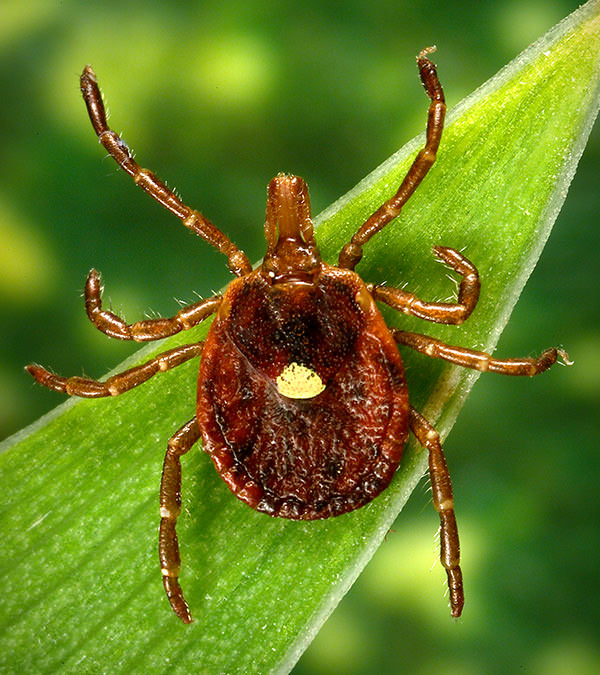
In the United States, AGS is spread by a bite from the Lone Star tick, and it can trigger an allergic reaction to mammalian food products, including beef, pork, lamb, deer, rabbit, and even dairy products.
Some patients are even allergic to pig or cow heart valves used in medical operations, or medications like Heparin, a common blood thinner derived from pigs. Large animal veterinarians or livestock producers that have AGS may even exhibit an allergic skin response when they come in contact with fluids from cattle and pigs.
Dr. Scott Commins, MD, is the William J. Yount Distinguished Professor of Medicine Associate Chief for Allergy & Immunology at the University of North Carolina School of Medicine, and one of the leading experts on AGS. He said the condition—although not connected to ticks at the time—was only identified in 2009. By 2012, a national blood test was available to test for the syndrome, which has led to many new diagnoses.
Although it is unknown how many Americans have this condition, Commins said the last assessment from the Centers for Disease Control and Prevention estimated 450,000 people have contracted AGS in the U.S. This would make it the 10th most common food allergy among Americans.
What causes the syndrome?
AGS develops when a human is bitten by a Lone Star tick that has the alpha-galactose sugar molecule in its saliva. Alpha-galactose is found in most mammals, and the human body responds by creating antibodies against the sugar, and an allergy or intolerance to red meat is the outcome. Medical professionals like Commins have been studying this condition and the ticks that cause it for years, but they admit they still have much to learn about this unique syndrome and allergy.
“It was a challenge to put the pieces together, because the allergic reactions are delayed,” Commins explained. “You eat a hamburger at dinner, and literally nothing happens for five or six hours.”
This delay in symptoms also makes it difficult to diagnose. Additionally, it takes at least four weeks after a tick bite for the allergy to develop, so patients don’t always make the connection between being bitten by a tick weeks prior, eating red meat, and experiencing symptoms hours later.
“A lot of food allergies are based on the idea that you are allergic to something from the very beginning,” Commins said. “Alpha-gal is not that way. People, usually adults, had successfully or safely eaten red meat for decades, and so the idea that it would come on out of the blue, and you could react to what you had for dinner during your sleep, has made it a real challenge to diagnose.”
Additionally, some research suggests certain groups of people are very sensitive to the sugar, while others could be bitten and not contract the syndrome.
“We do know that if your blood type is B or AB, you seem less likely to get it, and that’s because the B-blood type looks a lot like alpha-gal,” Commins said. “We think those patients don’t as readily make the response, because it would almost be like an autoimmune response. It’s not like they’re bulletproof, but they could have a little bit of protection. But we don’t know beyond that.”
Symptoms, management, and outlook
Commins said symptoms of AGS can include a range of indicators like redness, itching, swelling, hives, nausea, vomiting, diarrhea, difficulty breathing, chest tightness, lightheadedness, and even anaphylaxis.
However, Commins noted certain individuals with AGS only exhibit gastrointestinal reactions without the common allergic response of itching and hives. This shows how unique the condition can be from patient to patient and can lead to a delay in a proper diagnosis.
Furthermore, some individuals can be bitten by an infected tick, receive a positive AGS blood test result, and not experience symptoms at all after eating red meat. Commins said part of his research is to determine if those individuals will eventually develop an allergy, or not.
“You might say that the response is immature, and maybe it matures after the next tick bite,” he said. “We just don’t know if that’s even a risk factor for becoming allergic.”
Currently, there is no treatment or cure for AGS, but that does not mean a person with the syndrome will have it forever. Commins said the allergy can resolve itself over time, and red meat can be back on the menu. Doctors advise affected patients to alter their diets to avoid red meat products and prevent future tick bites, which can prolong or worsen symptoms.
“If you live where this tick range is, and you’re an outdoorsy person, or in agriculture, then you’re very likely to get bitten by a tick several times a year. And for those people, it rarely goes away for them.”
There has been only one confirmed death from AGS. In 2024, a 47-year-old New Jersey man attended a barbecue where he ate a hamburger, and hours later was pronounced dead. At the time, it was called a “sudden unexplained death” until new information released last week confirmed the man had contracted AGS without realizing it, and his death was due to the allergic reaction.
“This was definitely an outlier,” Commins said. “The rate of anaphylaxis for these patients is pretty high, so they do have severe reactions, but, fortunately, a severe reaction that leads to death is vanishingly rare. So even though people can have severe reactions and need epinephrine, an ambulance and a hospital, they rarely die from it. The big issue in this case, is he did not know he had the condition.”
This underscores the need for the public to report tick bites and symptoms if there is a possibility they could have contracted AGS from being in the great outdoors. However, receiving a correct diagnosis of AGS and knowing to avoid red meat can have a lot to do with geographic location in relation to the Lone Star tick.
“In some places, healthcare providers know about it and in the ER, they might ask you what you had to eat and if you’ve had any tick bites,” Commins said. “But then other places, they literally have never heard of it.”
As this tick continues to spread AGS in areas like the High Plains, knowledge and awareness of the condition from a personal standpoint could save time on receiving a diagnosis or even prevent death in extreme cases.
Lacey Vilhauer can be reached at 620-227-1871 or [email protected].
Sidebar: The Lone Star tick and preventing its bite
By Lacey Vilhauer
The Lone Star tick is the most closely associated with Alpha-gal Syndrome in the United States, but said other species of tick have spread the syndrome in other countries.
This species has been in the U.S. since at least the 1750s, but it is unknown how long it has been a vector of AGS. The female Lone Star tick is identified by a silvery-white mark on its back, while the male tick has varied white streaks or spots around the margins of their shields.
Although it is named for its Texas markings, this arachnid is most common in the Southern and Eastern parts of the U.S. However, it has been expanding its territory, and Commins said it is becoming more common in the central U.S., in states like Texas, Oklahoma, Nebraska, Iowa, Illinois, Kansas, and Missouri.
Commins said there is still a great deal to learn about the tick in relation to the syndrome. For instance, he said researchers still have not determined if all Lone Star ticks carry the sugar, or if only some do.
“We thought for a while that the tick had to have a blood meal from a mammal, but it turns out that the ticks can actually make alpha-gal or something similar, in their own saliva,” Commins explained. “This makes the risk for people, greater, because the blood meal is not required.”
Commins recommends using Deep Woods Off spray when outdoors to deter ticks from the skin and treating clothes with permethrin.
“We talk about doing frequent tick checks and trying to stay on paths, as opposed to walking through tall grass, but I think people also need to recognize that avoiding ticks is an incredible challenge. It’s hard to do in terms of going tick-bite-free, but I would tell people it’s worth the time to spray yourself and your clothes, because that seems to be the best way to prevent the tick bites.”
Lacey Vilhauer can be reached at 620-227-1871 or [email protected].
TOP PHOTO: Alpha-gal Syndrome can caused an allergy to beef, pork, and dairy products. (Photo by Jaunathan Gagnon via Unsplash.)



