Federal, state officials on high alert as New World screwworm advances into U.S.

Many have speculated that it was not going to be a matter of “if” New World screwworm would cross the Mexican border into the United States, but “when.” Recently, those expectations turned out to be true.
U.S. Department of Agriculture officials confirmed the first case of New World screwworm in a 3-week-old calf in La Pryor, Texas, on June 3, marking the first detection of the pest in U.S. livestock in decades. On June 5, USDA announced another case, this time in a 1-month-old calf in Zavala County, around 5.6 miles from the site of the first detection.
On June 8, the agency confirmed two additional cases of NWS in the U.S.— a calf in La Salle County, Texas, and a dog in Andrews County, Texas.
Last year, USDA suspended live cattle, horse and bison imports from Mexico over concerns about the fly’s northward spread. Secretary of Agriculture Brooke Rollins said the pest spread to new areas through the movement of animals, “not because the fly flies tens of miles or hundreds of miles on its own.”
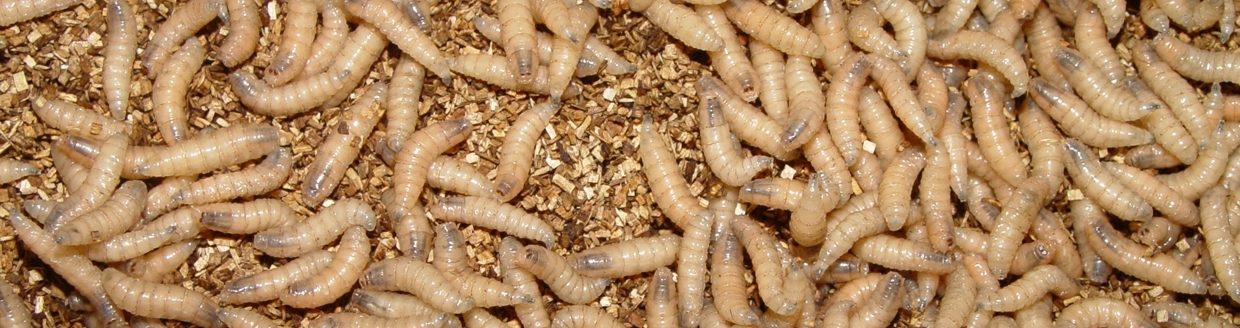
Larvae of the New World screwworm, a parasitic fly, burrow into the flesh of livestock using sharp mouth hooks. The pest was widely considered to be eradicated from the U.S. by 1966, though it re-emerged in the southwestern U.S. for a few years in the late 1970s, according to a report from the United Nations Food and Agriculture Organization. After that, it was driven off U.S. soil until 2016, when an outbreak in the Florida Keys infested local deer before officials stamped it out.
Lingering in Latin America
However, it never disappeared from Latin America, and in recent years, has been pushing steadily northward through Central America and Mexico. Earlier, USDA confirmed a case just 25 miles from the U.S.-Mexico border in the Mexican state of Coahuila.
USDA’s Animal and Plant Health Inspection Service has established a 20-kilometer infested zone around the detection site, where it is implementing quarantines, movement controls and surveillance for the pest, Rollins said. She added that the agency is immediately deploying 4 million sterile flies in ground release chambers in the area on top of the 4 million sterile flies it already drops aerially over the region each week.
“If we all work together and follow the animal treatment protocols and movement restriction guidance, there is no reason to believe that this incursion will result in an establishment of the pest in our country,” she said.
USDA Undersecretary for Marketing and Regulatory Programs Dudley Hoskins said agency officials “will continue to try to flood the zone with as many sterile flies as we can get there until we have confidence that we’ve knocked it down in that area and we can return to our normal posture.”
Rollins said around 400 to 500 million sterile flies per week are needed to push the fly past the Darién Gap, a stretch of land along the border of Panama and Colombia. About 100 million flies are produced at a facility in Panama, and another 100 million flies will be produced at a facility in Mexico now under construction, which Rollins said could open as soon as next month.
A $750 million facility being built in Edinburg, Texas, which will be capable of producing 300 million sterile flies per week, won’t start operating until next fall, Rollins said.
Texas State Veterinarian Bud Dinges urged producers to immediately report suspected infestations and check their animals as often as possible for wounds. He said New World screwworm cases are “highly treatable,” and emphasized that the pest does not pose a threat to food safety. (Ranchers can report suspected cases to the TAHC 24-hour veterinarian call line: 1-800-550-8242.)
American Livestock Markets and Dealers Association CEO Tim Niedecken told Agri-Pulse ranchers should inspect their animals closely for wounds that don’t seem to heal, especially following branding, castration and ear tagging, and consult their veterinarians if they notice anything that seems off.
“The livestock industry’s been preparing for this possibility for well over a year and while it’s going to create challenges, we’ll work together to protect animal health and maintain all of our commerce,” he said.
What else is needed?
Texas Gov. Greg Abbott has been working closely with state and USDA officials on combatting the NWS. During a recent press conference, he issued a disaster declaration for Zavala and Uvalde counties.
“I am issuing an updated statewide disaster declaration to make two things very clear,” Abbott said. “First, I authorize the use of all available resources of state government to respond to this disaster and reassign resources from across the state as needed to address NWS. Second, I am making all state personnel available to accelerate the movement of sterile flies into Texas and the construction of the new sterile screwworm production facility in Edinburg. We have eradicated this pest before, and we will do it again.”
To speed up construction of the sterile fly facility outside of Edinburg, Texas, Abbott said Texas is willing to spend its own funds to see that construction is “24 hours a day, seven days a week.” Abbott emphasized that “we cannot make it through a second summer.”
The governor’s disaster declaration deploys all available state resources to respond to this threat and prioritizes resources to Uvalde and Zavala counties.
Meanwhile, Canada said it would temporarily bar certain U.S. imports of livestock, including horses, from entering the country.
“Animals that originate from or were present in the state of Texas within 21 days prior to border crossing will not be accepted into Canada,” the Canadian Food Inspection Agency said.
Editor’s note: Sara Wyant is publisher of Agri-Pulse Communications Inc., www.Agri-Pulse.com.