As summer temperatures begin to climb in Arkansas, it’s critical to prevent the risk of heat illness by wearing appropriate clothing, staying hydrated and taking frequent breaks to cool down.
Bryce Daniels, extension assistant professor and state extension health specialist for the University of Arkansas Division of Agriculture, said there are three main types of heat illness that vary in severity.
Heat cramps are the mildest form and involve painful muscle cramps during or after physical activity in the heat, Daniels said.
“This is the first sign of electrolyte and mineral imbalances in the body, which can cause painful tightening of muscles,” Daniels said. “Heat cramps can progress into heat exhaustion if you remain in a hot environment and don’t replenish your lost electrolytes.”
The next stage of heat illness is heat exhaustion, which is more serious and occurs when the body loses too much water and salt through sweating and can no longer cool itself properly, Daniels said. If untreated, this can lead to heatstroke.
Heatstroke is the most severe form of heat illness.
“According to the Mayo Clinic, heatstroke is defined as a condition when the body overheats to a temperature of 104 degrees Fahrenheit, usually due to exposure to high temperatures or physical activity in high temperatures for too long a period of time,” said Nina Roofe, extension assistant vice president for family and consumer sciences for the Division of Agriculture. “Heatstroke can damage vital organs, including the brain, heart, kidneys and muscles.”
Daniels said it is important to understand that “all heat illness is 100 percent preventable.”
Who is at risk?
Roofe said people are more susceptible to heatstroke if they are older than 65, have heart or lung disease, are overweight, inactive or have a history of heatstroke. People exerting themselves in hot weather — such as members of the military, athletes or construction workers — or who lack air conditioning are also at greater risk of heatstroke.
“People who take medications for high blood pressure, including diuretics, vasoconstrictors and beta blockers, as well as those who take antidepressants and antipsychotics, are more susceptible to the risk of heatstroke and should practice caution,” Roofe said.
Symptoms of heatstroke
A change in mental status or behavior can be an indicator of heatstroke, including confusion, agitation, slurred speech, irritability and seizures.
“It’s also important to look out for a change in sweating, where the skin may feel hot and dry, or sweating may be profuse,” Roofe said.
Nausea and vomiting, flushed skin, shallow and rapid breathing, a fast heart rate — which is the heart’s attempt to cool the body — and a throbbing headache can also be indicators of heatstroke.
Roofe said the biggest concerns of experiencing heatstroke are organ damage and death.
“Heatstroke can cause the brain, heart, liver and kidneys to swell and therefore be unable to perform their normal functions,” Roofe said. “If the damage occurs without intervention, permanent damage or death can occur.”
First aid for heat illness
For heat cramps, stop performing physical activity and move to a cool place to rest, Daniels said. Remove extra clothing, use cool cloths or a fan to lower body temperature and drink fluids with electrolytes.
For heat exhaustion, follow those same steps and closely monitor for worsening symptoms. “Seek medical care if symptoms do not improve or if the person cannot drink fluids,” Daniels said.
If you suspect someone is experiencing heatstroke, treat it as a severe emergency, he said.
“Call 911 immediately and move them to a cool place,” Daniels said. “Remove extra clothing and cool the body with fanning, water and ice packs to the armpits and groin. Only give fluids if the person is fully alert.”
Sun safety and hydration
Wearing appropriate clothing when outside can help prevent overheating, Roofe said. This includes loose-fitting and lightweight garments made from cooling fabrics such as linen, silk, cotton or hemp.
“A wide-brimmed hat and sunglasses are helpful, too,” she said.
Practice sun safety by using sunscreen with an SPF of at least 15 and reapplying every two hours. Daniels said it is best to apply sunscreen approximately 30 minutes before sun exposure. This helps the skin absorb the sunscreen and makes it less likely to wash off during perspiration.
It’s also important to stay hydrated, Roofe said, although thirst is not a good indicator of hydration. Thirst lags behind hydration status, she said, especially as we age.
“Proactively drinking water — before you necessarily feel acute thirst — will help you sweat, maintain a normal body temperature and prevent heatstroke,” Roofe said. “Sugar-free electrolyte drinks can also help you stay hydrated and replace losses of electrolytes from extra sweating.
“Avoid high-sugar drinks, because these pull fluid out of cells and into the gut, which can lead to nausea and vomiting, which further dehydrates the body,” Roofe said.
The U.S. Centers for Disease Control has a hydration guide, which includes a urine color scale to help determine one’s hydration level.
“Aim to drink about one cup of hydrating fluid every 15 to 20 minutes,” Daniels said. “That equals about 24 to 32 ounces per hour. Small, frequent drinks work better than drinking large amounts at once, and you should not drink more than 48 ounces per hour.”
If you must exert yourself outside during the summer months, it is critical to condition yourself to work in the heat by exposing yourself to it gradually, giving the body time to acclimate.
“Take breaks more often to cool down in air conditioning, or at least in the shade,” Roofe said. “Don’t work outside in the heat alone, so if anyone has a heat-related issue, others are there to assist.”
Limit time spent outside during the hottest part of the day, which is usually from noon to 4 p.m.
Daniels said it is also key to start your day well-hydrated if planning to spend time outside, as it is “easier to stay hydrated than to catch up later.”
“If you begin the morning already dehydrated, your body may not recover throughout the day,” Daniels said. “Staying hydrated daily can also prevent long-term health problems such as kidney stones.”
It is also critical to never leave pets, children or adults in parked cars during the summer, as temperatures can rise 20 degrees Fahrenheit in 10 minutes, Roofe said.
“Even with the windows cracked, or if the car is in the shade, it is still going to contain heat and can lead to heatstroke or death,” Roofe said.
For more information about healthy living, visit the Cooperative Extension Service’s Health in Arkansas website.
To learn about extension programs in Arkansas, contact your local Cooperative Extension Service agent or visit uaex.uada.edu. Follow us on Facebook and Instagram. To learn more about the Division of Agriculture, visit uada.edu. To learn more about ag and food research in Arkansas, visit the Arkansas Agricultural Experiment Station at aaes.uada.edu.
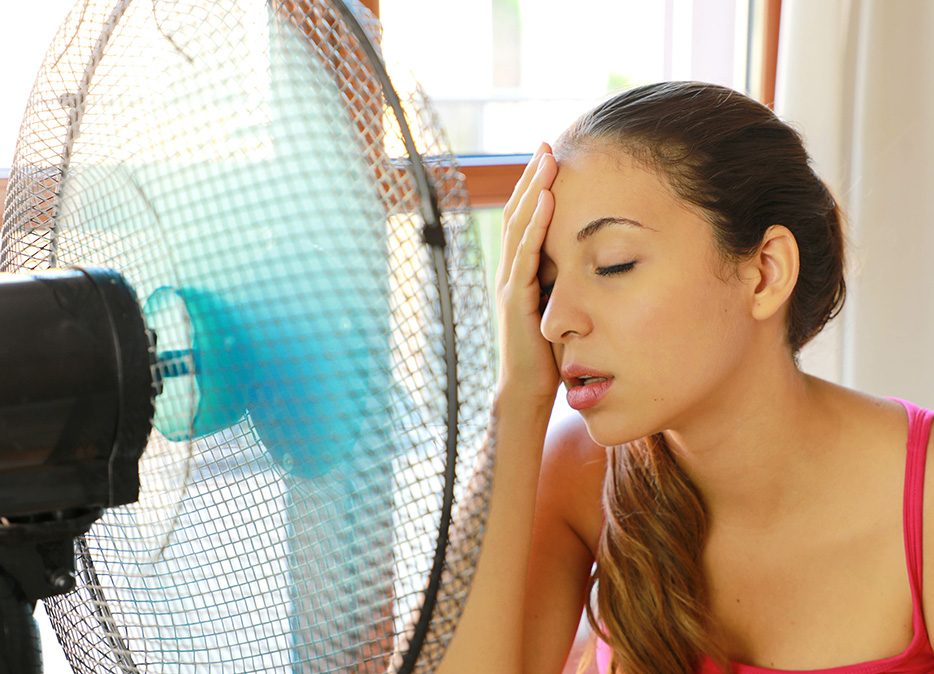
PHOTO: Young woman at home in hot summer day in front of the working fan suffering from summer heat. (Adobe Stock │ #285697412 – zigres)