
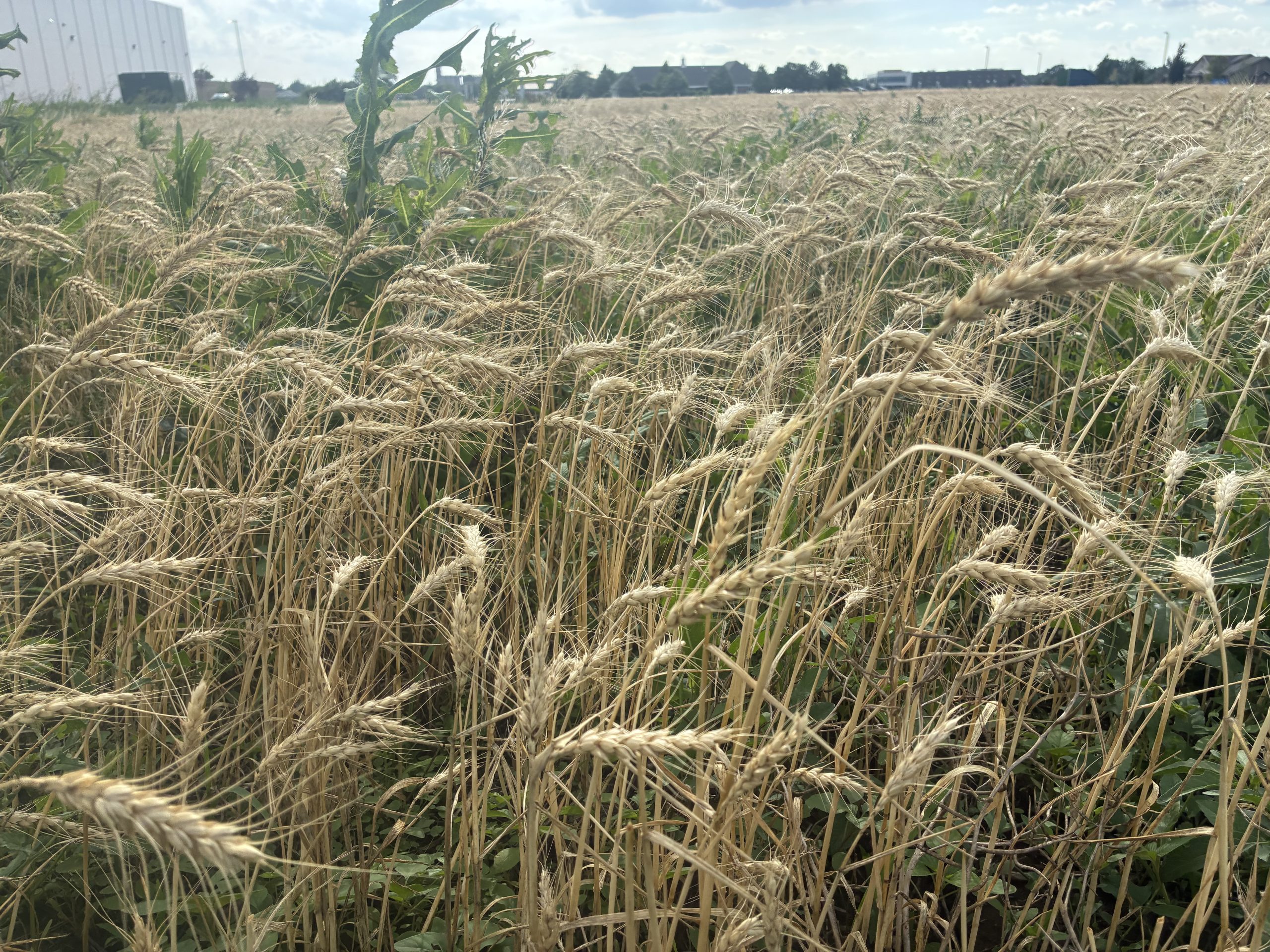
The High Plains wheat crop unfortunately is going to be one for record books.
In the Sunflower State, abandonment of acres is expected to reach 15% or more, said one Kansas State University expert.
“It has been a really tough year,” said Professor of Agronomy Extension Wheat and Forage Specialist Romulo Lollato.
Kansas traditionally sees about 5 to 6% abandonment, and in 2023, it was nearly 25%. On top of that, the wheat crop nationwide is expected to be the smallest since 1972. Kansas is expected to produce only about 218 million bushels.
“There is a lot of wheat that will not be harvested this year,” Lollato said.
Growers thought they were at least headed for a decent crop when they sowed their crop back last fall, he said, as they had adequate moisture and had good establishment. Then the crop faced one challenge after another: Lack of moisture, above average temperatures in the winter and most of the spring had virtually no moisture. The freezes in March and late April combined with drought conditions left growers anxious for good reason.
Northwest Kansas growers, whose crop matures later, also had an early May freeze.
Lollato said in central Kansas, in the Great Bend and Ellsworth region, a wheat crop sowed as a continuous crop was almost a complete failure. The stress was also telling for growers who had sowed wheat after a fallow rotation. Traditionally he would have about 60 bushels per acre and is likely to have a crop that yields 25 bushels per acre.
Much of the wheat in southwest Kansas was very short, a sign of drought stress, Lollato said.
In several regions there have been reports of wheat streak mosaic and barley yellow dwarf virus.
Wheat yield could reach 40 to 50 bushels per acre in some of the best fields in southcentral and in northcentral Kansas, but similar fields in recent years would have averaged 65 to 70 bushels per acre.
Recent rains
Early June rains could help; however, some farmers had already started harvesting and for those growers the additional rain will cause kernels to swell and that will reduce quality. Others who may be close to harvest might see the wheat sprouting and that also decreases quality.
Test weight of the harvested wheat has been very poor.
Weed control, he said, also plays a part particularly with a short wheat crop with pre-harvest rains.
One unexpected consequence of some of the recent storms was hail and that will knock some kernels to the ground and the seed will germinate as volunteer wheat, Lollato said. That is ideal for wheat curl mite, which causes wheat streak mosaic virus.
“It’s going to germinate sometime during the summer as a weed and that volunteer wheat can cause a lot of headaches, mostly with wheat streak virus,” the Extension specialist said.
Growers will also need to check combines because poor wheat can be blown in the back of the machine and that can cause damage for the following year’s crop, he said.
Options?
Whether to abandon the crop and try to plant a short season corn, sorghum or soybean crop will be an individual farmer decision, he said.
“It all depends on the rainfall,” he said. “They abandoned the wheat crop because there is not much water in the soil profile.”
He said unless the recent rains were enough to soak deeper into the ground, producers’ best option might be to fallow it and take care of the weed pressure, then go back to wheat in the fall.
Have a good plan
Lollato’s advice to growers is to have a good agronomic strategy for all. If the wheat is planted too early it is susceptible to stress from hot early temperatures that can hamper emergence by shortening the coleoptile, which is important for the plant emergence and establishment; plus, it can add to higher levels of aphids and curl mites, he said. Growers who face challenges with wheat streak mosaic or barley yellow dwarf virus need to select varieties with genetic resistance.
Sometimes a grower can go several weeks later than the ideal planting date, but he needs to make sure the variety matches the time frame, Lollato said.
Growers should start securing seed from their dealer as soon as they can, the wheat specialist said, because there will be a lot of competition for quality seed because like growers, seed companies have also faced challenges. Texas and Oklahoma seed companies are also in similar or worse conditions than Kansas.
Growers who have saved their own seed to sow this fall should follow a cleaning protocol, he said.
Dave Bergmeier can be reached at 620-227-1822 or [email protected].



