No winners likely in U.S.-Canada tariff war
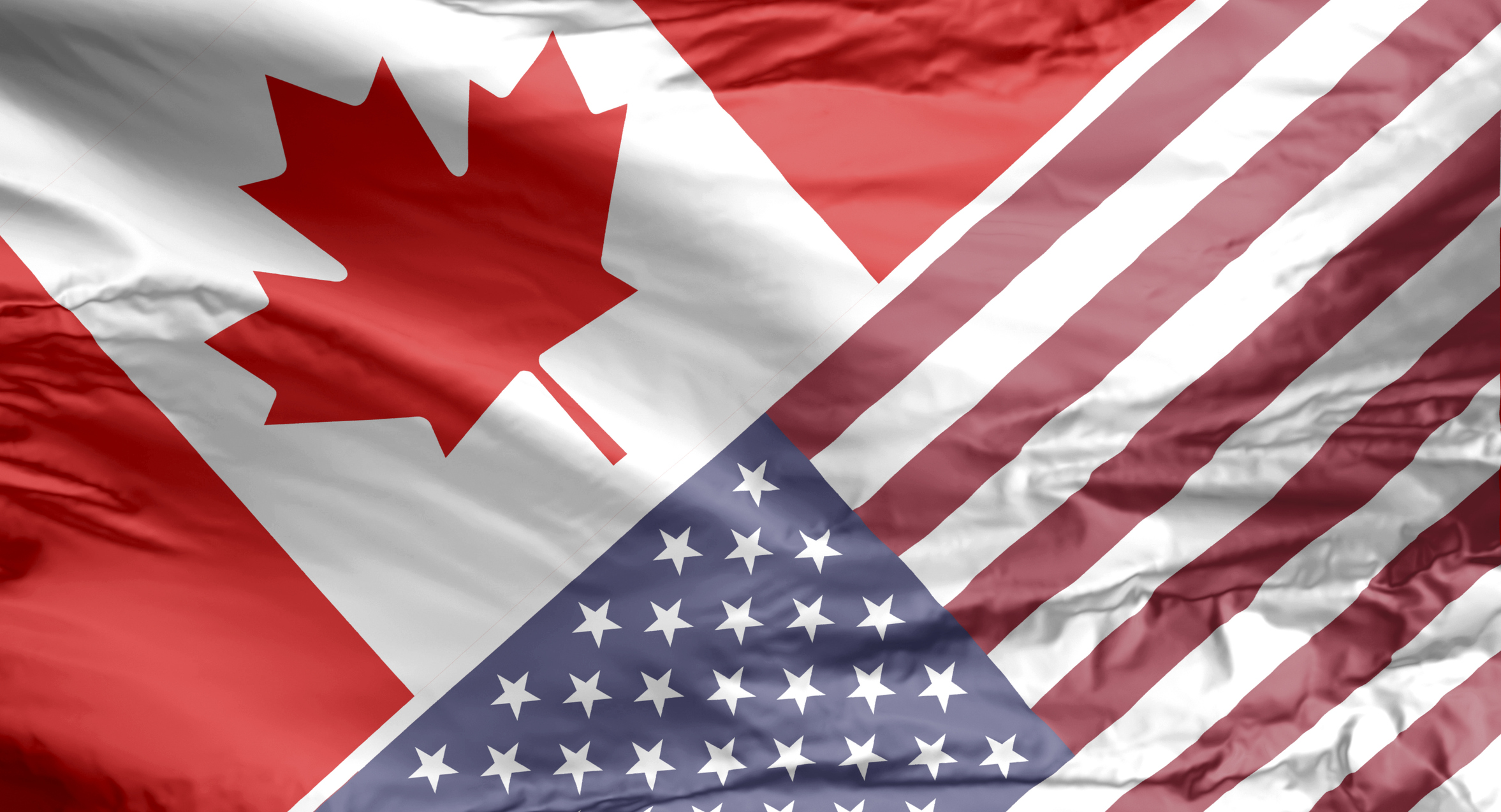
The latest trade war between the United States and Canada could become a drawn-out process, stirring tensions that will be hard to overcome.
That’s an assessment by C. Ford Runge, a Distinguished McKnight University Professor of Applied Economics and Law at the University of Minnesota. He has extensive expertise with agricultural trade policy and World Trade Organization negotiations. In late August, the two countries were in a trade spat, with 50% tariffs on tap that could spill over into the ag sector and affect consumers.
Canada is the second-largest export destination for U.S. farm exports, Runge said. At the same time, 80% of U.S. potash imports come from Canada, creating a significant vulnerability for farmers and ranchers. As of Sept. 8, additional tariffs have not been placed on potash.
Runge attributed the breakdown of trade negotiations to last-minute demands from both sides, leading to a potential long-term dispute.

The U.S. and Canada appeared on the cusp of an agreement Aug. 21 not to impose tariffs when talks quickly broke down. Without an agreement, both sides announced plans to up tariff rates. The U.S. announced it plans to levy a 50% duty on about $21 billion of Canadian products. Canada plans to levy tariffs on $27.6 billion in U.S. products beginning Sept. 8.
Agricultural interests are watching how the dispute plays out. Runge said the 50% tariffs will apply to steel and aluminum, which are critical to farm equipment manufacturers.
Context is king
Runge worked with Canadian trade officials on a U.S. trade agreement before the North American Free Trade Agreement went into effect Jan. 1, 1994. The North American countries worked together to form a free-trade zone to counter what was going on in the European Union.
The U.S. and Canada worked together during the Uruguay Round agreement talks and laid the foundation for NAFTA, which included Mexico.
NAFTA was replaced by the United States-Mexico-Canada Agreement in 2020, which had been championed by President Donald Trump during his first term. Trump signaled July 1 during a joint review that the U.S. was not going to renew the agreement for a full 16-year term. Since then, U.S. Trade Representative Jamieson Greer has been negotiating separately with Mexico and Canada.
“Canada is the No. 2 export destination by country for U.S. farm exports,” Runge said. “In the period since the NAFTA treaty and the subsequent USMCA negotiated by the first Trump administration, the economies of the U.S. and Canada have become even more fully integrated than they were before.”
Including agriculture and non-agricultural commerce, Canada is the No. 1 export destination, he said, which makes little sense to agitate. Likely last-minute demands reached a boiling point for Canadian Prime Minister Mark Carney, who is a respected negotiator, Runge said.
Liberation Day changed relations
The U.S. and Canada had a healthy trade relationship until April 2, 2025, when Trump declared a national emergency about the U.S. trade deficit and began imposing tariffs under the International Emergency Economic Powers Act on many countries, including Canada.
“People ask me a lot about it and I don’t have much good to say,” Runge said, adding that Trump enjoyed nearly 80% support among farming-dependent counties in November 2024, according to a story in Investigate Midwest.
How to resolve disputes
Runge knows there are several long-standing issues about the openness of either country when it comes to some farm and non-farm products between the two countries. The U.S. dairy industry has criticized what it calls unfair Canadian trade practices.
Gregg Doud, president and CEO of the National Dairy Milk Federation, wrote in a recent column that a dairy showdown has been decades in the making.
Under the USMCA trade agreement negotiated during the first Trump term, Canada committed to providing meaningful additional duty-free access for U.S. dairy exports through a series of tariff-rate quotas, Doud said. Canada’s administration of those tariff-rate quotas has repeatedly resulted in chronic underuse, reducing the benefit for American dairy farmers. Canada also continues to exploit loopholes to sidestep USMCA on dairy protein exports.
Doud also expressed hope that a cooling of tensions between the two countries would improve the situation, but added that dairy policies have to remain on the table.
Runge said the only way to resolve disputes is to continue to work “bit by bit,” adding that negotiations can be painstakingly slow, but they should not wreck the overall framework of an agreement when both countries benefit.
Canadian farmers worry, too
Canadian agricultural interests, particularly in the prairie provinces, are nervous, too, as they need access to U.S. consumers and they understand, like American farmers, they have a lot more to lose than to gain, Runge said.
“I also think the unnecessary pokes in the eye that accompanies these talks like renaming Lake Ontaria to Lake America, really infuriated the Canadian populace and as a result they are less willing to let bygones be bygones,” Runge said. “This is likely to do long-term damage to not just trade relations, but political relations between the two countries.”
The unfortunate breakdown also serves as a reminder that in global agricultural trade, importing countries need to have a reliable supplier because food is a national security matter and must be treated with sensitivity and strategy, he said. Building that trust takes many years, Runge said.
Besides the federal government, companies such as ConAgra, Cargill and ADM have built trust with other countries, and Runge worries Trump is breaking that trust.
“When you break that confidence it takes time to repair,” Runge said. “It’s not totally irreparable, but it takes time, and time is money.”
He doesn’t expect Congress to weigh in—as he thinks it should—because of the state of politics. While elections could give Democrats the majority in the House and perhaps the Senate, the president will still be in the White House and likely won’t be in a mood to change his tactics.
Trump remained popular with farmers and ranchers when the trade talks broke down, but his approach to international trade puts their livelihoods at risk.
Dave Bergmeier can be reached at 620-227-1822 or [email protected].