U.S. hog inventory edges lower in June
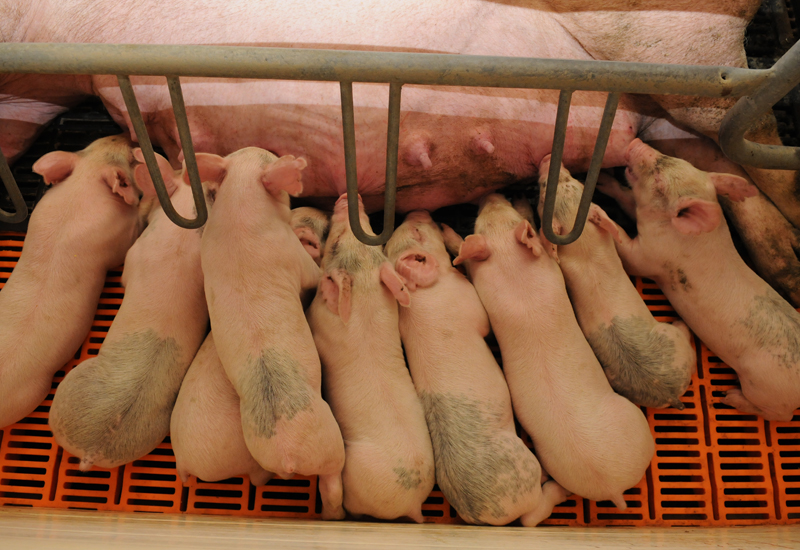
Analysts said the slight decline in U.S. hog inventory reported by the U.S. Department of Agriculture was in line with expectations.
As of June 1, there were 73.7 million hogs and pigs on U.S. farms, down slightly from June 2025 and March 1, 2026, according to USDA’s recently released Quarterly Hogs and Pigs report.
Other key findings included:
- Of the 73.7 million hogs and pigs, 67.8 million were market hogs and 5.88 million were kept for breeding.
- Between March and May 2026, 33.5 million pigs were weaned on U.S. farms, up slightly from the same period a year earlier.
- Producers weaned an average of 11.87 pigs per litter from March through May.
- U.S. hog producers intend to have 2.9 million sows farrow between June and August 2026 and 2.89 million between September and November 2026.
Analysts weigh in
Holly Cook Anderson, an economist with the National Pork Producers Council, said carcass weights have averaged about 1% higher year to date across all purchase types.
“Heavier carcass weights typically coincide with positive margin opportunities and mild weather and temperatures, with seasonal supply factors also playing an important role,” she said.
Lee Schulz, chief economist with Ever.Ag’s livestock risk management team, said market hog inventories by weight category provide an indication of anticipated slaughter levels during the six months following June 1. All four USDA market hog inventory estimates were below the average pre-report expectations, he said.
Three of the four estimates also were below the lower end of pre-report expectations.
The inventory of hogs weighing 180 pounds or more on June 1 was up 0.4% from a year earlier. Those hogs were expected to come to market from June through mid-July, Schulz said.
The inventory of hogs weighing 120 to 179 pounds was up 0.5% from a year earlier. Those hogs were expected to be harvested from mid-July through mid-August.
“On average, analysts expected this inventory to be up 1%,” Schulz said. “This market hog inventory category was the closest the average of pre-report expectations came to the published USDA inventory estimate. Conversely, the two lightest weight market hog categories came in much smaller than analysts anticipated.”
The inventory of pigs weighing 50 to 119 pounds, expected to be slaughtered from mid-August through September, was down 0.5% from June 1, 2025. That was 1.6 percentage points below the average pre-report expectation and well below the lower end of trade expectations, Schulz said.
The inventory of pigs weighing less than 50 pounds was unchanged from a year earlier, missing the anticipated 1.3% increase. Those pigs are expected to come to market from October through November.
The June 11 World Agricultural Supply and Demand Estimates report forecast a 1.4% increase in pork production for 2026 and a 1.1% increase in 2027, Cook Anderson said. The June Hogs and Pigs report provided updated estimates of market hog inventories and farrowing intentions, suggesting little year-over-year change in market hog availability during the next six months.
USDA will consider the information when updating its forecasts in the July WASDE to reflect current inventory estimates and carcass-weight trends.
“Looking further ahead, USDA will also consider the impact that a decline in reported farrowing intentions for the next two quarters and continued growth in number of pigs saved per litter may have on 2027 pork production expectations,” Cook Anderson said.
Breeding herd
The U.S. breeding inventory totaled 5.88 million head on June 1, down 1.2% from a year earlier and 0.2% from March 1, Schulz said.
“This is the smallest June 1 breeding herd since 2014,” he said. “The smaller breeding herd will restrain supply growth for the winter and spring. Farrowing intention estimates are used as an indication of slaughter from six to 12 months in the future.”
U.S. hog producers intend to have 2.9 million sows farrow during the June-through-August quarter, down 2.2% from the same period a year earlier. Those farrowings will affect hog slaughter levels from January through March 2027.
Producers intend to have 2.891 million sows farrow from September through November 2026, down 0.6% from a year earlier. Those farrowings will influence slaughter levels from April through June 2027.
Export picture
Cook Anderson said exports are an important component of overall pork demand. Trade data through April suggest pork exports have been stronger than expected, with volume up 4.5% and value up 3.9% from the first four months of 2025.
“So far in 2026, exports are accounting for more than 26% of carcass weight production,” she said.
Schulz offered a similar assessment.
“Total dollars are up almost 5%,” he said. “So, it’s not just that more volume has been exported at a lower price. Total value is up. This export strength has outpaced many projections.”
In December 2025, USDA projected first-quarter 2026 export volume would decline slightly from the first quarter of 2025, Schulz said. At the time, USDA forecast export volume for all of 2026 would increase only 0.7%.
“Fast forward six months and USDA is forecasting that U.S. pork exports grow by 4% in 2026 compared to 2025,” he said. “Export dollars growing at a similar clip, or more, would be a major boost for the U.S. pork market.”
Management perspective
Schulz said producers have less margin for error when managing risk. Profitability in 2026 is forecast to be about one-third of what it was in 2025.
“While profits may still be available, the difference between profit and loss is much closer,” he said. “High profit margin situations can better withstand market shocks, volatility, production hiccups and hesitation in managing risk because there is a larger cushion.”
Tighter margins generally require more discipline in production and marketing. Only four months in 2027 are currently forecast to be profitable, Schulz said.
USDA reported that Iowa had the nation’s largest hog inventory at 24.7 million head. Minnesota ranked second with 9.3 million, followed by North Carolina with 7.2 million.
Dave Bergmeier can be reached at 620-227-1822 or [email protected].