New facility at K-State brings grain, food and animal science together
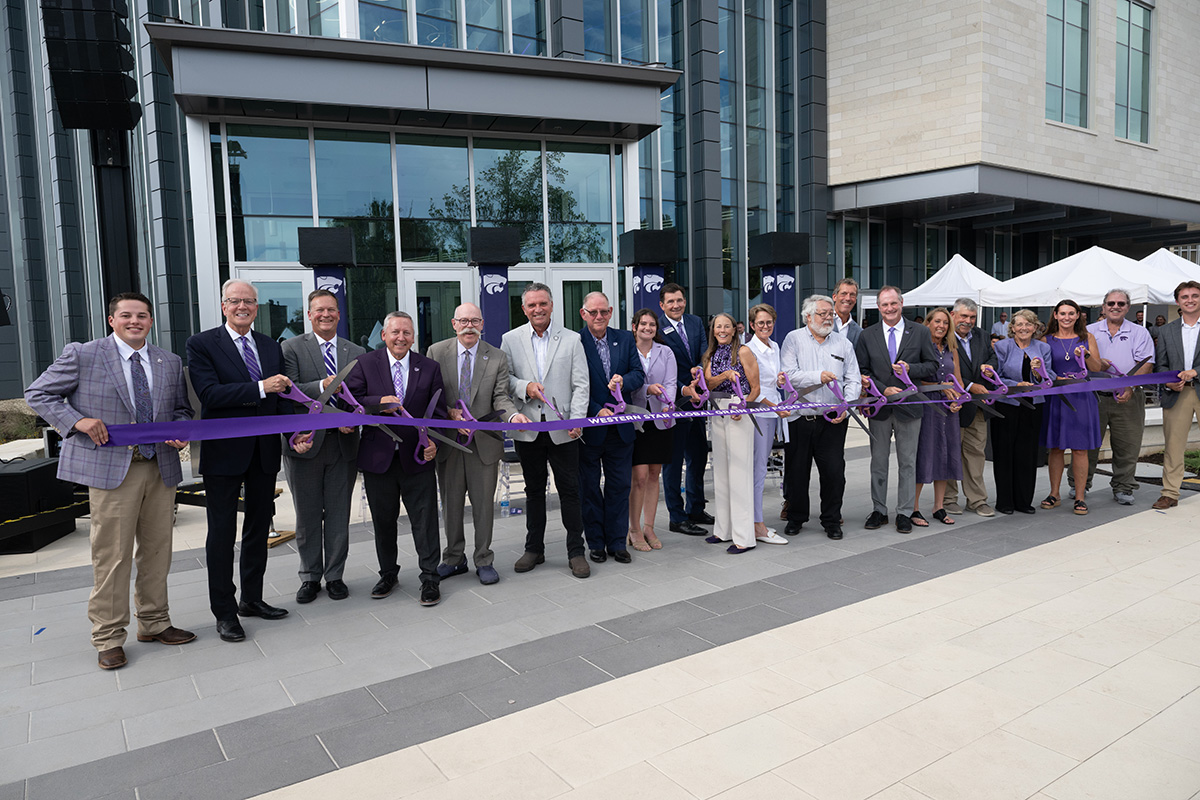
The ribbon’s been cut, the media got the first look over, and the celebration has been had.
Kansas State University opened what officials are calling a landmark facility that will bring grain, food and animal science together under one roof to help shape the future of agriculture and food systems. The Western Star Global Grain and Food Center opened its doors Sept. 18.
According to K-State Communications, the new center is connected to renovated spaces in Call and Weber halls, and it creates a new home base for bakery science and management, feed and pet food science, food science and industry, and milling science and management programs, while strengthening connections with the Department of Animal Sciences and Industry.
K-State President Richard Linton said that the buildings themselves are only part of the story.
“The real story is what happens inside them,” Linton said. “This building brings our faculty together across disciplines. It creates an exceptional experience for our students. And it connects research, innovation, education and industry in ways that can have a lasting impact on Kansas and beyond.”
Buildings
The largest agricultural construction project in K-State history, the 178,000-square-foot, three-story center is the final piece of the university’s $216 million Agriculture Innovation Initiative.
According to K-State, the $130 million center dedicates space to collaboration between public resources and private enterprise—intentionally creating room for researchers, students and industry partners to work side by side.
The facility includes specialized teaching and research laboratories, pilot-scale processing spaces, flexible interdisciplinary research areas, a 236-seat lecture hall, and designated collaboration spaces. The complex also includes the new 1863 Marketplace, which showcases College of Agriculture-produced meat, dairy, grain, and honey products, among others. The marketplace will eventually support the return of on-campus Call Hall Ice Cream production, planned for spring 2027 and create additional hands-on learning opportunities for students in dairy and food science.
The building’s significance isn’t in the spaces themselves, but instead how it brings people together. At least, that’s how Dan Moser, Eldon Gideon dean of the College of Agriculture sees it.
“This center will bring students, faculty, researchers and industry partners together in ways that inspire discovery and accelerate solutions,” Moser said. “It is a place where learning will become leadership, where ideas will become innovation, and where collaboration will create impact.”
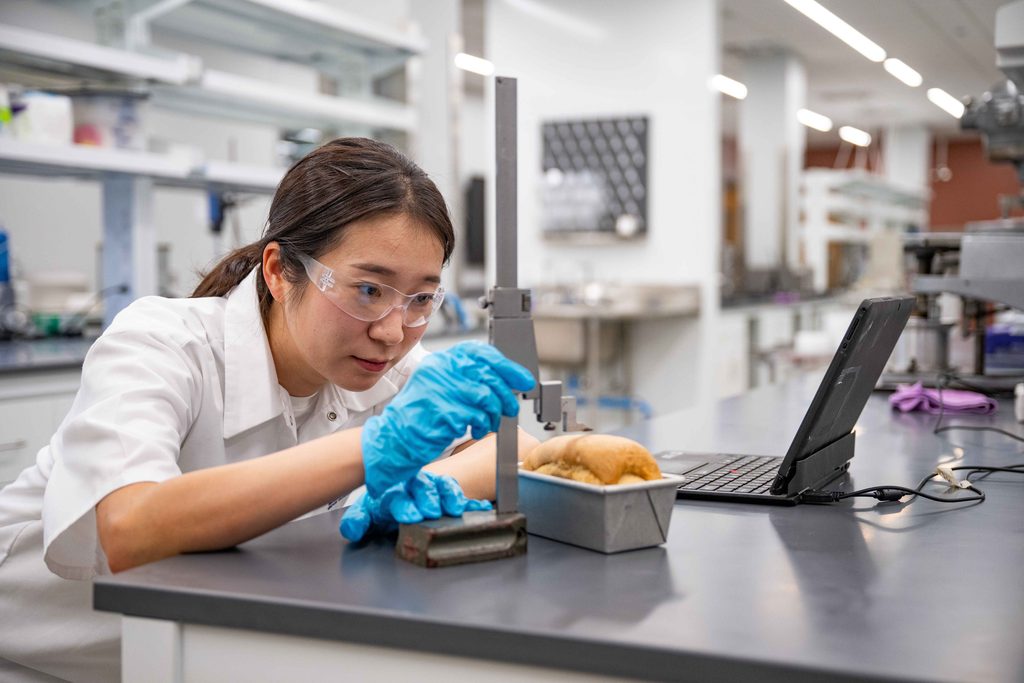
Those who attended the ribbon cutting events were able to see the demonstrations and conversations between students and faculty, further proving how important those interactions are going to be. Visitors were able to see the complex and stops included the milling science teaching laboratory and pilot mill, Food Science Test Kitchen, Bakery Science Laboratory, and feed and pet food pilot plant. According to K-State, all are spaces that provide students with opportunities to experience hands-on application, research, and industry problem-solving.
Moser believes the opening is more than showing off a new building, but instead, “We open doors to new opportunities, innovations, and a brighter future,” he said.
Ernie Minton, interim associate vice president for Extension and engagement, agreed and said the connection to Weber Hall adds to the interdisciplinary approach.
“There is no other facility like this anywhere, Minton said. “The Western Star Global Grain and Food Center brings together disciplines that deserve to share a roof.”
Learning
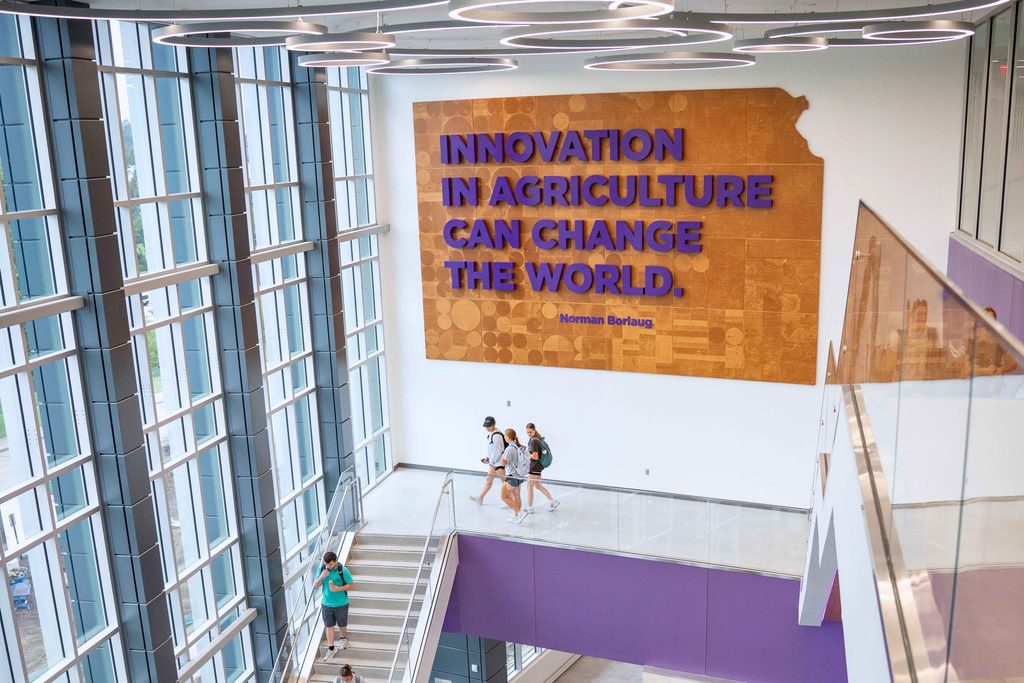
Connection is at the center of the vision of the facility. From kernel to finished food products or from raw ingredients to animal or pet nutrition, the center helps create opportunities for ideas across the ag value chain. This often combines pilot-scale processing, research, student training, and industry partnership in ways that are difficult to replicate elsewhere.
For students, those connections translate directly into preparation for careers across the grain and food industries.
“As students, we learn best by doing,” Chase Nagel, senior in bakery science and management and milling science and management, said. “The experiences we gain here are not just lessons from a textbook. They are lessons that help us solve real-world challenges and prepare us to become leaders in our professions.”
Legacy
The Western Star name honors history and the rich agricultural heritage and legacy of the Hale and Vanier families. The Western Star Mill was purchased by J.J. Vanier in 1925 and later expanded through the leadership of those families, was the beginning of a long history of leadership in the global grain and food industry and decades of support for Kansas State University.
“Today, the Western Star name represents more than a successful business,” Moser said. “It reflects a commitment to entrepreneurship, innovation, education and service.”
Construction of the center was made possible through the support of alumni, donors, commodity organizations, industry partners, university leaders and state and federal partners. Federal support included $5.53 million in Congressionally Directed Spending secured for the facility, part of a broader investment in K-State’s research infrastructure and land-grant mission.
“This is not the finish line,” Linton said. “In many ways, this is the starting line.”
Kylene Scott can be reached at 620-227-1804 or [email protected].