Cowherd records show more than data
As chief genetics officer at NextGen Cattle Company, Joe Epperly has many tasks to look after. Records included.
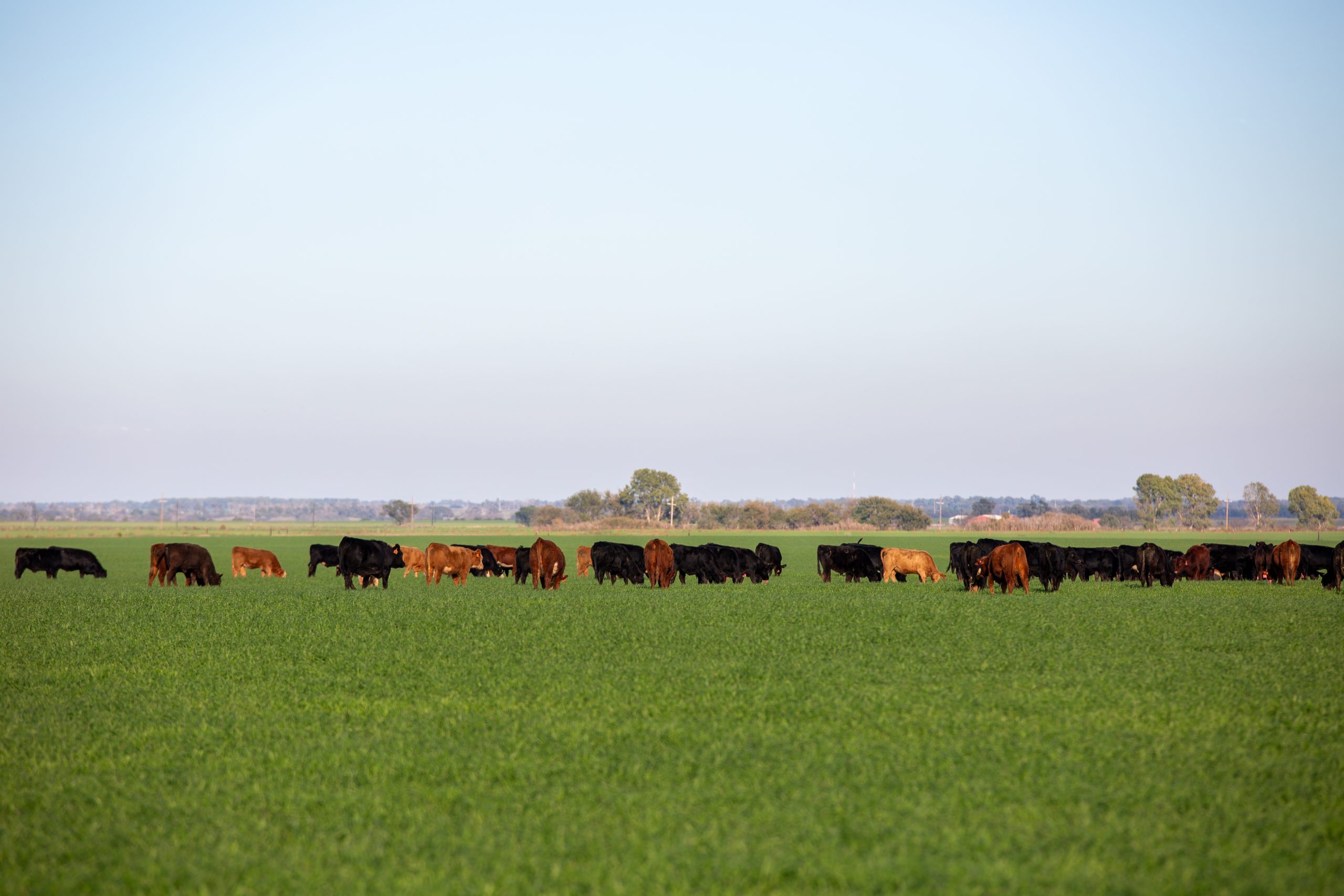
NextGen runs around 1,000 cows in the Flint Hills of Kansas and markets 800 bulls annually with cooperators from across the country, Epperly said. NextGen also has a 50,000 head feedlot in Hugoton, Kansas, a commodity trading business and a direct-to-consumer beef sale business. He oversees the seedstock business consisting of Angus, Beefmaster, Charolais and AngusX.
For Epperly, there’s important details when it comes to records.
“Every piece of information that we can capture on our herd is important and useful to our success,” he said. “Currently, our focus is on maternal traits: Fertility, calf vigor, mothering ability, and udder quality. We capture every observation that we can for both breed association analysis and our own.”
In the past, most operation records were scattered across spreadsheets, text messages, and whiteboards. The organization recently moved its information to a digital system. Information is available to managers and every employee.
“Previous to Breedr, our records were on ‘all of the above.’ We’d capture weights through one system, transfer to a database and then try to work with it there to get it to breed associations,” he said. “Or it was on a paper copy, which had to be entered at the office, and all our health records were either written on a white board or in a group chat or google sheet, but no one ever was clear on what had been treated and when.”
Even though Epperly can appreciate a hard copy in his hands and to save for records, having data digitally and accessible to the entire team has been a game changer for the operation.
“There’s no need to remember to go back and enter it, no chance of spilling coffee on your paper records, no wondering whether that calf got doctored this morning,” he said. “The information is just there.”
Being a seedstock operation, data collected from the cowherd is submitted to the relevant breed associations for traits they measure.
“We evaluate the genetic predictions that come back from those,” he said. “Other traits that they don’t evaluate are evaluated in house and affect our keep/cull and marketing decisions.”
The data has become so valuable in the seedstock business and finding a way to accurately collect it and store it has been very important to the operation.
“Data is the currency of the realm in the seedstock business and any way we can make it easier to collect and cleaner to submit or evaluate will make our breeding decisions more accurate and cattle better in the future,” Epperly said. “There are no shortcuts, and we likely will be collecting more data moving into the future. The winners in the industry will be the folks that handle it the best.”
Record keeper
Built to help make record keeping simple and useful for commercial cattle operations, Breedr was founded in 2018 in Australia. Producers can record breeding, calving, weights, treatments, genetics, and performance levels on a phone while working cattle at the chute, in the pasture or during calving. That information becomes part of each animal’s record and is available to the entire team, giving everyone a consistent view of the herd and better information to use when making day-to-day management decisions.
“At a time when cattle numbers are at their lowest and ranchers are looking at how they rebuild, they need to maximize every animal on the ranch,” James Law, president of North America operations at Breedr, said in a news release. “Breedr does just that, giving you the information that lived in a paper notebook, that now lives on your phone, tablet or computer. This investment helps us get it into as many ranchers’ hands as possible.”
Officials said the cattle’s records go with them to market through the Connected Beef, Breedr’s cattle marketing program. Producers can choose to sell through either private treaty or on a Superior Livestock auction.
Each animal sells with its genetic, performance, growth, health and management history, so buyers know what they’re bidding on, and producers have an opportunity to be paid for the work and data they’ve put into their cattle. The Connected Beef network has traded nearly $500 million in cattle so far this year, according to the company.
According to a news release, Breeder recently announced a $27 million Series B funding round to get individual animal records in the hands of United States cattle producers. The funding is expected to grow the Breedr U.S. team, bring the platform to more ranches and feedyards, and expand the data producers are able to utilize, including genomics.
More than 2 million cattle are on the Breedr platform today. Producers can find more information at breedr.co.
Kylene Scott can be reached at 620-227-1804 or kscott@ hpj.com.