
Foreign long-term leases of U.S. farmland rise sharply, USDA analysis finds
Foreign investors held an interest in about 43.4 million acres of U.S. agricultural land as of Dec. 31, 2022, representing 3.4 percent of all privately held agricultural land in the United States, according to data reported under the Agricultural Foreign Investment Disclosure Act.
An analysis of those filings found that foreign holdings include both land ownership and long-term lease agreements, though public discussion and legislation often focus primarily on ownership.
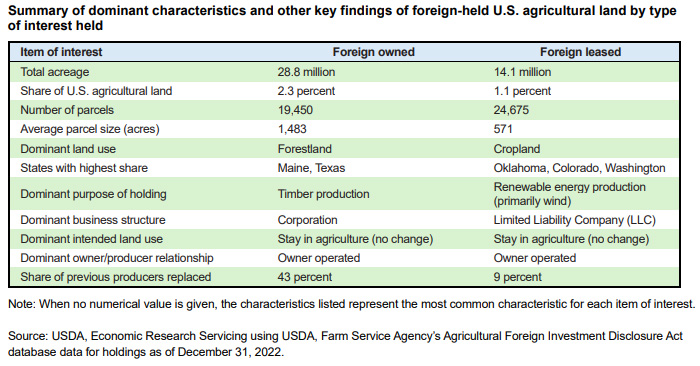
Roughly two-thirds of foreign-held acreage—about 28.84 million acres—was foreign owned in 2022. Long-term foreign leases of 10 years or more accounted for about 14.08 million acres, or 32.5 percent of foreign-held agricultural land. Five years earlier, long-term leases represented about 20 percent of foreign holdings.
The data indicate that the share of long-term foreign leases has grown rapidly. Between 2017 and 2022, long-term foreign-leased acreage increased by 136 percent, while other forms of foreign-held land increased by 27 percent.
The USDA analysis also found significant differences in how foreign-owned and foreign-leased land is used. About 71 percent of foreign-owned agricultural land is forestland. In contrast, about 65 percent of long-term foreign-leased land is cropland, with less than 7 percent associated with forestland.
Researchers found that many long-term leases appear to be linked to renewable energy development rather than traditional agricultural production. Business name analysis showed that 75 percent of long-term leased acreage included the word “wind” in the company name, while 9 percent included “solar.” In total, 85 percent of companies leasing farmland long term had names associated with renewable energy.
The geographic distribution of leased land also differs from owned land. Foreign-owned farmland does not show a strong regional pattern, though Maine has the highest share relative to its private agricultural land. Texas has the largest number of foreign-owned acres overall, though it represents a small share of the state’s total agricultural land.
Long-term foreign-leased farmland is more concentrated in the central United States and the Pacific Northwest, particularly in states such as Colorado, Oklahoma and Washington. Researchers found a strong correlation between the amount of long-term foreign-leased agricultural land and the number of wind turbines installed in a state.
Despite the growth in energy-related leases, most land involved in these agreements appears to remain in agricultural production. More than 96 percent of long-term foreign-leased acreage indicated no intended change in agricultural use, according to AFIDA filings.
The findings suggest many renewable energy leases may involve dual use of the land, allowing agricultural production to continue while generating additional income through energy development.
Policymakers have shown increasing interest in foreign investment in U.S. agricultural land. As of November 2024, legislators in 28 states had proposed bills related to foreign investment in agricultural land, and 22 states enacted restrictions on foreign ownership between January 2023 and July 2024.
Researchers note that while foreign investment represents a small share of U.S. farmland overall, the growing role of long-term leases—particularly those tied to renewable energy development—adds complexity to ongoing policy discussions about farmland ownership, land use and rural economies.
View the entire USDA report HERE.
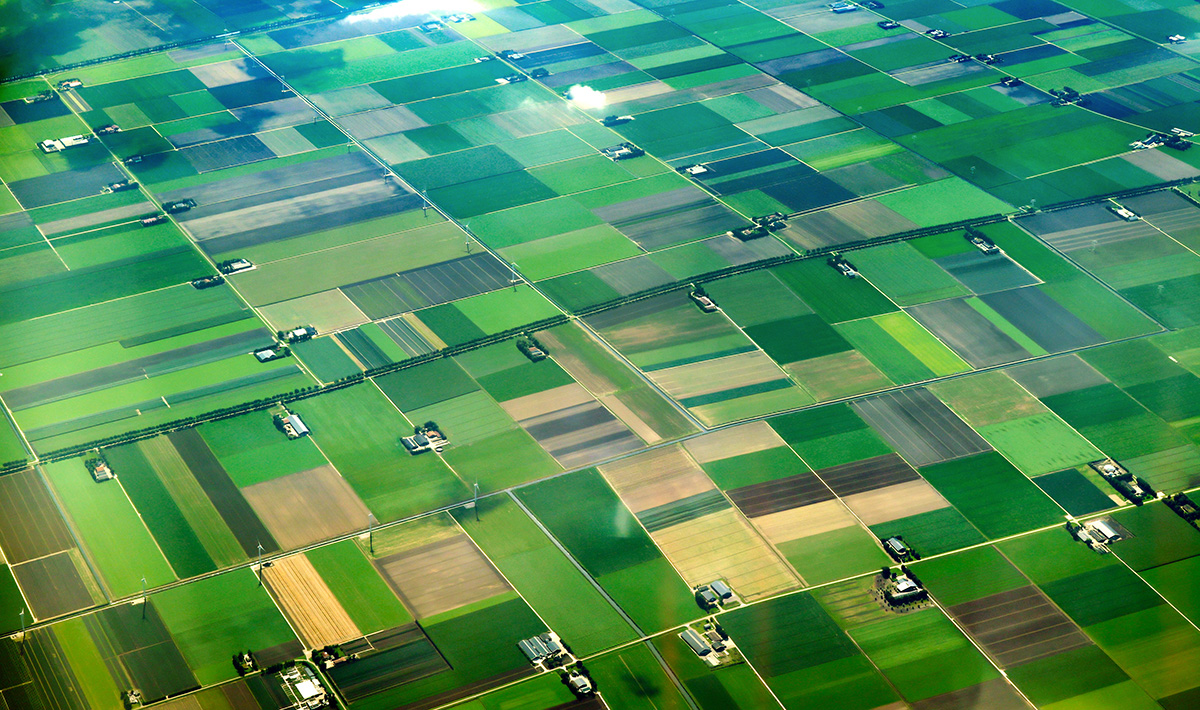
PHOTO: Aerial view of cultivated agricultural farming land with vivid green color. (Adobe Stock │ #312193210 – sizsus)



