Built-in safety features every farmer should know.
Your smartphone can improve farm safety during calving or planting this spring, says University of Missouri Extension state specialist for health and safety Karen Funkenbusch.
The spring farming season is filled with hazards. Farmers often work alone in remote areas of the farm while equipment moves along rural roadways, pesticides are applied and planting is a race against spring rains. Severe weather—tornadoes, heavy winds and flooding—is also more likely this time of year.
Because of these risks, keeping friends, family and coworkers aware of your location is essential. If you’re not familiar with smartphone safety features, ask a family member or neighbor to show you how to use these important tools. The specific steps to activate these features may vary based on your phone’s operating system and manufacturer.
Essential phone features for farm safety
Enable location sharing: Turn on location sharing through Settings. Your location is visible only to the contacts you choose, and the setting stays on until you turn it off. A handwritten note, such as “I’m checking cows on the Dodge place,” might help family, but location services can pinpoint your exact location, saving responders time when every minute counts.
Learn to text: Text messages require less signal strength than voice calls, making them more reliable in remote areas.
Use voice activation: Learn how to use your phone’s voice-activated assistant. For example, on iPhones you can press your power button and say, “Siri, call 911.”
Know your emergency features
- Know how to access your phone’s flashlight for power outages.
- Many apps provide weather alerts and first aid instructions.
- Some smartphones and smartwatches can detect falls or crashes and automatically alert emergency services.
Use GPS for orientation: GPS can help if you become lost while checking cattle, mushroom hunting or hiking in wooded areas.
Send your location automatically during emergencies: Your phone can automatically send your location when you call or text an emergency number like 911. If you specify emergency contacts on your phone, they will be automatically notified as well.
Share your location with emergency contacts: You can also share real-time location updates and battery percentage with trusted contacts by activating location sharing.
Always keep your phone charged and in your pocket. Keep chargers in vehicles, sheds and barns.
In an emergency, limit your calls to conserve battery life.
“Look at your phone as a powerful life-saving device,” says Funkenbusch.
Additional resources
- Federal Communications Commission – Tips for Communicating During an Emergency
- National AgrAbility – Emergency Preparedness Resources
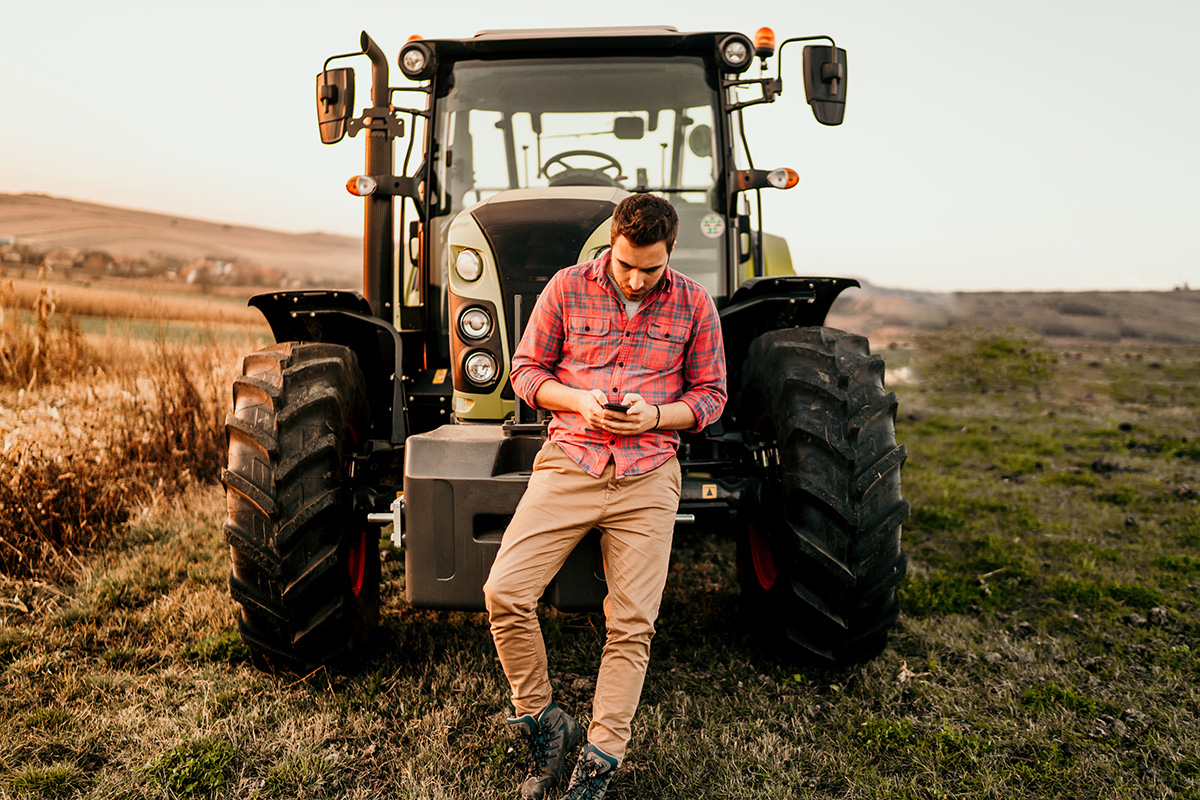
PHOTO: Farmer using smartphone and tractor at harvesting. (Adobe Stock │ #234551396 – aboutmomentsimages)