
On a 90-degree day in March, my boys and I were outside working on a project, and as we were taking a break because of the heat, I made the remark, “What do you think the people 100 or more years ago thought about living here when it was this hot?”
I had to remind them that during the late 1800s and early 1900s, few had electricity, some had heat in their homes—and definitely there was no air conditioning. They survived because they had to and not because they had a home filled with conveniences and comforts like we do now.
I also had to wonder what those early settlers thought about the weather. Did they know the signs of dry weather and how to prepare for a drought? Likely people who resided in the High Plains probably were hardy and smart, otherwise they wouldn’t have made it as far in life as they had managed.
Recently on social media I ran across a post talking about the Great American Desert. I chuckled, because I refer to the area I live in as the desert.
The post said, “The Great American Desert that isn’t on maps. Once upon a time, much of the central United States was labeled something surprising: the Great American Desert. A “Desert” that wasn’t. In the early 1800s, explorers like Stephen H. Long crossed the vast lands west of the Mississippi River and described it as barren and unfit for farming. Maps at the time literally marked this region as a “desert.”
According to the post, the so-called desert was the Great Plains—including states like Kansas, Nebraska, Oklahoma, and Texas. Today that same area is rich in agricultural production and leaders in wheat, corn and cattle production.
The post went on to say early explorers got their description of a desert wrong because they didn’t understand the role of seasonal rainfall, the potential of irrigation, the richness of prairie soil and without trees and with dry seasons, it looked like a desert. But it wasn’t.
Even though there are days why I question why I live out here in the High Plains, I think most of us in rural areas have gotten it right. We know when the rain comes the most often. We also know we might get all our rain all at once or sprinkles here and there. There’s nothing consistent about precipitation in my part of the world. Many have realized how to use what rain we do get for agriculture. We tailor crops to fit the conditions.
Irrigation has become increasingly the norm in the Plains. Center pivot systems were invented and perfected in this region. And as the water levels in the aquifer have started to decline, irrigators are finding ways to be more efficient, be more mindful of their usage and pay attention to regulations.
There is nothing quite like the soil on the prairie. It’s rich in nutrients and can sustain many things. Native pastures have so much diversity; researchers often come to study it. Many ranchers and landowners have found the right mix of grazing, maintenance, and other practices to get what they need out of it. And in recent decades, many have realized how important soil health really is, and are pushing the potential of the prairie soil to the extreme.
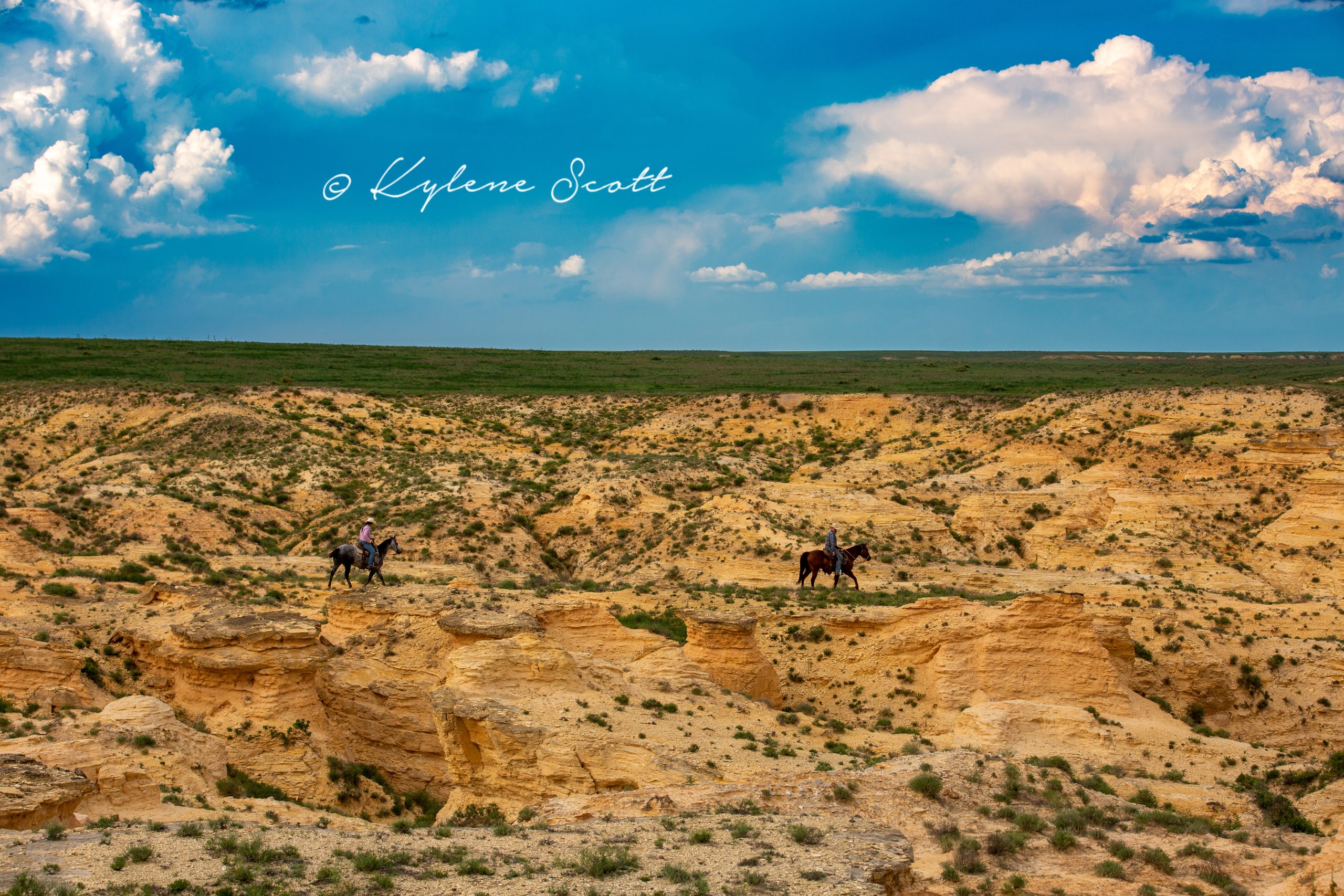
As for the trees, I don’t mind the Plains’ lack of them. There’s nothing quite like the rolling expanse of a western Kansas pasture and watching the sea of grass float in the breeze. It’s pretty in its own way. I despise the comment that Kansas is flat. Sure, there are places that really are flat, but there are more that aren’t. Check out the Gyp Hills in south-central Kansas around Medicine Lodge. Look at the Red Hills in Comanche, Clark and Meade counties. Go to Northwest Kansas and check out the Arikaree Breaks near Saint Francis.
I’ve noticed more than one video online saying how rural areas don’t appeal to them. Everyone can have his or her opinion, but I don’t understand how people under appreciate the beauty in rural areas. Do you want paved roadways and every store and restaurant your little heart desires to cover all the land? I could go into lecture mode and describe how much agriculture needs rural areas, but if you don’t want to hear all those arguments as to why we need land / agriculture / range land / forests / mountains / etc., that’s on you.
The truth is agriculture is needed. Rural areas are needed. Those flat, uninteresting fields are needed. Flat fields make growing crops so much easier. Harvest is a breeze if combines and grain carts don’t have to find the best path, so they don’t damage machinery. I appreciate where my food comes from and those who produce it.
Kylene Scott can be reached at 620-227-1804 or [email protected].



