CHS CEO to speak at leadership seminar

CHS CEO and President Jay Debertin will visit South Dakota State University April 24 to speak at the ECON 319 Seminar with Industry Leaders class.
The class, led by Joseph Santos, professor and director of the Ness School of Management and Economics, invites students to participate in an open conversation with leaders from major businesses and organizations. According to Santos, the goal of the course is to explore and analyze the challenges and opportunities confronting various industries. Additionally, attendees will learn how leaders in these industries think about and make business and economic decisions.
SDSU students, faculty, staff and community members are invited to hear from Debertin from 10 to 10:50 a.m. April 24 in Woster Celebration Hall at the SDSU Alumni & Foundation.
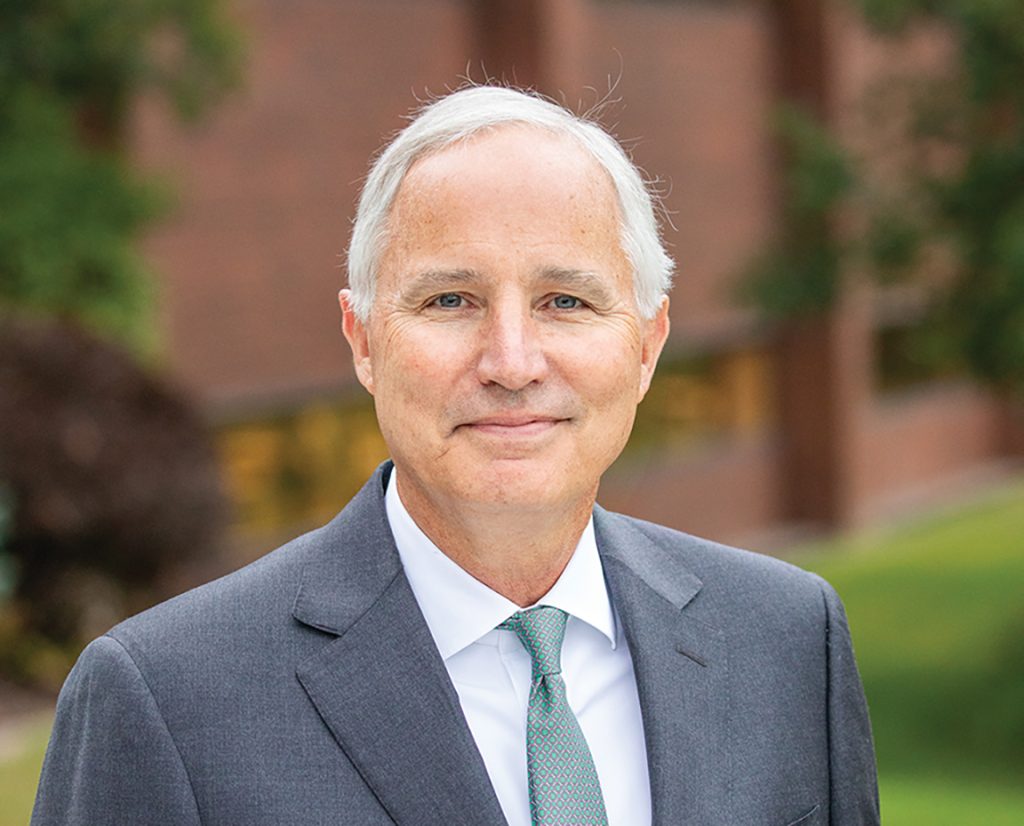
Debertin was named president and CEO of CHS, the nation’s leading farmer-owned cooperative and an agronomy, energy, global grains and processing company, in 2017 and has held various leadership roles at CHS since 1984. Debertin drives company strategies while growing its core businesses to provide end-to-end products and leverage the strength of the cooperative’s supply chain to support the nation’s farmers and cooperatives.
Working for CHS was, in part, a coming home for Debertin. He grew up in the heart of the Red River Valley in Minnesota in a community surrounded by agriculture and a strong cooperative system.
He holds a bachelor’s degree in economics from the University of North Dakota and an MBA from the University of Wisconsin-Madison.
Debertin serves as board chair for Ventura Foods LLC, a joint venture of which CHS is part owner. He also sits on the boards of the National Council of Farmer Cooperatives, the Federal Reserve Bank of Minneapolis and Securian Financial.
From banking and government policy to venture creation and agribusiness, students can connect directly with working professionals from a variety of industries. Beyond learning from the speakers, students gain skills through real-time intellectual engagement by actively participating in and responding to discussions. The course helps students build their professional identity by learning how to evaluate problems, weigh decisions and articulate reasoned views under time pressure.
“For students at a land-grant university in South Dakota, that conversation has immediate geographic and economic relevance,” Santos said. “It is not a case study from a textbook. It is the actual person making the decisions.”
“He carries a particular weight for students at SDSU,” Santos said. “Agribusiness is not an abstraction for them. He can speak to the strategic pressures facing farm cooperatives, the economics of global commodity markets and the leadership decisions that determine outcomes for thousands of farmers.”