
USDA lowers beef production outlook for 2027
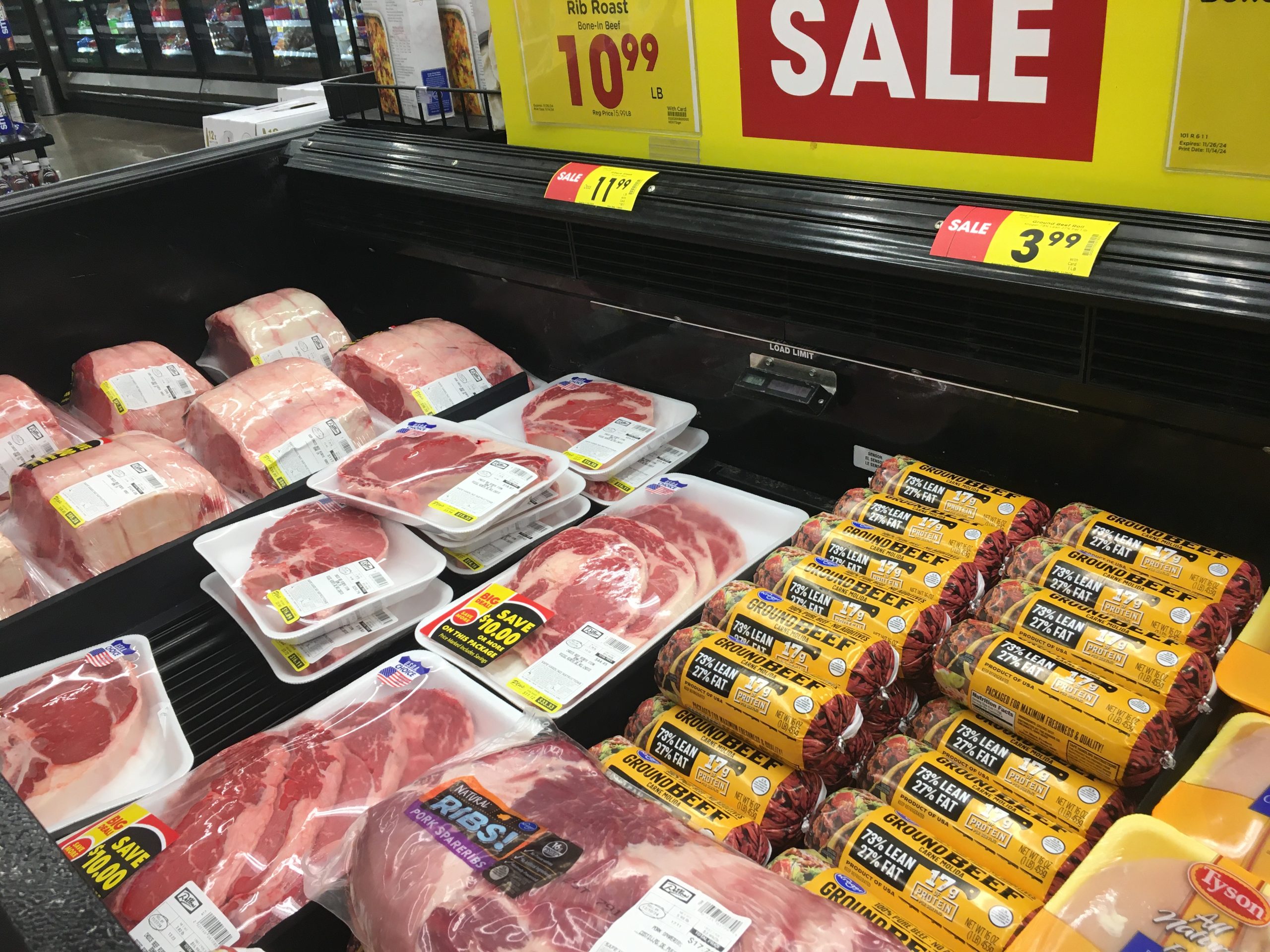
The U.S. Department of Agriculture’s World Agricultural Supply and Demand Estimates report projects an increase in pork production in 2027, but lower beef production.
In total, U.S. red meat and poultry production for 2027 is forecast above 2026 production levels as higher pork and poultry production more than offset lower beef production. Beef production is forecast lower as expected herd rebuilding and increased heifer retention limit the availability of fed cattle for slaughter.
Beef production is projected at 25,310 million pounds for 2027, compared to 25,547 million pounds for 2026.
Consumers continue to want beef on their plates, although inflation’s return as a result of the Iran war is something ranchers need to monitor not only for markets, but also for their own operations, said Glynn Tonsor, a professor in the Department of Agricultural Economics at Kansas State University.
“I’d argue producers already know and feel it,” he said. “System-wide inflation shows up in many places including inputs of running cattle businesses.
“We certainly need to continue monitoring household income, spending, sentiment and how cost-of-living impacts those metrics. Beef demand has been robust for some time despite those concerns, but concerns have grown notably in the past six weeks.”
Pork production in 2027 is forecast to increase despite limited growth in expected farrowings, as improved sow productivity supports larger pig crops and increased slaughter. Heavier hog carcass weights are also forecast in 2027. Pork production is estimated at 28,255 million pounds, up from 27,985 million pounds forecast for 2026.
Red meat and poultry production for 2027 is estimated at 109,014 million pounds compared to 108,436 million pounds for 2026.
The total red meat and poultry production forecast for 2026 was increased from the previous month as higher expected pork, broiler and turkey production more than offset lower beef production.
The beef production forecast was lowered on official data through March for the first quarter to 6,147 million pounds and lower-than-expected marketings in the second quarter due to the recent pace of steer and heifer slaughter. Marketings also were lowered in the second half of the year due to the slow pace of placements into feedlots reported in the first quarter and reduced expectations for second-quarter placements.
Lower expected cow slaughter also underpins the production decrease.
Pork production was raised slightly on higher production in the second half of the year to 27,985 million pounds on an annual basis, which more than offset the decrease in the second quarter.
For 2027, beef exports are lowered from 2026 on tighter supplies to 2,335 million pounds from this year’s projection of 2,361 million pounds, but pork exports are raised on increased production and competitive pricing in international markets.
Trade ambitions
The beef industry may get a shot in the arm as a result of the recent trade summit between the United States and China.
China’s General Administration of Customs has granted a five-year registration extension to 425 overdue U.S. beef establishments in China’s Food Import Food Establishment system, the U.S. Meat Export Federation recently announced. Additionally, 77 new U.S. beef establishment registrations have been added to the CIFER system with an effective date of May 15, and registrations are valid for five years. There are 38 beef establishments that remain suspended. Of the suspended facilities, 25 also were expired and are now renewed, but remain ineligible for export.
“USMEF greatly appreciates U.S. beef access being prioritized at the summit meeting between President Donald Trump and President Xi. Renewal of U.S. beef establishment registrations is a critical step forward for U.S. beef exports to China,” said USMEF President and CEO Dan Halstrom. “We await more details and a further readout from USTR’s engagements with China and note with appreciation Ambassador Jamieson Greer’s optimism for U.S. agricultural trade with China.”
According to Halstrom, China’s renewal of U.S. beef establishments is excellent news for the U.S. beef industry and for customers in China who are anxious to resume purchases.
Beef imports are lower on expectations of reduced supplies in key exporting countries. Still, beef imports are projected at 6,109 million pounds on an annual basis for 2026 compared to 6 million pounds for 2027. Beef imports were raised on the increased pace seen through the first quarter and strong demand for lean processing beef.
“I do expect further increases in imported beef given the domestic production (both overall volume and relative increase in 50 percent trimmings from larger animals)—that is the broader market at work,” Tonsor said.
Pork exports are increased in the second half of the year on improved global demand, particularly in the Western Hemisphere. Pork exports were estimated at 7,330 million pounds in 2027 compared to 7,232 million pounds projected for this year.
For 2027, fed cattle prices are forecast above 2026 on expected tightening of cattle supplies. The price based on the 5-Area Direct for all grades was estimated at $254 per hundredweight.
Tonsor expected the trend to continue.
“The only thing that will notably pull high cattle and beef prices down from here is a decline in consumer demand,” he said. “Given supply realities, it would take a notable decline in demand to result in substantially lower prices for the 2026-2027 period.”
The 2026 cattle price forecast increased from last month to $249.66 per hundredweight on recent data and tighter expected supplies. Hog prices were lowered based on recent trends to $63 per hundredweight, although they are projected to climb to $67 for 2027.
Tonsor said farm managers will need to watch all expenses.
“Always know your cost of production and implied break-even sales prices,” he said. “Regularly compare the out-of-pocket costs of placing downward price protection on upcoming sales and make use of decision tools available at various land-grant universities.”
Dairy parlor
Milk production in 2027 is forecast to increase from 2026, driven by higher milk per cow and a stable milk cow herd. Milk production is estimated at 236 billion pounds for 2027, up from the projected 235.4 billion pounds for 2026. Commercial milk exports in 2027 are forecast to be higher than in 2026 on both a fat basis and a skim-solids basis due to additional exports of cheese and whey products.
Commercial imports also are forecast to increase on both a fat basis and skim-solids basis due primarily to increases in imports of cheese and milk proteins. Domestic use in 2027 is expected to increase on both a fat basis and skim-solids basis. Dairy product prices are forecast to be higher for cheese and butter, but lower for whey and nonfat dry milk compared to 2026.
As a result, the Class III price is forecast higher and the Class IV price is lower in 2027. The all-milk price in 2027 is forecast to be lower at $20.95 per hundredweight compared to $21.25 per hundredweight for 2026.
The 2026 milk production forecast was raised slightly from the previous month on expectations of a larger cow herd, but a slower growth rate in output per cow, all based on the latest information published in the Milk Production report.
The import forecast on a fat basis is raised on increased expectations for butter shipments. The skim-solids import forecast is lowered slightly primarily on lower expected imports of milk proteins. The fat-basis export forecast is increased on higher expected exports of cheese and butter. Exports on a skim-solids basis are raised on increased shipments of cheese and whey products more than offsetting lower expected shipments of NDM. The 2026 price forecasts for cheese, NDM and whey are raised compared to the previous month.
Dave Bergmeier can be reached at 620-227-1822 or [email protected].



