The Fairbanks family: From colonial Massachusetts to the Flint Hills
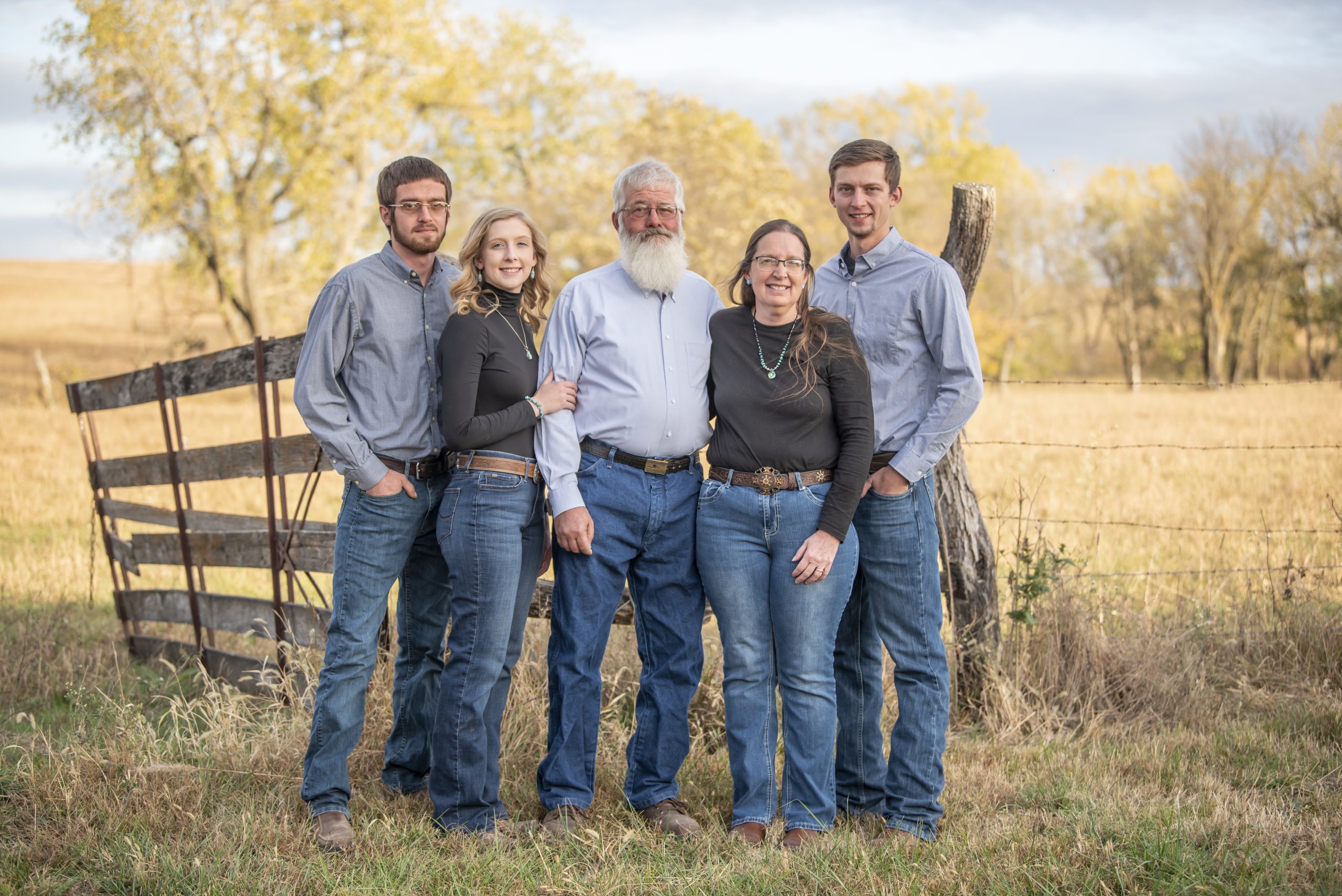
As the United States celebrates its 250th year of independence, one Kansas farm family’s roots reach back even further, connecting them to colonial times and the American Revolution. John and Deanna Fairbanks, along with their children Jonathan, Jesse and Tess, of Onaga, Kansas, are descendants of Jonathan and Grace Fairbanks who immigrated from England to the Massachusetts Bay Colony in 1633.
Jonathan and Grace Fairbanks arrived in New England with their six children and became founding residents of Dedham, Massachusetts, in 1636. The family received 12 acres of land and built a home between 1637 and 1641. The structure, known today as the Fairbanks House, remains standing and is recognized as the oldest known timber-frame house in North America.
Jonathan Fairbanks was a skilled tradesman who made and sold spinning wheels used for fabric. He was also a farmer, and his descendants continued to live in the house and produce food for their family for years to come. At its height, the property grew to 200 acres of agricultural farmland.
The last Fairbanks descendant moved out of the 17th century home in 1904, and the Fairbanks Family in America Inc. bought the house to preserve it and open it to the public as a museum and historical site. It has been open to the public for more than 100 years, and tours continue today. To learn more about the house, visit www.fairbankshouse.org.
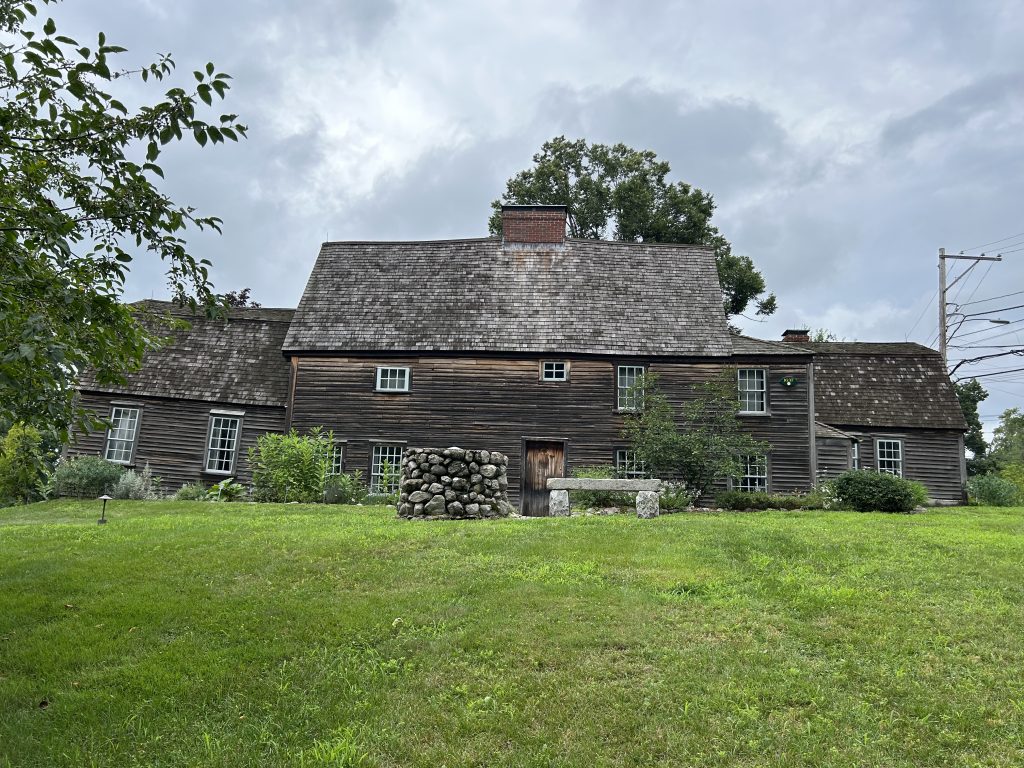
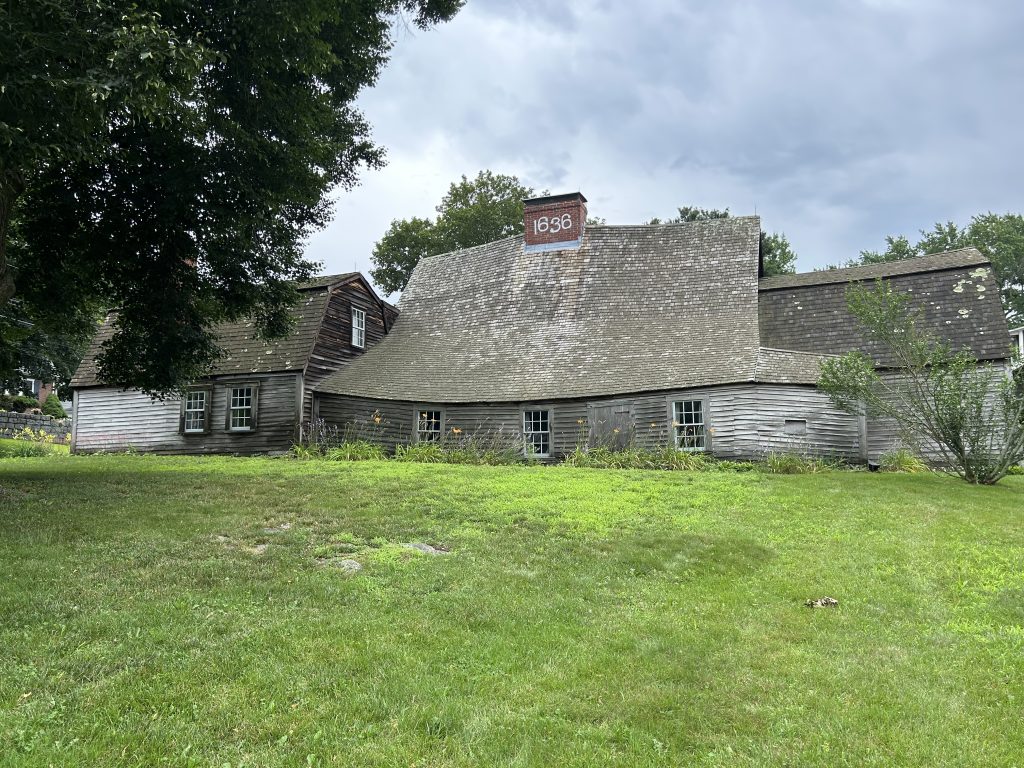
The Fairbanks House in Dedham, Massachusetts. (Photo courtesy Sharmin Fairbanks McKenny.)
Roles in the American Revolution
After establishing themselves as a prominent colonial family, the Fairbanks also made their mark during the American Revolution. According to Sharmin Fairbanks McKenny, a Fairbanks descendant, historian, and author, multiple Fairbanks played a role of America gaining her independence 250 years ago.
Deacon Thomas Fairbanks was on the Lancaster, Massachusetts, Committee of Correspondence and in the Third Provincial Congress of Massachusetts. His committee was responsible for getting blankets, clothes, spears, and lances for Continental soldiers during the battles of Bunker and Breed Hill. She said he also helped find safe storage for patriot ammunition. He also assisted merchants whose commodities were seized by the British during the Siege of Boston between 1775 and 1776.
“He was 68 years old at the time and was too old for the military, so I like to say he fought with his words and actions,” McKenny said.
McKenny said several Fairbanks also served as drummers during the Revolutionary War. One was 23-year-old Cyrus Fairbanks, who drummed the marching cadence from Lancaster to Boston—an 18-hour walk—during the Lexington Alarms. This signaled the start of the Revolutionary War with the Battle of Lexington and the Siege of Boston in April 1775.
Samuel Fairbanks was a quartermaster in the Continental Army during the war. McKenny said the quartermaster had one of the most challenging roles in the army. Quartermasters were tasked with bringing uniforms, horses, wagons, food, tents, and arranging camp for the soldiers. He was stationed at New Windsor, New York, which was Gen. George Washington’s headquarters.
Fairbanks Farms LLC
While the family’s roots stretch back to almost four centuries to colonial New England, its agricultural legacy continues in Kansas. Like many American families, later generations moved west. One branch eventually settled in northeast Kansas, where Clarence Fairbanks—John’s grandfather—established what became Fairbanks Farms in 1916.
Although John retired in 2023, his sons Jonathan—named after the original Jonathan Fairbanks—and Jesse have taken over, making them the fourth generation to run the operation.
“It’s very important to us to keep the land and the business running, and to keep it in the family,” Jesse said.
Deanna said the Fairbanks Farms began as a diversified operation and remains that way today, raising corn, sorghum, soybeans, alfalfa, and hogs and cattle for custom slaughter.
Jonathan said the operation has changed over the years, with some downsizing to their sow herd, which is the basis for their butcher hog business. He said their cow-calf herd has stayed about the same, with 30 cows. He said they feed out 10 to 15 of the calves each year for their custom slaughter business.
Like many family farms, the operation alone cannot support multiple households. Both brothers work off-farm jobs while helping manage crops and livestock. Jonathan is at the farm the most, working as an auto and diesel mechanic when he is not in the field or feeding livestock. Jesse’s work requires him to travel often as he is employed as an offshore wind turbine technician off the coast of Massachusetts, of all places.
Past and future
Jonathan and Jesse consider their storied family’s history as a motivator to continue their chapter of Fairbanks history in America.
“It gives us something to live up to,” Jonathan said. “I enjoy it, and I wouldn’t want to do anything else. Our nation’s not perfect, but we’re still arguably the greatest nation there is, and to be part of a family that’s had a hand in that, that is something special.”
Jesse said he considers continuing the family farm in Kansas as his version of the American Dream—similar to the aspirations his ancestors had when they made the risky decision to come to America centuries ago.
“I would consider it the American Dream,” Jesse said. “I work with a lot of different people in my job, and every time I tell someone that I live on a farm, everybody’s jealous. It gives you a lot of pride, having something that not everybody gets to experience.”
The Fairbanks know having records of their ancestors nearly 300 years later after they arrived in America is a rarity in the 21st century. Deanna urged families to preserve documents, photos and pass on every nugget of family history to the next generation, because once a generation dies off without sharing their knowledge, that usually means the information perishes with them.
“Unfortunately, not every family has the same interest level as our family and certainly most families don’t have family researchers that have done all this work,” Deanna said. “If you don’t pass it on, people forget it.”
In the 17th century, the Fairbanks family worked the land to provide for their household and create opportunities for future generations. Nearly 400 years later, the family’s Kansas operation is built on much the same principle. While the equipment and location have changed, the goal remains the same: Leave the farm in a position for the next generation to take over, benefit from the land and continue the Fairbanks legacy.
Lacey Vilhauer can be reached at 620-227-1871 or [email protected].
Photo: The Fairbanks Family. From left to right: Jonathan, Tess, John, Deanna, and Jesse Fairbanks. (Photo courtesy Wyatt Minihan of WJM Photography.)