Hot temps may encourage homeowners to delay seeding lawns this year
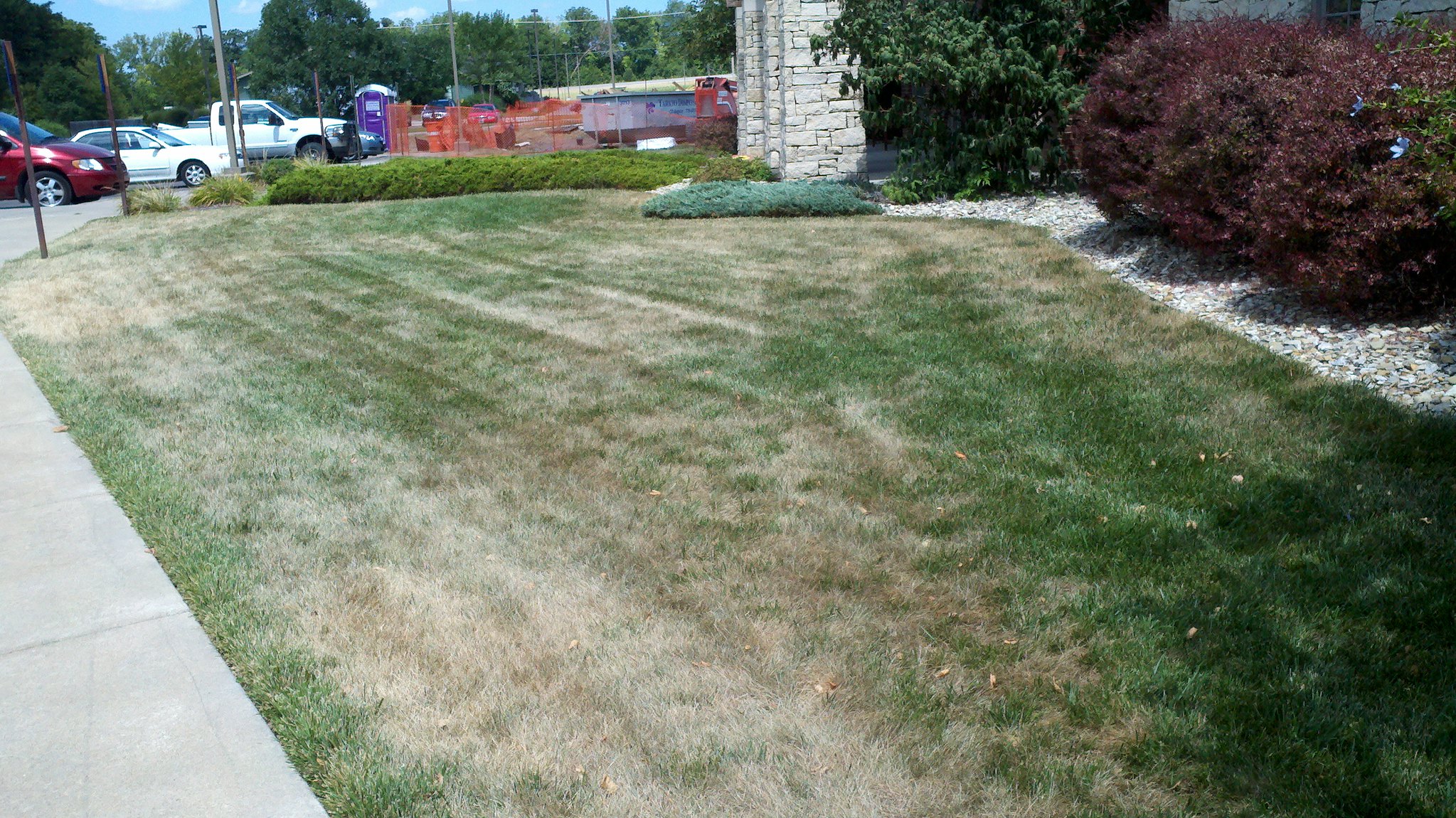
K-State horticulture expert says waiting a couple weeks may help cool-season grasses
September is the best time to give cool-season grasses a boost in Kansas, but with triple-digit temperatures hammering many parts of the state recently, it might be a good idea to hold off just a little bit.
Kansas State University horticulture expert Matt McKernan says you can still over-seed cool-season grasses such as tall fescue and Kentucky bluegrass in early September, but it’s going to hit your pocketbook a little harder.
“If it remains really hot, you may be watering three times a day to keep newly-planted seeds moist,” McKernan said. “You may want to wait until this current hot spell ends before putting your seed down and starting your watering because it will not only save on your water bill, but also be easier to keep the soil moist.”
This year, that may mean that the middle to late part of September is a better time for homeowners to think about thickening up their home’s lawn.
“To maximize the success of new grass seed establishment, it is important to put in the preparation necessary for success,” McKernan said.
Those steps include:
Fertilize the lawn
“September is the ideal month to fertilize cool season lawns, and fertilizers are often best applied at or before the time of planting,” McKernan said. “For lawns that are not frequently fertilized, a starter fertilizer may be beneficial. Starter fertilizers are higher in phosphorus, which will give the seed a greater chance of getting started quickly.”
“Follow the directions on the bag to know how much fertilizer to put down.”
Prepare the soil
“Seeds need good contact with the soil in order to access moisture and improve germination,” McKernan said. “This is especially important when weather conditions are hot and dry.”
While breaking up the soil crust is critical, seeds only need to be planted 1/8 to 1/4 inch deep for good soil-to-seed contact. McKernan said homeowners can use a hand rake to roughen up soil in small areas. For larger areas, he suggests either a verticutter machine or core aerator.
“A verticutter machine has solid vertical blades that can be set to cut furrows in the soil,” he said. “A slit seeder is a verticutter machine with a seed hopper added so the soil prep and seeding operation are combined.”
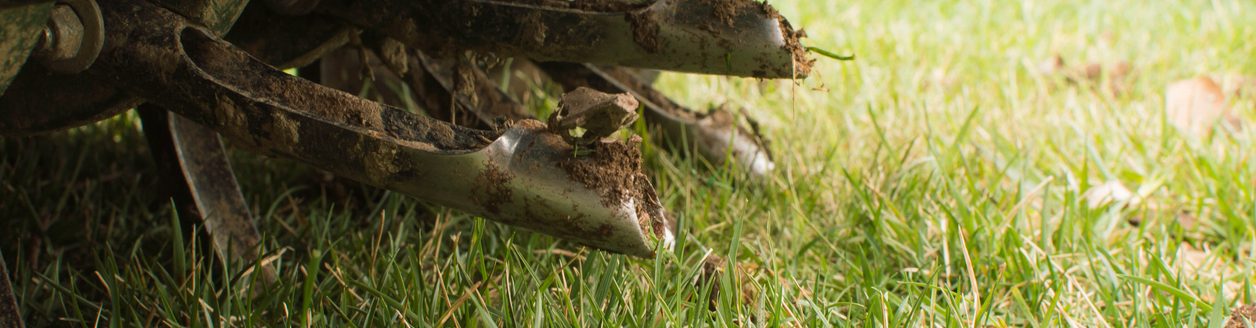
By contrast, a core aerator literally punches holes in the soil, depositing the cores on the surface of the ground.
“Each core aeration hole produces an excellent environment for seed germination and growth, while also helping to improve soil health” McKernan said. “Make 3-4 passes with the core aerator to ensure holes are spaced approximately 3 inches apart before seeding.”
A core aerator also reduces the amount of water needed to germinate the seed. Aeration increases the water infiltration rate, decreases compaction and increases the amount of oxygen in the soil.
Apply proper seeding rates
For new tall fescue lawns, McKernan suggests applying 6-8 pounds of grass seed per 1,000 square feet. Apply three pounds of seed per 1,000 square feet when planting Kentucky bluegrass, which is a smaller seed. “You’re actually putting down more seed per square foot with Kentucky bluegrass,” McKernan said, “but you need that extra seed in order to get a good stand.”
If your law is thin, but still has some established grass, McKernan suggests cutting these seeding rates in half. “When overseeding a lawn, we lower the seeding rate to account for the turfgrass that is already growing in the lawn. This helps to prevent overcrowding our turfgrass” he said.
Using too much seed results in a lawn more prone to disease and damage from stress. Using too little seed may result in clumpy turf that is not as visually pleasing. Calculate the yard’s square footage to determine the appropriate amount of seed to apply.
Keep the soil moist
McKernan suggests watering newly planted areas lightly, but often. “Keep the soil surface constantly moist, but not water-logged,” he said. “It’s critical that grass seed be kept moist in order to germinate, and that newly germinated seedlings aren’t allowed to dry out until they establish a more robust root system.”
“During hot days, a new lawn may need to be watered two to three times a day. If watered less, germination may be slowed or seedlings may wither and die” McKernan added. “As temperatures cool, the soil moisture will last longer in between waterings, requiring watering only every couple days.”
As grass plants come up, gradually decrease watering to once a week if there is no rain.
“Let the plants tell you when to water,” McKernan said. “If you push the blades down and they don’t spring back up quickly, the lawn needs water. Once seeds sprout, try to minimize foot traffic that seeded areas receive until the seedlings are a little more developed and ready to be mowed. Begin mowing once seedlings reach 3-4 inches tall.”
McKernan and his colleagues in K-State’s Department of Horticulture and Natural Resources produce a weekly Horticulture Newsletter with tips for maintaining home landscapes and gardens.
Interested persons can subscribe to the free newsletter, as well as send their garden and yard-related questions by email to [email protected], or contact your local K-State Extension office.
PHOTO: Lawn in summer dormancy from heat, drought stress (Photo: K-State Research and Extension.)