
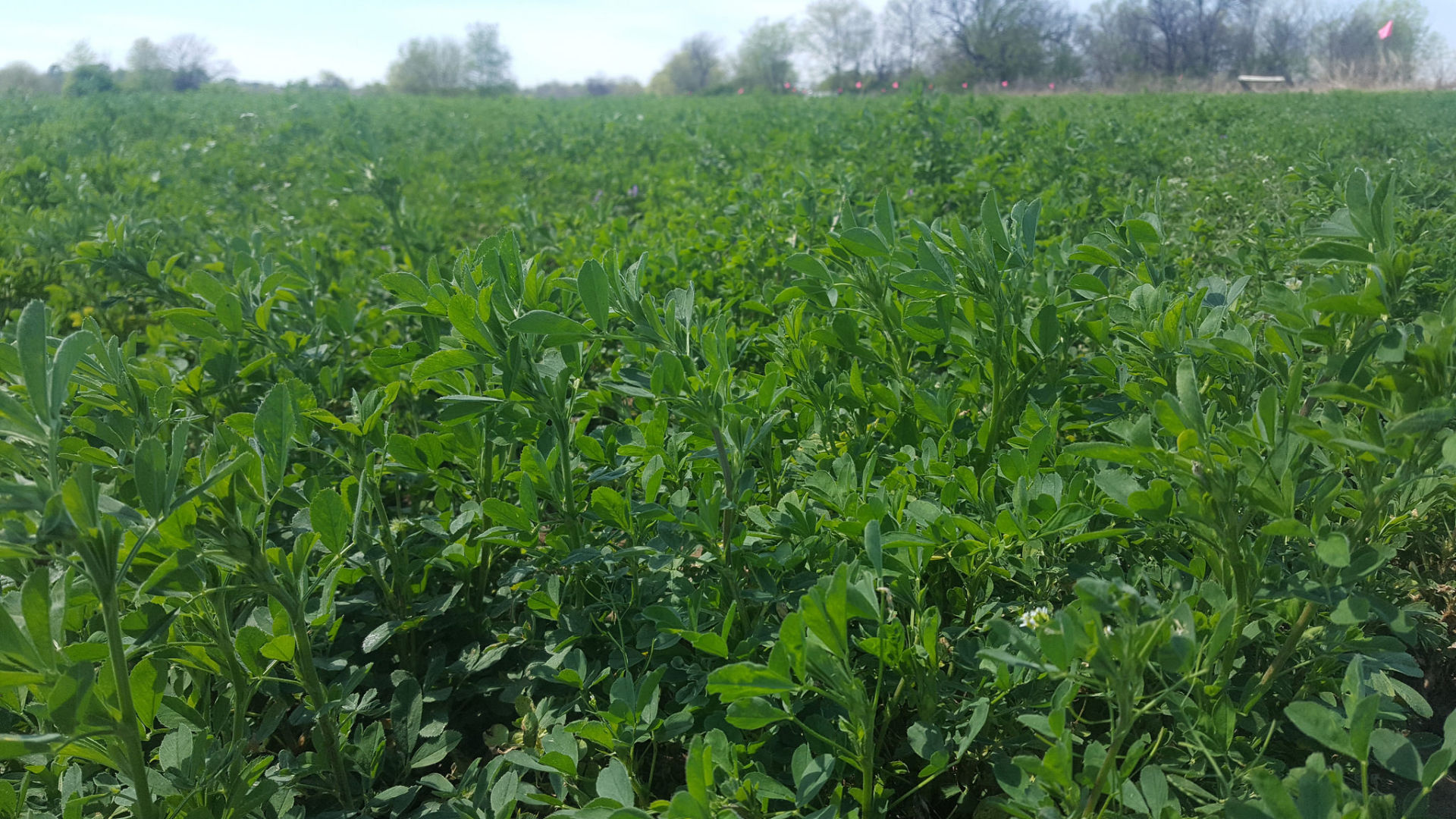
There’s a definite sense of long-term optimism among alfalfa growers nationwide, according to Beth Nelson, president of the National Alfalfa and Forage Alliance, which is based in St. Paul, Minnesota.
In May 2025, NAFA conducted a survey of 200 farmers from across the country. Encouragingly, only 9% of those surveyed plan to decrease their alfalfa acres over the next five years, while 30% plan to increase their acreage, she said. “This shows a commitment to alfalfa as a valuable and versatile crop.”
That said, there is some cautious optimism for this year’s market. Hay stocks vary around the country and that impacts prices regionally. Many farmers expect prices and demand to be a bit stronger than last year’s levels, though still below recent highs, Nelson said. Concerns for weather-related factors, like drought, and the potential impact on yields are always on farmers’ minds.
Some pessimism has come from the shift by some dairies and feedlots away from alfalfa given past high price years. Many of those buyers have not fully returned even though prices have come down.
“NAFA has focused on supporting farmers through these market shifts by promoting alfalfa’s unmatched value and nutritional benefits in the ruminant ration and by advocating for policies and research that keep alfalfa competitive and sustainable in the long term,” Nelson said.
Drought conditions
Currently, much of the alfalfa acreage in the High Plains region is experiencing drought, as shown by the U.S. Drought Monitor. But the drought map changes frequently, and there was some easing from April to May in parts of the High Plains. Weather conditions are only part of the story, she said. Another key factor is irrigation water availability. Areas with ample irrigation can often buffer the impacts of drought, while areas without can be hit harder.
One of the reasons alfalfa remains such an important crop, even in drought-prone regions, is its resilience.
“Thanks to its deep taproot, alfalfa can survive extended dry periods by going dormant and then resuming growth when moisture returns,” Nelson said. “At NAFA, we’re working to ensure that alfalfa’s adaptability and its role in sustainable forage systems are front and center as we navigate the challenges of drought and changing weather patterns.”
Large-scale dairies
The increase in large-scale dairies across the southern Great Plains, including Kansas, Oklahoma, Texas, and Colorado, presents a great opportunity for alfalfa farmers, Nelson said. NAFA encourages growers to actively network with these dairies and the nutritionists who help these farms to better understand their specific ration needs and determine how alfalfa can best fit. Connecting with the dairy farmer and nutritionists about alfalfa’s benefits can be key to ensuring it’s included in rations.
NAFA funded research specifically looks at optimizing dairy rations with alfalfa, which is important because alfalfa produces more protein per acre than any other crop, she said. That protein, along with calcium and high-quality fiber, is critical for meeting the elevated nutritional demands of dairy cows and supports higher milk production.
“Going beyond nutrition, alfalfa is a nitrogen-fixing legume that requires no expensive nitrogen fertilizer to obtain high yields and high protein levels,” Nelson said. “Alfalfa is a more environmentally friendly protein source than many other feed crops.
High quality alfalfa production in expansion dairy geographies benefits both dairies and alfalfa farmers, she said. By building relationships with these dairies and leveraging alfalfa’s unique nutritional and sustainability advantages, alfalfa farmers have an opportunity to grow and support expanding dairy markets.
Checkoff
NAFA and the U.S. Alfalfa Farmer Initiative (known as the Alfalfa Checkoff) are prioritizing alfalfa research funding to ensure it continues to meet farmers’ evolving needs. A NAFA survey revealed several concerns, Nelson said.
“Weather impacts, harvest timing, market volatility, weed pressure, and the lack of a strong crop insurance safety net were the most commonly cited concerns,” she said.
In terms of research priorities, farmers most frequently mentioned yield improvement, forage quality and nutrition, and soil and nutrient management as areas that would be most impactful.
“Moving forward, we’re using the recent farmer feedback to sharpen our call for research proposals and ensure new research projects align closely with what farmers have said,” Nelson said.
Some of these are areas where the checkoff dollars have been used in past funding cycles and farmers can view these research projects and their results on at alfalfa.org/USAFRI_FinalReports.php. Growers can click on the project titles and get a quick view of the project highlights, and full reports are also available.
When farmers purchase alfalfa seed from brands participating in the checkoff, they’re not only investing in their fields, they’re also investing in the future of the alfalfa industry.
The alfalfa checkoff channels $1.50 from each bag of seed purchased into vital research, promotion, and industry efforts that enhance alfalfa’s role in animal nutrition and as a regenerative crop, keeping alfalfa competitive with other cropping choices and uniting industry voices to shape a resilient future for alfalfa.
Choosing a seed brand that participates in the checkoff, helps secure a thriving future for alfalfa, she said.
NAFA has worked hard to secure dedicated funding for both the Alfalfa Pollinator Research Initiative and the Alfalfa Seed and Alfalfa Forage Systems Research Program, which has had a real impact on alfalfa research. The Alfalfa Pollinator Research Initiative receives about $100,000 a year and is administered by the U.S. Department of Agriculture’s Agricultural Research Service, while the Alfalfa Seed and Forage Systems Research Program has grown from $1.35 million in 2014 to $4 million annually. That program is administered by USDA’s National Institute for Food and Agriculture.
Although these funds are separate from the checkoff program, they often complement the checkoff’s work, Nelson said. Researchers may have started with checkoff-funded projects and then built upon those projects to receive Alfalfa Pollinator Research Initiative or Alfalfa Seed and Alfalfa Forage Systems Research Program project funding.
“We know alfalfa has historically received far less dedicated public research funding than other major crops like corn and soybeans,” Nelson said. “Having multiple, reliable funding sources ensures public researchers can stay focused on alfalfa and drive continuous improvement in varieties, management, and environmental stewardship. At NAFA, we’re proud to be a voice for industry and to help keep alfalfa at the forefront of agricultural research and innovation.”
Final thoughts
NAFA takes a comprehensive approach to supporting and advancing the alfalfa and forage industry through targeted advocacy, research and education efforts.
- Advocacy: NAFA builds awareness for alfalfa, the Nation’s 4th most valuable field crop, and works to secure recognition, research funding, risk management tools (e.g., crop insurance) and policy inclusion for alfalfa (e.g., NRCS Short-term Perennial Program; new revenue crop insurance program under development).
- Research: NAFA manages the alfalfa checkoff program, conducting research based on industry-set priorities. Additionally, NAFA has worked to secure more than $4 million annually for the Alfalfa Seed & Alfalfa Forage Systems (ASAFS) research program and more than $24 million in USDA Agricultural Research Service funding specifically for alfalfa research.
- Education: NAFA hosts annual training seminars and maintains educational resources.
Dave Bergmeier can be reached at 620-227-1822 or [email protected].
Alfalfa Variety Ratings guide
The latest Alfalfa Variety Ratings, whether through a searchable 2025 database or print version, is available at alfalfa.org/varietyratings.php.
“It’s a great tool for farmers,” said Beth Nelson, president of the National Alfalfa and Forage Alliance. “With 23 different search parameters, it allows them to determine varieties that best match their specific growing conditions and management goals.”
The ratings include critical information like fall dormancy, winter survival, and disease and pest resistance—everything from bacterial wilt and Aphanomyces to leafhopper tolerance, she said. It even includes ratings for grazing tolerance and standability, which are increasingly important considerations for many farmers.
This comprehensive data helps farmers make informed decisions about which alfalfa varieties will be most productive and resilient in their local environment, Nelson said. “At NAFA, we’re committed to supporting farmers by making this information easy to access and use so that they can continue to grow high-quality, high-yielding alfalfa crops.”



