
Forage sorghum high value, especially in dairy nutrition
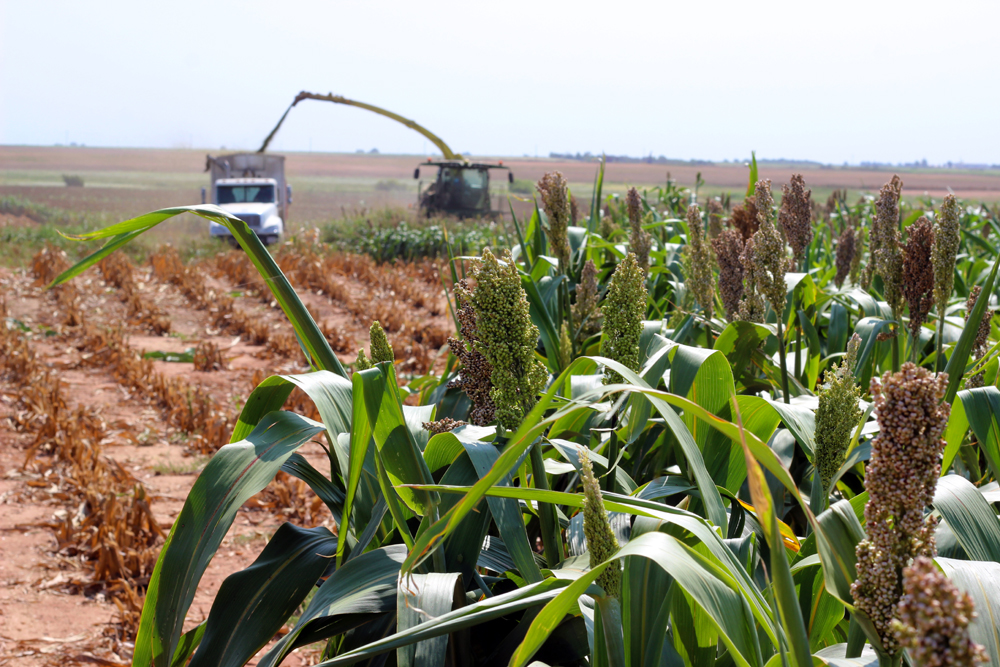
Dairy rations in modern times look much different than those from many years ago.
During the United Sorghum Checkoff co-sponsored webinar that took a deeper dive at the role of forage sorghum in dairy rations, Brent Bean provided agronomy insights, while Steve Martin and Macey Brown with DNMC Milk discussed the nutrition side of forage sorghum in rations. The webinar was presented by Feed Strategy and Feed & Grain.
Bean, the director of agronomy for USCP, said water is the first consideration when switching from corn to sorghum for silage.
“The reason we’re growing forage sorghum for dairy or feed yards, really is just because of lack of water,” he said. “Corn has been a great crop from a silage standpoint, but if you don’t have the water, corn is not going to perform very well, and that’s where forage sorghum tends to shine.”
Bean said data from Texas A&M University’s Bushland research station forage sorghum variety trials is promising. Eight years of data compared forage sorghum and corn.
“Only two years does the corn actually come out ahead from a yield standpoint on the forage sorghum, looking at the average number, and those were the two years where precipitation was the highest,” he said. “So, where a total of irrigation and rainfall was over 23 inches is really the only time that the corn out-yielded the sorghum.”
Its outcomes like that are a good illustration of why growing forage sorghum on the High Pains fits.
There are about a half dozen forage sorghum types being grown now for sorghum silage. Types range from conventional forage sorghums, brown mid-ribs, brachytics, photo period sensitive, and others.
“Now, unlike corn, there’s just a lot of variability in hybrids and even types,” Bean said.
One of those, the brown mid-rib, has been around about 25 years, according to Bean, and is one of the more commonly known.
“They certainly have made improvements on those varieties. When they first came out, there was a serious lodging issue with the BMRs. That really isn’t the case anymore,” he said. “You can get some lodging occasionally particularly if you delay harvest too long. But the companies have done a good job of bringing in some strength on that stock.”
The brachytic dwarf varieties are probably the newest trait that’s come along and its basically forage sorghum with shorter internodes, causing the leaves to be “stacked up on top of each other.”
“So, you have a higher ratio of leaf-to-stalk, and then you typically have better standability,” Bean said. “But doesn’t mean you can’t have lodging under the right condition.”
The male sterile varieties have gotten a lot of attention over the last four or five years and this hybrid produces no pollen.
“What that means is you’re not going to get any starch or very little starch, but that energy is going to remain in that stalk as sugars,” he said. “Typically, you get a little bit increased palatability, (and) it should have decreased lodging potential, just because you don’t have that head that’s putting a bunch of weight on the top of that stalk.”
Harvesting strategy
With male steriles, Bean said many farmers are harvesting them early at the boot stage or before, then laying it down and letting it dry before picking it up.
“You can direct cut it. But, if you direct cut it, what the recommendation is you wait at least four weeks after flowering or heading to give that sorghum plant really a time to dry down a little bit,” he said. “So, it gets to less than that 70% moisture and closer to 65% moisture.”
He doesn’t recommend waiting much past the six-to eight-week range when harvesting the male sterile varieties.
Photoperiod sensitive varieties stay in the vegetative stage, meaning they don’t head out on the High Plains, or it’s very rare for them to, according to Bean.
“These are going to have a wetter stock and so they almost always have to be cut, laid down, let them dry for a little bit, and then come back and pick up,” he said. “If you’re choosing to use a photo period sensitive quality can be OK on these, but I don’t think they’re typically as good maybe as some of the other varieties that you might be planting.”
A couple specifics Bean mentioned when it came to nitrogen levels in forage sorghum was earlier maturing hybrids need a little bit more than a later maturing one.
“If you do increase your nitrogen, or you have too much nitrogen in the soil, you do run a risk of really getting some more issues with lodging,” he said. “So, we don’t want to overdo it on the nitrogen.”
With pre-emergence herbicides it’s essential to pay attention.
“We don’t have as many options in sorghum as we do with corn,” he said. “The three we have are atrazine, S-metolachlor or a combination of those two. Pre-emergence herbicides are critical for sorghum.”
Sugarcane aphid
The only insect Bean is concerned about for sorghum is the sugarcane aphid. Once growers find it on the crop, they should go ahead and spray since it’s more beneficial to get the spray on while the sorghum is not too big. Good coverage is essential for control of the aphid.
“We do have some good insecticides we can use. Coverage can be important,” he said. “One application is sufficient. There are some hybrids now in the market that do give us some pretty good tolerance to sugarcane aphid and so I’d encourage you to check those out if that’s something you’re concerned with.”
Dairy nutrition
Brown leads implementation of the DNMC weekly green sheets, yearly trend analysis and year-over-year peer group comparisons. She also advises farm clients and takes a lead in dairy sustainability and water smart strategies.
Brown said it’s important to recognize how dairies have expanded in the United States. According to Brown, the main areas dairies are concentrated is in Texas, New Mexico and Kansas, while new ones are popping up in Florida and other southeastern states.
The dairies are locating to states where sorghum can be grown as feed, she said.
Many in the High Plains would consider 2025 as above average for rainfall, and she said that boosted yields for wheat, corn and sorghum production.
“And I think that’s important, because as we’re planning our forage utilization for the coming years, I think we’ve all learned our lesson to not count on the rain as much as we would definitely like to,” she said. “Planning and knowing what sorghum varieties feed best for your specific operations are important.”
Plan for less water
Having forage options that depend on less precipitation is important, Brown said, especially when thinking about long-term sustainability of dairy farms and feeding.
“We know that the water source is pretty scarce, and sorghum is definitely a great option,” Brown said. “And then just thinking about how we’re feeding it, I think one of the biggest challenges we’ve seen is that there’s so many different varieties that it’s hard to know kind of where to start.”
Getting comfortable looking at sorghum as an option, understanding what varieties will fit specific needs the best is going to be critical. The same goes for determining which varieties grow best in specific regions.
When thinking about the cost benefit, Brown said forage production margins are “pretty slim” and finding more economical options beyond corn is important.
“Although it is nice to have when we can have it when the rain permits, it’s still expensive,” she said. “Having a secondary forage option that not only requires less water, but can also produce some cost-saving options, is very important.”
Brown said recently she heard that on average sorghum on a per-acre basis can be about $200 cheaper.
Dairy cow needs
Martin founded DNMC and focuses on diet formulation and modeling, ration optimization strategies and feed milk economics. He brought the talk back to the cows and why agronomy is important.
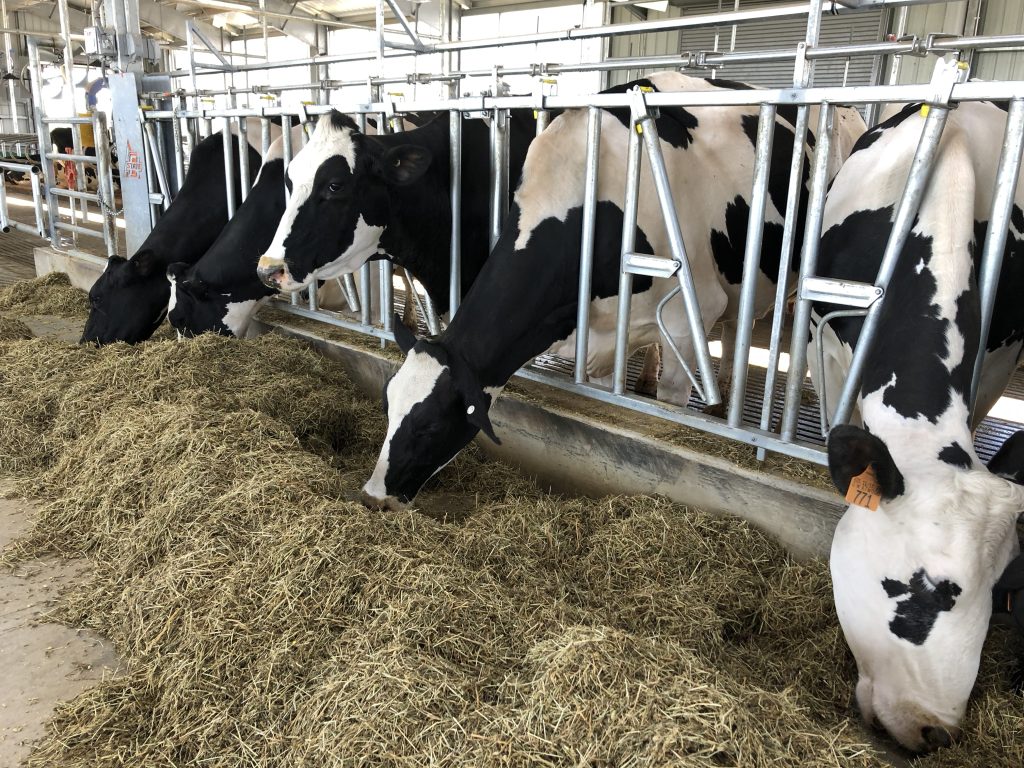
“Dairy cows need a lot of forage and we’re always trying to think about how can we grow things or work with our neighboring crop production opportunities to create forage that that we can support dairy production with,” he said.
Martin said a feedlot animal might have 5 or 10% roughage in its diet while a brood cow or momma cow might have 100% forage in her diet.
“The dairy cow sits right in the middle of that, and most dairy rations are—I think in the books in school—it’s like 40% forage,” he said. “But we’ve learned that in some geographies that 50 is the right number.”
And in some geographies where less water is available and forage is harder to grow, that number can be even as low as 30% and still have healthy animals and good milk production.
“When we think about replacing corn silos, and that may not be everybody’s reality, you might be replacing small grains, or you might be replacing alfalfa, depending on where you’re at if you’re out west, where alfalfa still tends to be a high feed rate ingredient,” he said. “It could be that sorghum silage plus purchased protein may actually be a better bet for water strategies than alfalfa.”
Martin said all the forages have a place, calling alfalfa magical, corn silage amazing, and “sorghum silage is more amazing than most people think.”
“We just need to figure out what those properties are, and how to make sure we pick the right ones,” he said.
Kylene Scott can be reached at 620-227-1804 or [email protected].
Related coverage and resources
- Related on HPJ: From feed to food, grain sorghum has long history in the High Plains
- Related on HPJ: Sorghum silage: Rising star of dairy feed
- Outside resource: USDA ERS — Dairy



