Feedyard immersion day gives high school students look at facility, team
It takes a team to make a feedyard successful.
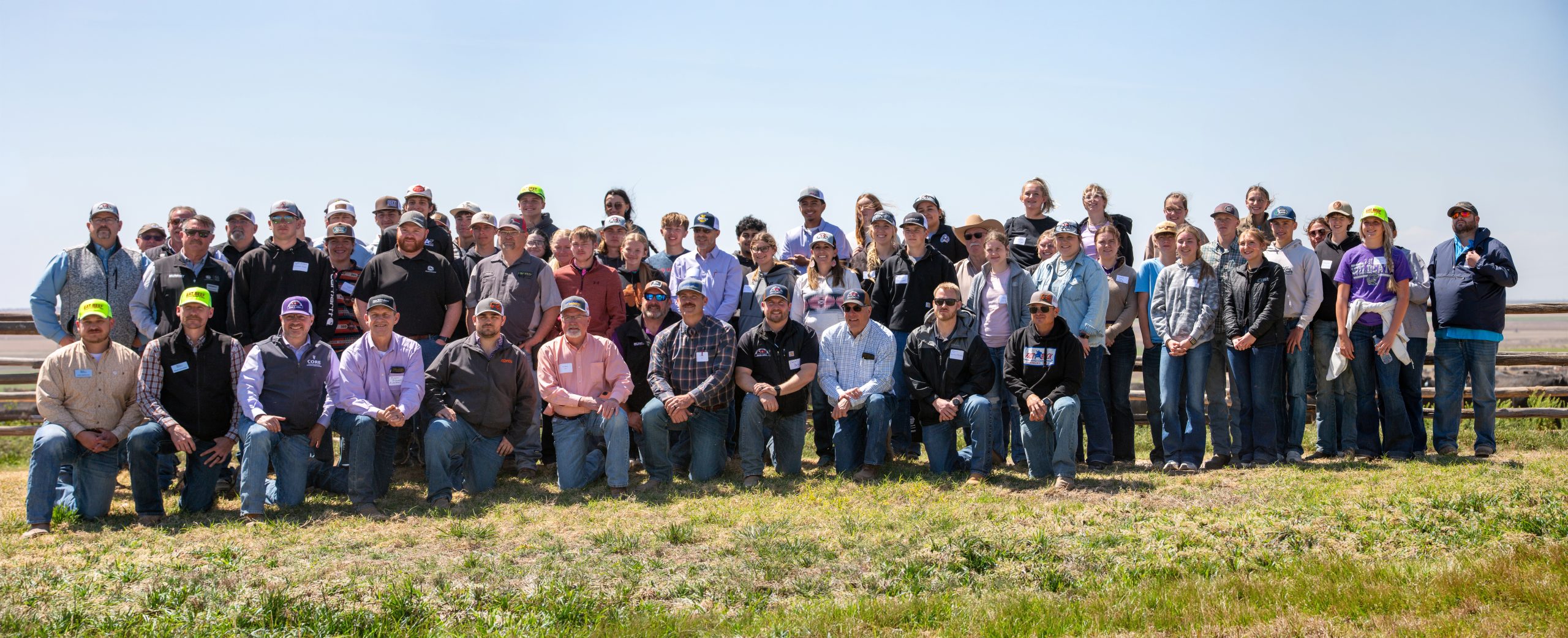
A couple dozen southwest Kansas high school students had the opportunity to check out all the jobs on the team at the Isrik and Doll Feedyard in Ingalls, Kansas, on April 8.
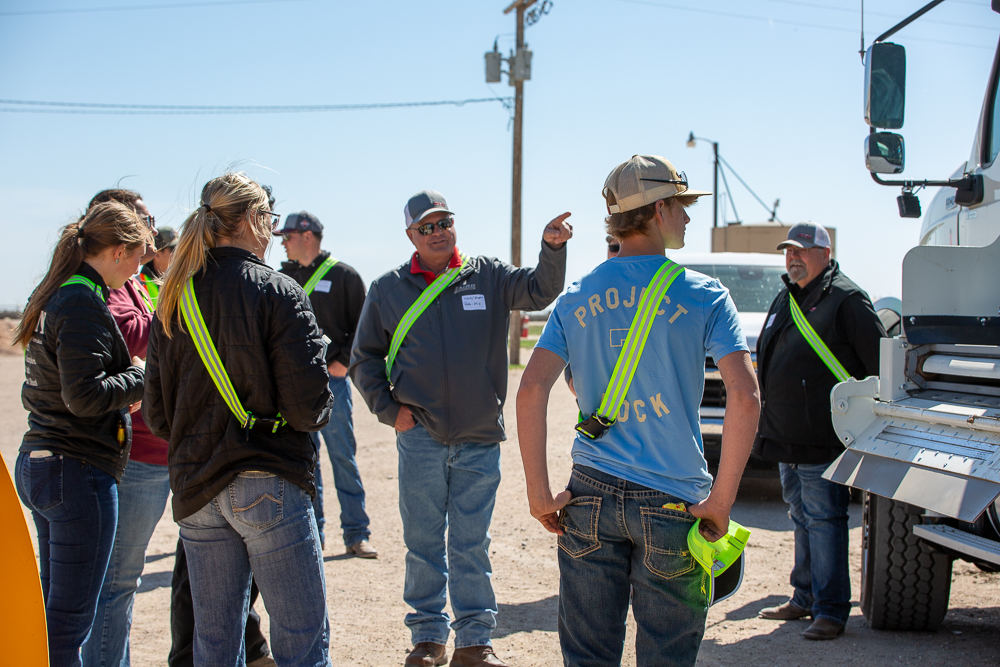
Students were able to get hands-on experience during different stations, which included beef, animal health, animal nutrition, drone technology in feedyards, Micro Technologies, heavy equipment, and the Kansas Livestock Association’s safety trailer.
Daniel Berg, assistant vice president of cattle operations at Irsik and Doll, encouraged students who have a passion for the beef industry or are interested in pursuing a career in the beef industry.
“Our goal is for this day to be hands-on, educational, and to increase students’ passion for the beef industry,” he said prior to the event.
Brandon Depenbusch, Irsik & Doll vice president of the cattle division, told attendees he had several goals for the day. First, was to stay safe.
“There’s business going on today, a lot of big trucks and animals and stuff like that,” he said. “No. 2, let’s have fun, right? No. 3 is the most important thing—let’s learn something.”
Depenbusch challenged the students to take notes and at the end of the day to have an answer to his question—what’s one thing you took away from the day as you’re going through?
Trevor Cox, Zoetis strategic account manager, reiterated what Depenbusch said.
“There’s hundreds of careers that you’re going to experience today,” he said. “A feedyard—there is a lot that you can do, so just take it all in. Learn something.”
Depenbusch said at Ingalls, the operation has 38 employees and his team works with numerous customers across the country.
“All the cattle that you guys saw, all those cattle are owned by somebody else,” he said. “I like to tell people, is it’s really just a big ole bed and breakfast. People like you send your cattle to us, and then we will feed them. Charge for food, we’ll charge a room rate, and then we’ll provide health care. We’ll provide marketing services and that type of stuff.”
Program
And hands on it was.
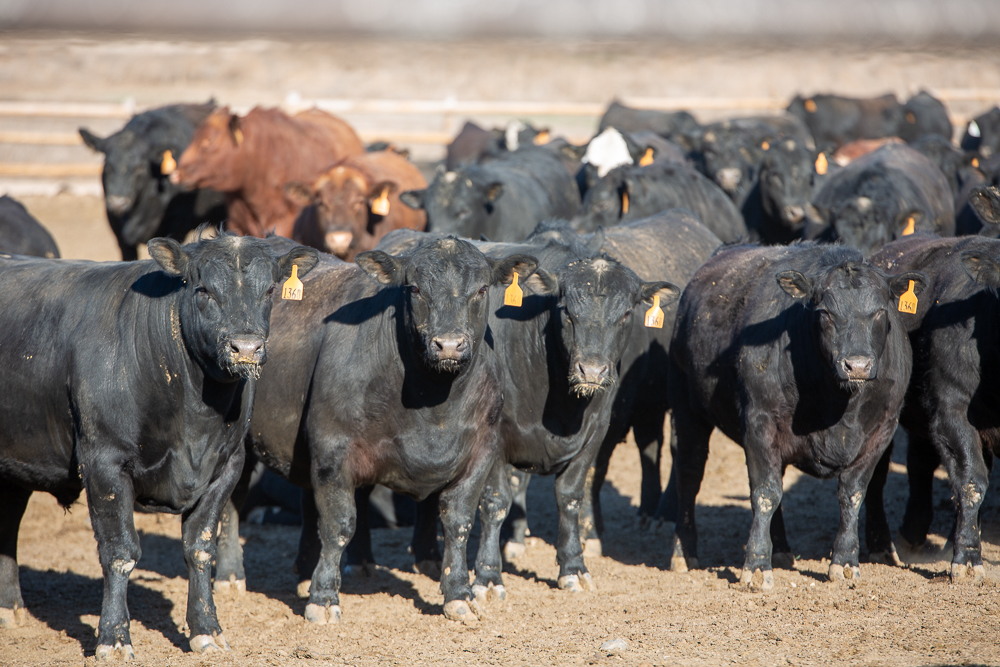
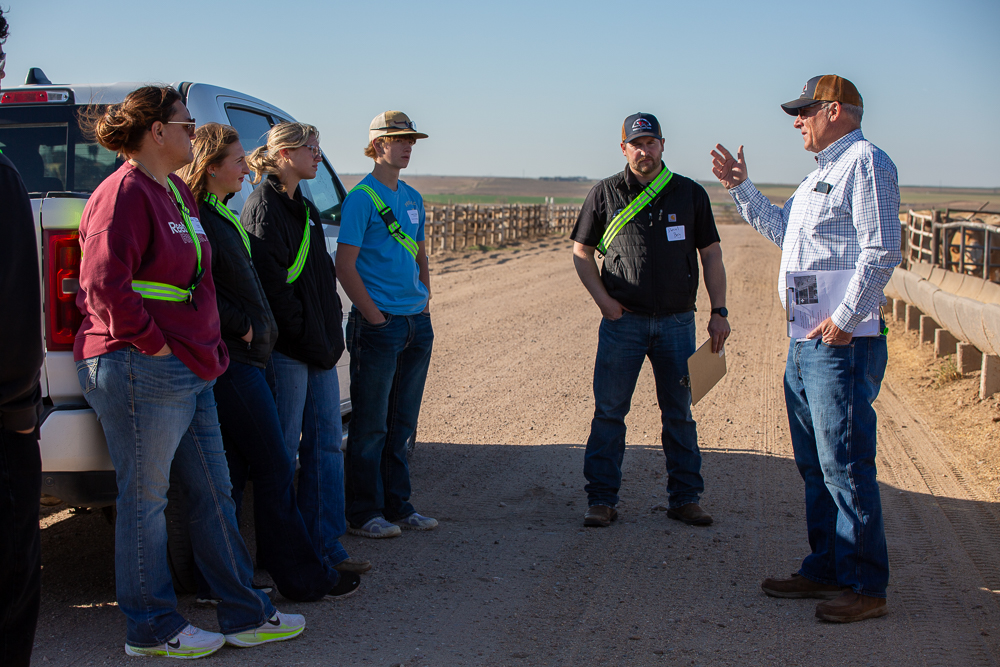
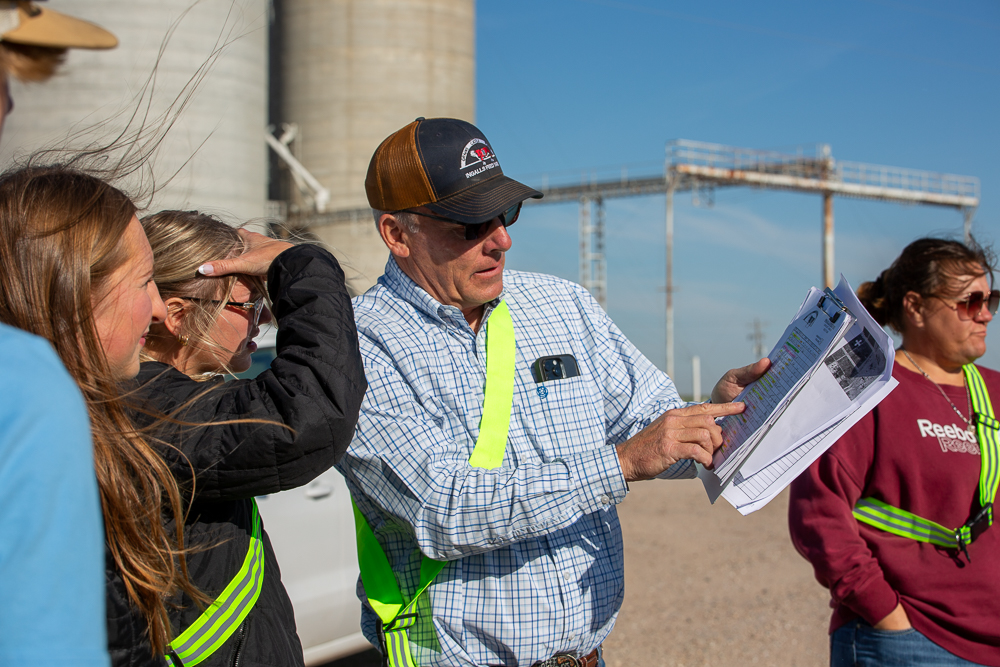
In the beef rotation, students were taken to the pens to look at a pen of steers that Ingalls Feedyard Manager David Ast said were “the best ones in the yard.” This particular pen was nearing its finish date. Fat and slick they all looked similar, and their black hides glistened in the morning sun. After Berg and Ast shared their insights, students were asked to answer questions about yield and quality grades and these questions turned into a contest where the students coming closest to the right answers won a prize.
The students were also shown a pen of cattle that was not nearly as uniform as the first set. These cattle originated from varying sources, were different breeds, and didn’t quite feed and look as good as the black-hided pen. This pen would soon make its way to a packer in Corpus Christi, Texas, Ast said, a 14-hour trip.
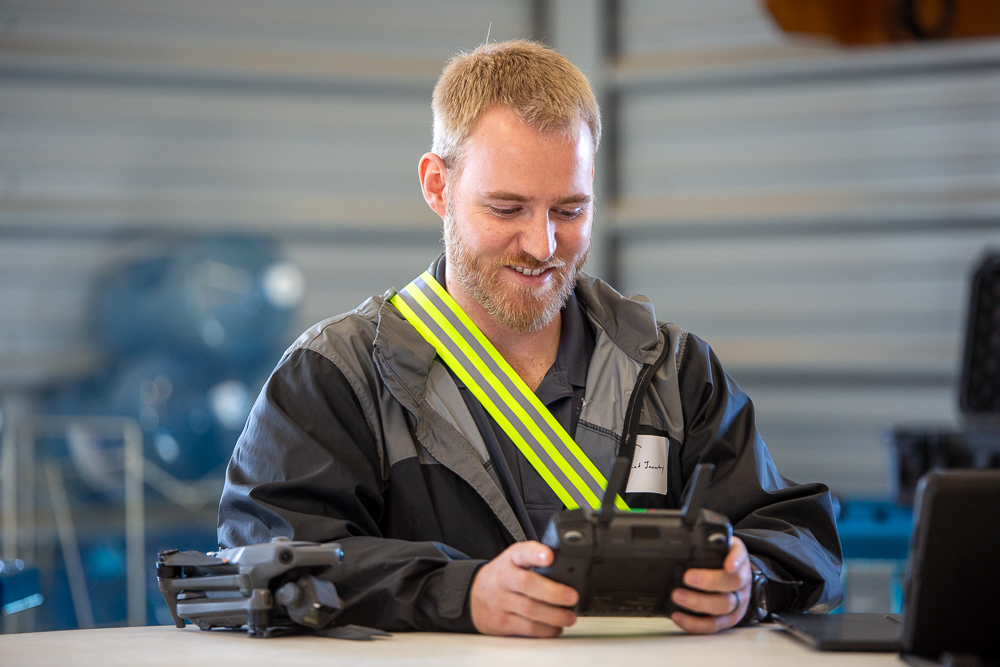
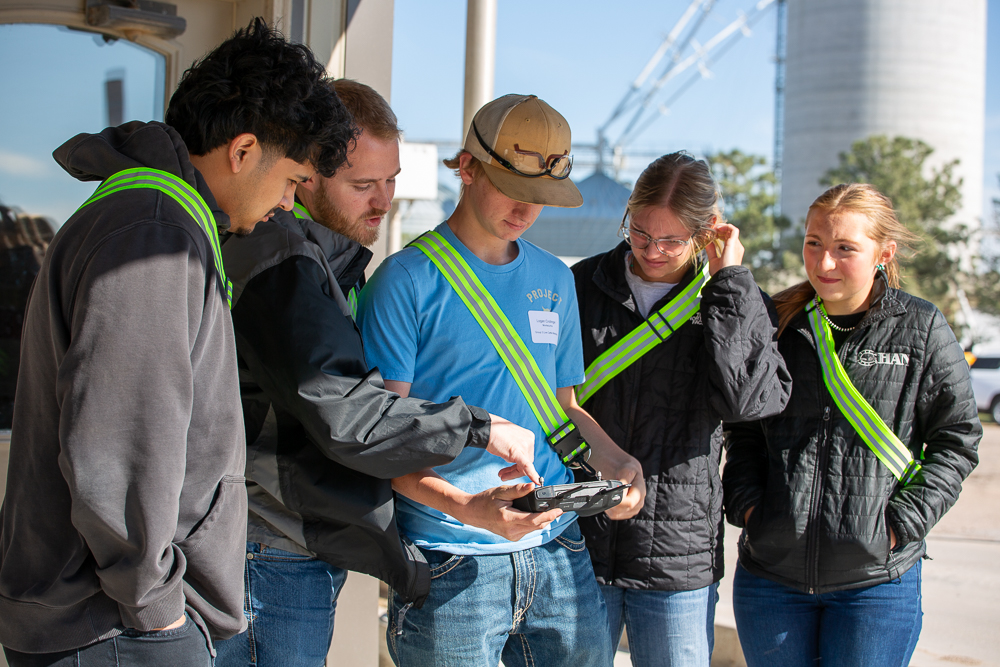
Later, students discussed drone technology in feedyards with Tyson Johnston, partner with HeadCount. Johnston let the students check the drone out before its flight and he described the process of putting it in the air. Later, the drone was taken outside where it flew above the designated pens. Scanning the selected pens and animals, the footage was then downloaded into the computer for analysis. Johnston showed the students the data collected and how it’s used.
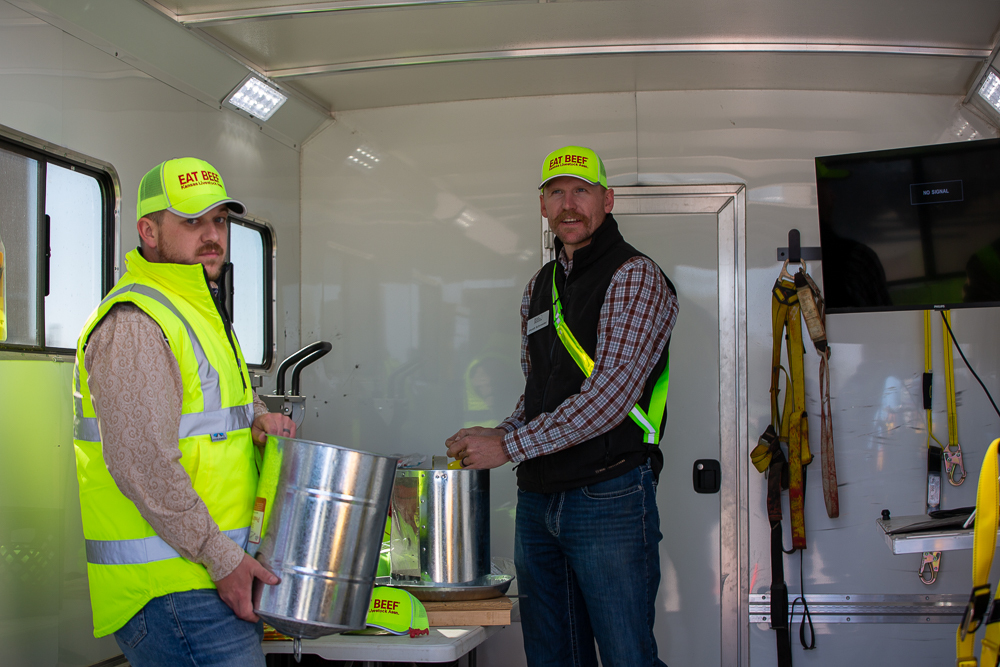
At the Kansas Livestock Association trailer, safety was demonstrated, and each student was taught how to use a safety harness and was later hoisted from the ceiling of a trailer with a winch to give them an experience of a fall with a harness.
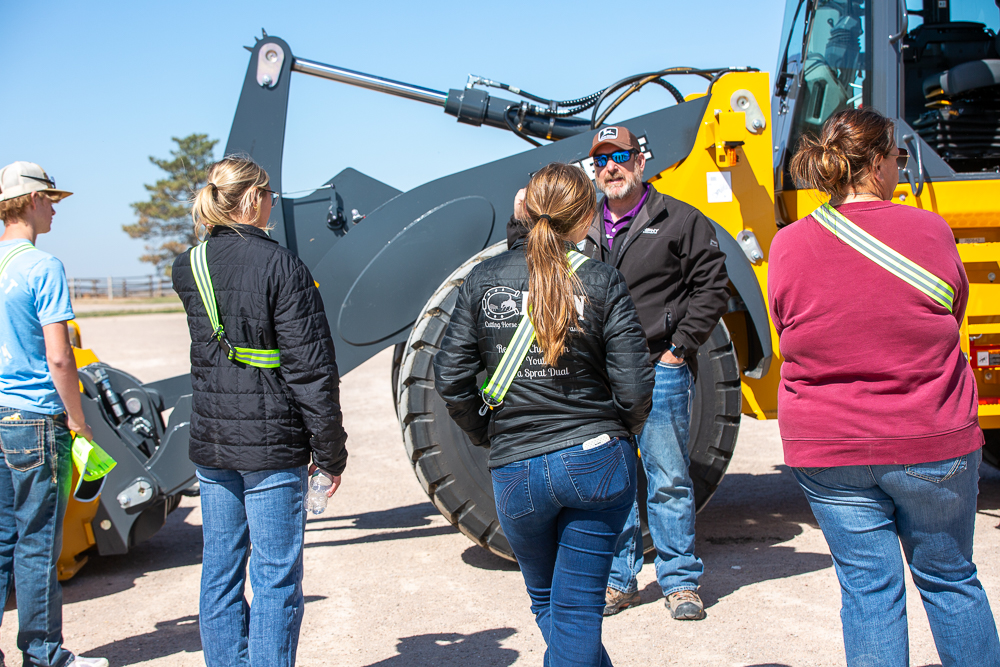
Heavy equipment from Murphy Tractor and Roto-Mix was demonstrated, and students were able to go inside and see advances in technology inside the trucks and equipment and how it’s used in the yard.
Later, demonstrations with Zoetis veterinarian Shawn Blood gave students the opportunity to see a necropsied steer and find the differences in a healthy animal versus the one that had succumbed to disease. Feedyard employees were also processing a pen of cattle during Blood’s demonstration.
A tour of the feedmill by Quint Finney showed differences between the feedstuffs in the ration as well as the operation of the corn flaker. Finney had the students identify what was in the ration and showed them differences between a starter and a finisher ration.
Following the segments of the program, Depenbusch held his promise that there would be questions. He asked each student what he or she learned during the day. Answers ranged from how much the yard relied on technology to how specialized the jobs were to one even answering he’d never work at a feedyard. Overall, the students expressed a positive experience.
History
Ast said the Ingalls Feedyard was started in 1961 by father and son Brad and Loren Doll, and brothers, Steve, Clarence and Norbert Irsik, originally feeding 5,000 head.
“We’re up to 40,000 right now, and we have customer cattle all the way from Florida,” he said. “Our job is feed them, and pack them out.”
When Ast graduated from Kansas State University, he knew he wanted to run a feedyard as he loves the yard and the cattle.
“I started driving the feed truck and then worked in the mill for 30 some years,” he said.
There are a variety of jobs at a feedyard, but it’s his interaction with customers, that’s the most important.
“We have a great relationship with customers,” he said. “Communication is a big deal.”
Sponsors of the program were Irsik & Doll, Zoetis, HeadCount, MWI Animal Health, Roto-Mix, Ascendance Truck Centers, Murphy Tractor, KLA, Kansas Cooperative Council and Kansas State University Southwest Research-Extension Center.
Kylene Scott can be reached at 620-227-1804 or [email protected].