CNN pioneer Ted Turner remembered for media empire and land stewardship
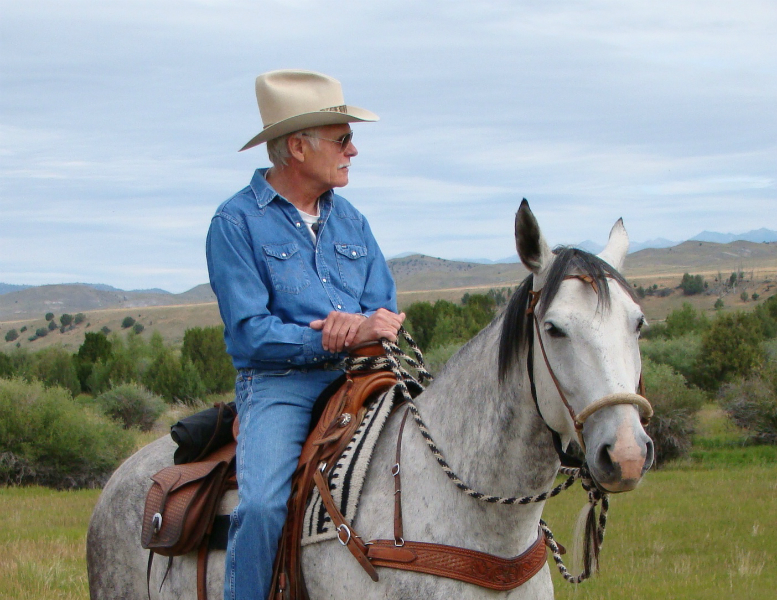
Ted Turner on one of his ranches in 2009. (Photo courtesy Turner Enterprises.)
Ted Turner, the outspoken media entrepreneur who transformed television news through the creation of CNN while also becoming one of the nation’s largest private landowners and conservation-minded ranchers, died May 6 at his home near Tallahassee, Florida. He was 87.
Family spokesman Phillip Evans confirmed the death. Turner disclosed in 2018 that he had Lewy body dementia, a progressive brain disorder.
The 24-hour news cycle and bison conservation
Turner was best known for launching CNN in 1980, introducing the nation’s first 24-hour television news network and reshaping how audiences consumed breaking news. His cable ventures eventually expanded into TBS, TNT, CNN Headline News, Turner Classic Movies and Cartoon Network, helping redefine the television industry during the late 20th century.
But beyond broadcasting, Turner built a significant presence in agriculture, ranching, and land conservation, but it was not without controversy over his land ownership and methods. Over several decades, he amassed more than 2 million acres of ranchland in the United States and abroad, making him one of the country’s largest private landowners.
His ranches in Montana, Nebraska and New Mexico became known for large bison herds, wildlife conservation efforts and habitat restoration projects. He was the single largest landowner in Nebraska at the time of his death. At his peak, Turner owned nearly half a million acres of ranch land in the Nebraska Sandhills.
Turner Ranches and conservatism
Turner’s ranching interests reflected both business ambitions and environmental priorities. He promoted bison production as a way to support the long-term survival of the species while creating commercial markets for the meat. That strategy later evolved into Ted’s Montana Grill, a restaurant chain featuring bison products.
He also established Turner Ranches and Reserves that combined livestock operations with conservation programs focused on endangered species, grassland restoration, and sustainable land management. According to the Turner Enterprises website, over 45,000 bison graze his ranches today.
Turner’s environmental interests made him an unusual figure in agriculture and business circles. A lifelong hunter and outdoorsman, he simultaneously became a prominent advocate for land preservation and wildlife protection.
His holdings included large tracts managed as nature preserves, and he supported efforts tied to biodiversity, renewable energy and ecosystem restoration. Following his death, his company stated his ranchland will be protected from development to ensure his conservation mission will continue.
The Atlanta Braves and the rise of CNN
Born Robert Edward Turner III on Nov. 19, 1938, in Cincinnati, Ohio. Turner spent much of his youth in the South after his family relocated to Georgia. His father operated a billboard advertising company, and Turner later took over the business following his father’s death in 1963.
He expanded the company into broadcasting by purchasing a struggling Atlanta television station in 1970. That acquisition eventually became the foundation of the Turner Broadcasting System.
Turner’s willingness to take financial risks defined much of his career. He purchased the Atlanta Braves baseball franchise in 1976 and broadcast games nationally through his television operations, helping fuel the rise of cable “superstations.” His ventures often carried significant debt, but many ultimately succeeded and reshaped the media landscape.
CNN became his most influential creation. Initially dismissed by competitors, the network gained credibility through around-the-clock coverage of major world events, including the Gulf War in 1991. The network’s live reporting from Baghdad established CNN as a dominant global news source.
Turner merged Turner Broadcasting with Time Warner in 1996 in a deal valued at $7.5 billion, marking the end of his years as an independent media empire builder. After AOL acquired Time Warner in 2001, Turner gradually stepped away from corporate leadership roles.
Philanthropy efforts
In 1997, Turner pledged $1 billion to support United Nations-related humanitarian programs, one of the largest charitable commitments ever made at the time. The donation supported programs focused on refugees, disease prevention, children’s welfare, and land mine removal.
In his later years, he focused more heavily on ranching, conservation, and philanthropy. His operations included bison production, wildlife habitat preservation and environmental foundations supporting conservation and endangered species initiatives.
Turner’s conservation approach drew attention within agricultural and ranching communities because it combined commercial livestock production with wildlife restoration. Bison herds on his ranches became a visible symbol of efforts to restore native species while maintaining viable agricultural enterprises on large Western landscapes.
Turner was married three times, including a decade-long marriage to actress Jane Fonda. He is survived by five children, grandchildren and great-grandchildren.
Although his broadcasting achievements transformed modern media, Turner’s legacy in agriculture and conservation also reshaped discussions about private land stewardship in the American West.
For many in agriculture, Turner represented an unconventional ranch owner whose visibility brought national attention to bison production, habitat preservation and sustainable land use at a scale rarely seen in private ownership.
Lacey Vilhauer can be reached at 620-227-1871 or [email protected].