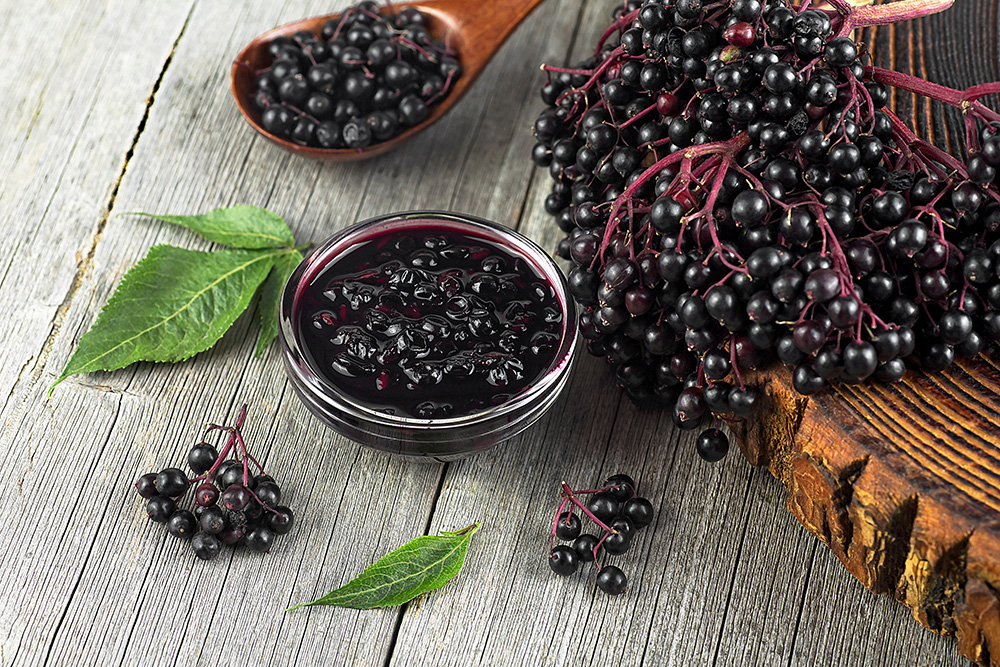
Elderberries are small, dark purple berries with a tart, earthy flavor. For centuries, they have been used in home remedies for cold and flu symptoms. Although elderberries are not proven to cure illnesses, they are rich in vitamins A and C, which support a healthy immune system.
Raw elderberries, including the stems, leaves, seeds and flowers, contain naturally occurring compounds that can release cyanide during digestion. Consuming raw or improperly prepared elderberries may cause nausea, vomiting, diarrhea, and other unpleasant symptoms. In large amounts, poisoning can be serious enough to require hospitalization.
Cooking elderberries significantly reduces the risk, making properly prepared jams, syrups, and other cooked products safe to enjoy.
Syrups, jams and jellies
When preparing elderberries for canning or bottling, take the following safety steps:
Preparation
Remove all stems, leaves, and unripe berries before processing. Discard seeds whenever possible, as they contain higher concentrations of toxins.
Cooking
Boil the elderberries for at least 10 minutes.
Canning
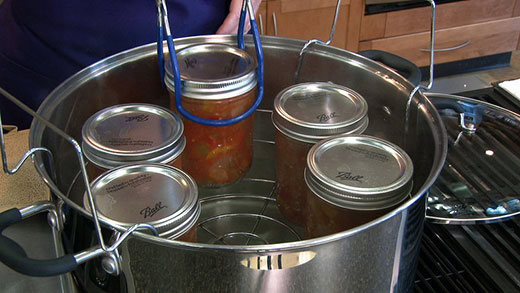
Because elderberries have varying pH levels, it is safest to assume they are a low-acid berry (pH above 4.6). Therefore, always add an acidifying ingredient when canning or bottling to ensure safety. An acidifying ingredient has a very low pH and includes lemon juice, citric acid and vinegar. Always follow a research-based recipe. We recommend this elderberry jelly recipe by Ball Mason Jars.
Dehydrating
Dehydration is also an option. To safely dehydrate elderberries:
- First remove all stems, leaves, and flowers.
- Rinse the berries with clean running water and dry them.
- Lay the berries in a single layer and dehydrate at 135 degrees Fahrenheit for 6 to 8 hours until they are crispy and dry.
Dehydrated elderberries or elderflowers should still be heat-treated before consumption to destroy toxins.
It is best practice to include cooking instructions with dried berries or elderflowers, for example “Rehydrate elderberries in water and cook before enjoying to destroy toxins.”
Baked goods
Elderberries are a great addition to baked goods like scones or pastries. By incorporating the berries into the batter or dough, the combination of moisture and heat during baking destroys the toxins.