Kansas Soybean Association president encourages membership, participation
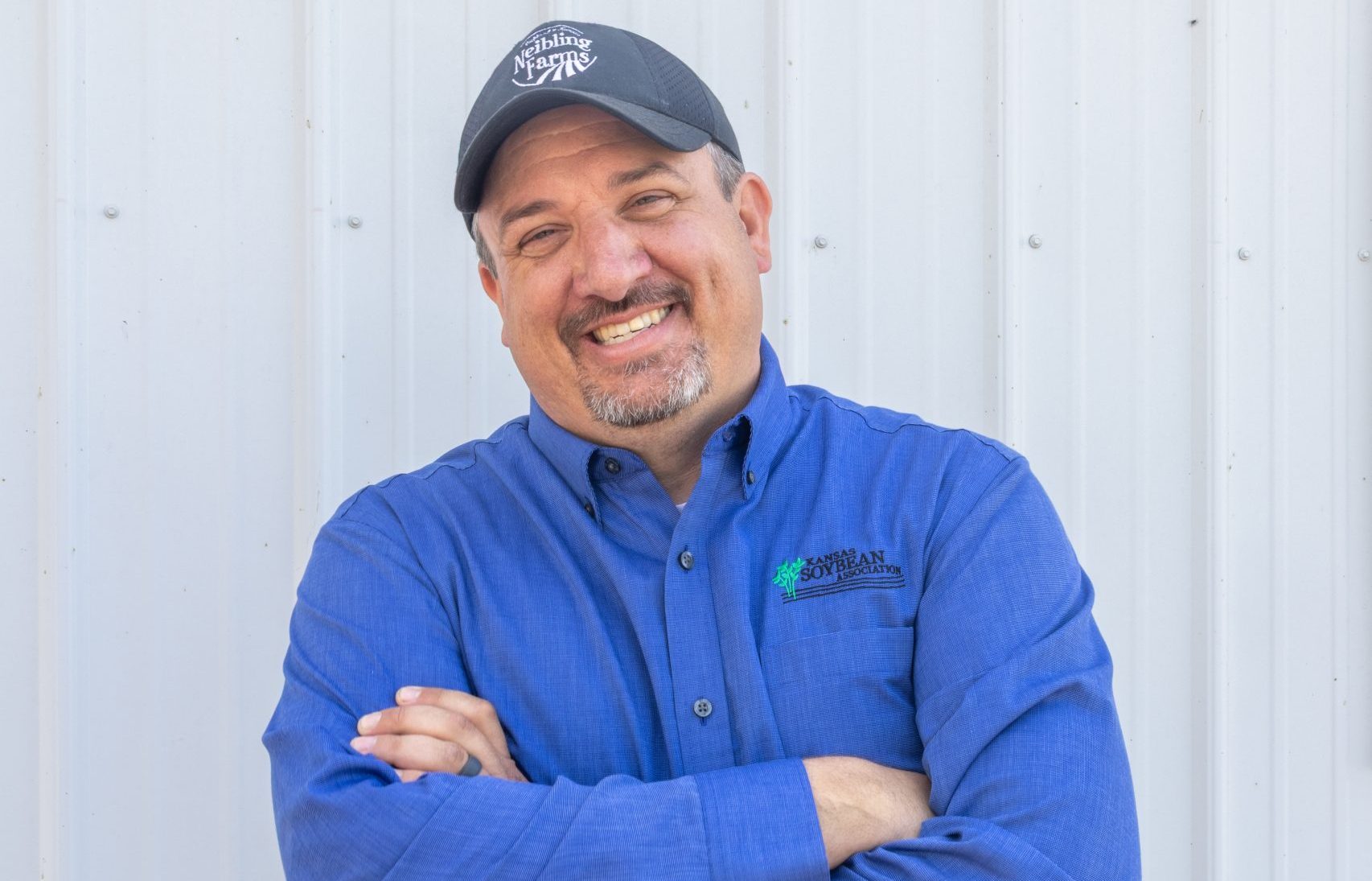
Kansas Soybean Association President Brett Neibling told the media at the Kansas Commodity Classic in late January that getting involved with a state organization is good for not just him, but all soybean farmers.
“When I got started about eight or nine years ago, I knew what the Kansas Soybean Association was, and I knew what the checkoff was, but I didn’t realize how important that work was,” he said. “I started talking to these other members, and I started going through trainings and going through these leadership trainings with them.”
From that he started to realize how important involvement was.
“You don’t realize how important it is to have a voice in the room where decisions are made,” he said. “Farmers—we’re very independent people—we think we can do it all on our own.”
Neibling, who farms in northeast Kansas in Doniphan County, said his grandfather always told him many hands make light work. And with his work in the soybean associations in the state, he believes it.
By working together it adds clout, he said. As an example, collaboration with the Kansas Soybean Association allows him to have access to the Environmental Protection Agency administrator that he could not have on his own.
Being able to have someone articulate and advocate for Kansas soybean farmers is important, Neibling said. Members need help with tough issues, and the association can help get it done.
“We need members, and the more we are, the stronger we are,” he said. “We did a very big push to increase our membership (last year) and to continue to say, hey, there’s a lot of soybeans, obviously, grown in Kansas. We need your help. We’re working for you. We need you.”
Farmers have many worries and soybean growers are no different. When questioned about what he wants to see accomplished in 2026, Neibling said biofuels is near the top of the list. He was selected as a representative from KSA to serve on the Clean Fuels Alliance.
As part of the alliance he was able to meet with industry leaders in biofuels—those who work at crush facilities, processors and people who work for the airlines—and better understand the need for creating a new domestic market of fuel that soybeans can be part of.
“I would love to see, the ruling on 45Z to come into effect,” he said. “I would love to see some of these states, especially in the West Coast, like California, Oregon, Washington and now New Mexico, to continue to put some of their clean carbon reduction programs on that. It is a driving force for this in other states to develop it.”
Something like that could be a game changer, Neibling said.
“Honestly, we’re never going to be able to replace some of our international markets, because China was so important to us, but it would be really nice if we can be able to keep some of that that here in the United States and create that new market,” he said.”
According to Neibling, 2025 was a busy year, but not the best one or one “we were hoping for.”
“But that’s a great thing about being a farmer. You got to be optimistic even in these down times,” he said. “So, ‘25 obviously was a tough year, obviously, some of the new policies were little detrimental at first, with the market going down with the tariffs and the trade war still waiting on those rulings from the EPA concerning the RVOs and the renewable fuel standard.”
There’s still some waiting going on, but a new year can bring new opportunities. At the state level there was a win on pesticide labeling.
“We need those chemicals and those pesticides available for us to be competitive without even more restrictive regulations,” he said.
As hard as 2025 was, it was also a learning experience for growers in that it had similarities to 2018, Neibling said the markets never really recovered from that time, and the experience lessened the blow last year.
“So instead of kind of hitting us all at once, like it did in ‘18, we had that nice, long decline of our markets,” he said. “But uncertainty is always—whether it’s prices, the markets, what’s going to go on internationally—so much right now, it seems like that our markets are dependent on what’s going on in federal policy or things that are said in DC, so that’s kind of upsetting.”
There isn’t much control over any of that kind of stuff, but Neibling believes that when KSA helps get the messages outout, it can help keep producers informed.
“When you’re a farmer, you’ve got to worry about everything. You’ve got markets, you got the weather,” he said. “And then, we’re still human beings. We have our family. We worry about our kids and our futures and things like that.”
Kylene Scott can be reached at 620-227-1804 or [email protected].
PHOTO: Kansas Soybean Association President Brett Neibling. (Courtesy photo.)