Carcass traits can help guide ranchers, K-State researcher says
Developing the right carcass traits can make a difference for feed intake for stockers and feeder cattle, according to one researcher who studies feed intake.
Mindy King’s research at Kansas State University aims to further explore the mechanisms governing feed intake regulation and feed efficiently, efficiency and feedlot and stock for cattle. She said once calves reach the feedlot, the focus turns to what those calves can do in the feed yard.
King, an assistant professor in animal sciences and industry, at K-State, was a presenter along with Emma Briggs, a beef system specialist based at the Agricultural Research Center in Hays, at the recent Cattlemen’s Day in Manhattan.
The feedlot industry has numerous broad overarching goals, King said.
“We want to maximize productivity, carcass quality, carcass weights, and over the last several years. We have seen this uptick in carcass weights when we get to the packing plant,” King said. “We don’t really expect that trend to drop off anytime soon.”
Weights continue to go up
King said in March the U.S. Department of Agriculture reported that carcass weights are up from a year ago and what she’s thinking about is the 5-year average and she doesn’t expect it to come down any time soon.
During her session, King said her goal was to talk through perspectives producers face. They include—how is this increase in carcass weight affecting us from an efficiency perspective, both for the individual animal and from a carcass perspective? How is this translating to carcass quality and as we move forward, do we keep pushing these cattle heavier? Another question is what does that look like for the future?
In the past 10 years, in Kansas, the closeout weights from December 2015 to December 2025, showed little change at entry, but instead a slow uptick in that final weight at the time of harvest.
“Which is again leading to our increased carcass weights,” she said. “In addition, we’re also seeing an increase in days on feed, which is probably of no surprise to anyone here.”
In 2015, it was about 160 days on feed in Kansas, and now averages are reaching 180 days. There are also producers who are pushing cattle to 200 days and even longer, King said.
From a beef yield perspective, heavier carcass weights have been beneficial.
“The good news is that in the beef industry, our consumer demand is growing and has grown exponentially, especially if we think about where we were in 2008, 2009, 2010,” King said. “However, our cattle inventory has not been growing at quite the same rate, and we’re actually trending downward in terms of how many head we have in the United States.”
King said predictions for 2026 are the industry will maintain its herd numbers. Also, how much beef is being produced won’t be dropping off because of increases in carcass weights.
“From a genetic standpoint, we have been selecting for larger frame cattle, and that’s helped us a little bit,” King said. “From a nutrition perspective, our finishing cattle nutrition programs are designed to promote high growth, which is helping us achieve these heavier carcass weights. From a management perspective, we have seen a lot of work done on improving health and health outcomes in feedlot cattle, and we’re also increasing days on feed.”
Incentives remain in place
There are many market incentives to make cattle heavier, King said, especially in today’s market. Modern finishing rations are high concentrate, usually high starch rations.
“These cattle are going to break down that diet in their rumen, and they make these little compounds called volatile fatty acids. These are vital for ruminants and feedlot cattle in particular,” King said. “Because this is how they get energy. Energy is how they grow.”
She said the nice thing about high concentrate diets is the cattle produce a compound called propionate, and it helps with glucose production. Ruminants, however, don’t absorb any glucose directly from their gastrointestinal tract.
Diets like this can be beneficial, and glucose is important for marbling and intramuscular fat deposition, too.
“By increasing this glucose supply to these animals, we’re able to capitalize on this and increase marbling as a result,” she said. “From a biological perspective, extended days on feed does a lot of things, and there are some nutrition overlaps here. We have this environment of prolonged propionate exposure, leading to more glucose, leading to more energy. So, they’re growing well, and at the same time, we are increasing into muscular, fat and marbling.”
King said from a days on feed perspective, it’s not about increasing weight, it’s about maintaining the metabolic environment that helps support several carcass quality characteristics.
Tradeoffs
Data from the University of Nebraska has shown in a comparative slaughter study, that cattle on feed at 142, 162 and 185 days, it noted that when the cattle are fed longer, they also need more feed to put on weight.
“They’re becoming less feed efficient from an individual animal perspective, from a biological standpoint, this is really no surprise,” King said. “This is a natural phenomenon. There is very little we will ever be able to do to keep that from happening. As these animals get older and they mature, they are shifting from protein deposition, or that lean muscle to fat deposition.”
Fat costs a lot more energy to put on than muscle does, thereby reducing the energy surplus.
“You don’t have as much left over to put toward lean tissue growth like you would like,” she said. “The good news for us is that larger frame cattle are able to sustain muscle accretion for a much longer time than smaller cattle. So, our current feedlot herd actually is well positioned to handle these extended days on feed.”
As they get larger and their body weight increases, their maintenance requirements also increase.
“It’s costing them more energy just to keep the lights on and pay rent, so they have less left over, and what I like to call fun money, or Starbucks money, they have less left over to put toward things like growth,” King said.
There is some metabolic disruption happening, so the cattle are in a chronically heightened glucose state and can develop insulin resistance. When that happens, the tissues that need and use glucose can’t get enough and that will reduce the energy supply those animals are getting. Plus, it reduces growth.
“Aside from that, they’re putting on more fat, both intramuscularly and subcutaneously and internal fat,” she said. “They’re not getting more fat cells. There’s some turnover happening, but the number of fat cells they have is staying pretty consistent. But these fat cells are getting bigger. When they get big, they start doing things that they’re not supposed to be doing, like secreting inflammatory compounds.”
Any time an animal is in a heightened state of inflammation, it has to spend more energy to maintain that state.
“So, these animals are reducing overall energy surplus, which is essentially leading to them not gaining quite as well,” she said. “But I think the bigger question is, individual animal performance goes down.”
King’s interest lies in what is happening at the industry level.
“As an industry, are we less efficient today than we have been previously? The answer to that is no, not really,” she said. “From these same close out rates, average daily gain is actually up a little bit in 2025 compared to 2015 and when we look at some feed efficiency data the early 90s compared to about 2022, we’re getting some pretty comparable feed efficiency averages.”
That tells her that even though individual animal performance is going down, the industry has done a good job at maintaining productivity levels.
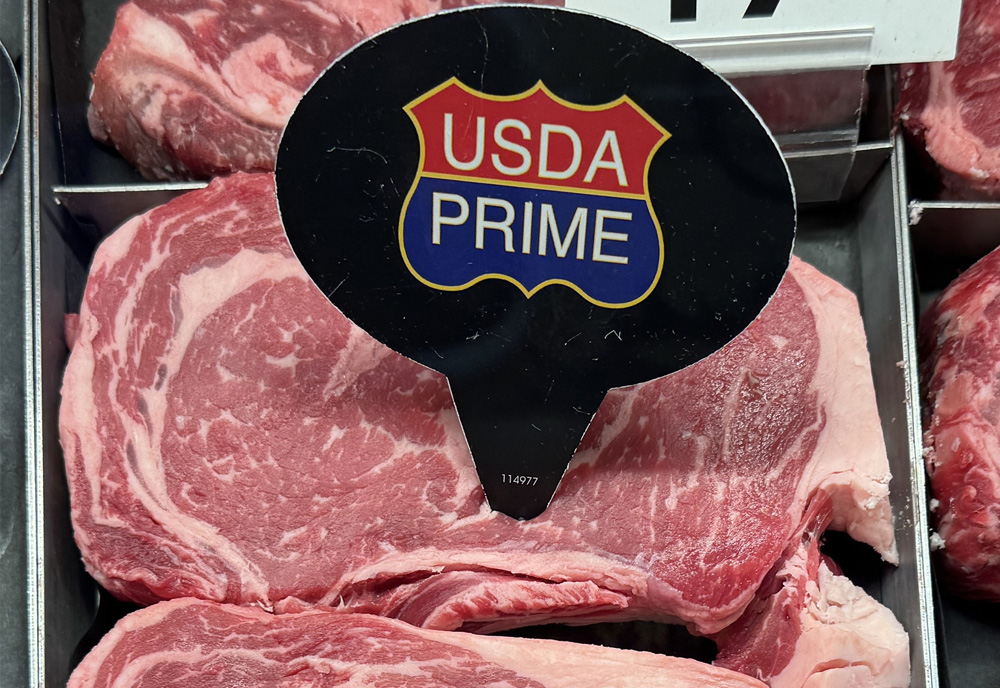
Even with increased days on feed, there’s still some good results. Quality grades are going up. Studies have shown that animals harvested at 185 days on feed shifted more toward grading upper and middle-third Choice, moving away from the bottom third and Select grades.
“From a marbling perspective, we see a pretty similar trend, even going out to 500 days on feed, we see a linear increase in marbling score as a result,” she said.
Favorable characteristics
Even though some individual animal performance may be going down, there are still some favorable characteristics that the animals are gaining as they stay on feed longer.
“But just like anything, there are some tradeoffs, of course, as we’re extending days on feed advantages, we’re increasing marbling score, we’re increasing quality grade,” she said. “Our modern genetics have allowed us to help sustain these extended days on feed and still be profitable.”
While increasing marbling, there’s also increasing fat deposition in other places, and King noted there is potential to see some negative impacts on characteristics such as yield grade.
“As carcasses continue to grow, I think it’s important to think about the future,” she said. “We are asking these animals to sustain an increased metabolic low freeze type energy load. As a result, there is potential to increase our risk of digestive and particularly metabolic disorders.”
There are some late finishing deaths that can happen, and King questions whether these animals are going to have the heart and lung structure to maintain larger, heavier weights.
“Which really brings us to soundness and mobility from an animal welfare perspective, we are going to have to start considering, are these animals able to support this extra weight on their frame or is there going to be a tipping point where we start really negatively impacting animal welfare,” she said.
There are some economic considerations as well, not just from an animal perspective, but for the beef industry to change.
“Our current rail systems are not designed for these really big cattle. Our transport mechanisms are really not designed for this,” she said. “We’re going to have to have some economical investment to help keep up with current industry treatments.”
Kylene Scott can be reached at 620-227-1804 or [email protected].