K-State beef cattle experts explain economic drivers and how mature cow size may need to be different across segments in the industry
On a recent episode of the Kansas State University Beef Cattle Institute Cattle Chat podcast, beef cattle experts discussed how cow size can directly impact herd efficiency, production costs and long-term profitability.
The conversation highlighted that while larger cows often produce heavier calves, they also require greater nutritional inputs, making forage availability and operational resources key factors in determining the best fit for an operation.
The discussion stemmed from a producer’s question regarding the economics of larger-framed cows compared to more moderate-sized cows. Beef Cattle Institute veterinarians Bob Larson and Phillip Lancaster shared research and practical considerations producers should evaluate when determining the ideal mature cow size for their herd.
Larson emphasized that geography and environment play a major role in determining what type of cow best fits an operation.
“Geography matters when deciding what kind of cow fits in a different environment,” Larson said. “A bigger cow is going to require more calories and therefore have a higher cost, but if you get a bigger calf from her, it may be worth the trade. The value difference is something producers have to evaluate.”
Lancaster added that increasing mature cow size without adjusting stocking rates can create challenges for grazing systems and forage management.
“If you have the same number of 1,500-pound cows and 1,100-pound cows with that big of a difference in mature weight, you either have to shorten up your grazing or you are overgrazing,” Lancaster said. “I’m not sure we have been adjusting stocking rates as much as we should as mature cow size has changed.”
Lancaster referenced research showing producers gain approximately six pounds of weaning weight for every 100-pound increase in mature cow weight. However, he noted the additional calf weight does not always guarantee increased profitability.
“The question is whether that increase is enough to offset the additional costs,” Lancaster said. “That depends on several different factors, including forage availability.”
The conversation also addressed labor considerations associated with larger cows. While the producer who submitted the question suggested labor requirements remain relatively similar regardless of cow size, Lancaster explained that the greater concern is often feed availability and grazing management rather than labor itself.
“In my mind, it’s more about grazing days versus hauling feed because there isn’t a significant slope in labor,” Lancaster said. “It’s more about days.”
Throughout the discussion, the specialists emphasized there is no universal “ideal” cow size for every operation. Instead, producers were encouraged to evaluate forage resources, environmental conditions and production costs to determine the most efficient and profitable fit for their individual herd.
To learn more about the topic and others, listen to the full episode of the BCI Cattle Chat podcast.
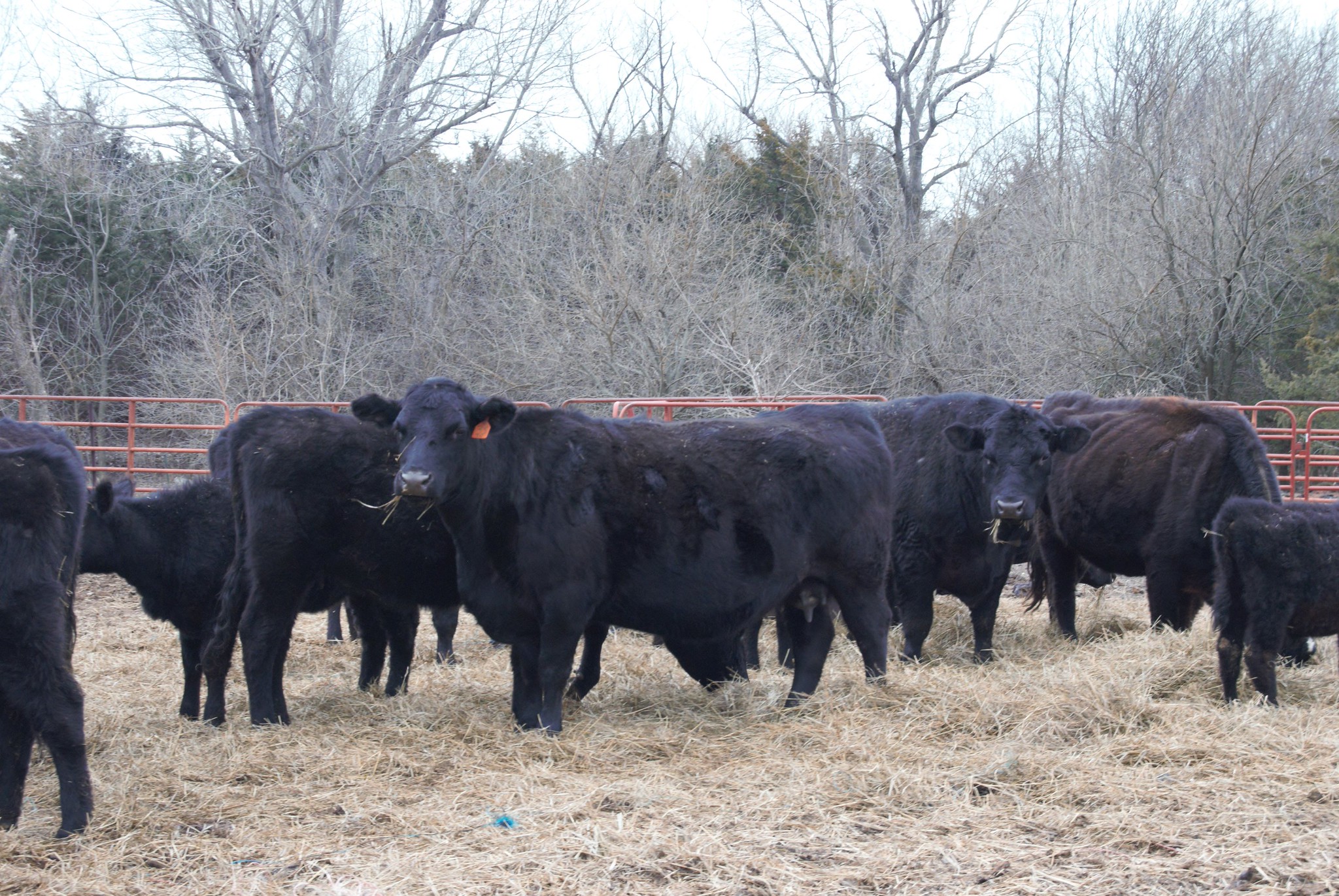
PHOTO: Black Angus out in the field. (Photos courtesy of K-State Research and Extension)